
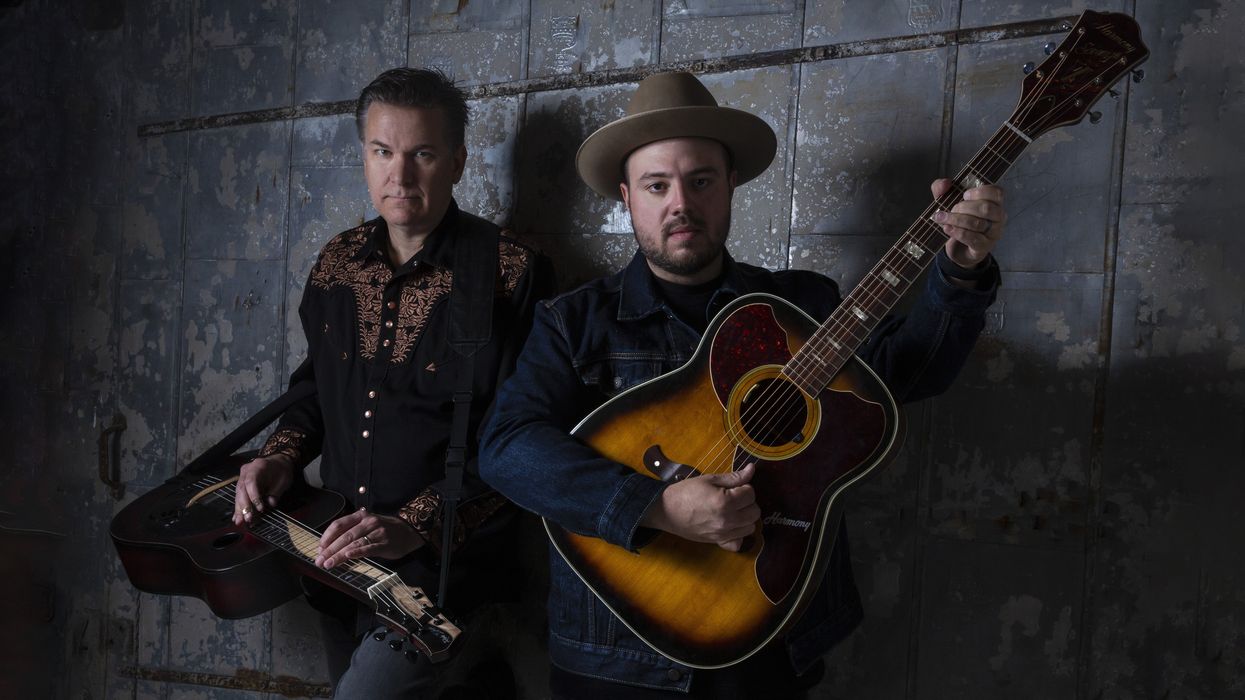

Life on the road is, quite literally, a driving force in country music. From the baleful strains of Hank Williams’ classic “Lost Highway” to Willie Nelson’s perennially uplifting “On the Road Again,” the endless black ribbon has inspired more songs, with a wider range of moods and emotions than there are twists and turns on a Blue Ridge mountain switchback. So it was only fitting that when Rob Ickes and Trey Hensley started digging into ideas with Grammy-winning producer Brent Maher, they found themselves chasing a familiar theme.
“Three crappy gigs in Ohio had a lot to do with it,” Ickes recalls with a laugh as he recounts the story behind the title cut to Living In A Song, the duo’s fourth album together, and their second with Maher producing. “I remember I was sick that weekend, just wore out, and I was sleeping in the car between soundcheck and showtime. It was just a weird experience, and then a couple of weeks later, Trey started singing this song. In the end, I think it’s about persevering. It can suck out here, but this is what you do when you love something, you know?”
Rob Ickes & Trey Hensley - Thanks
To be sure, the journey to where they are now has covered a lot of miles. After moving cross-country from the Bay Area to Nashville in 1992, Ickes emerged as a fleet-fingered demon on the dobro, first as a founding member of bluegrass band Blue Highway, whose early albums were released on Dick Freeland’s Rebel Records, the original home of bluegrass heroes the Seldom Scene. (That band’s Mike Auldridge, a key influence and eventual collaborator with Ickes, is a dobro legend in his own right.) A long-time player of Tim Scheerhorn’s resonator guitars—with his Wechter Scheerhorn 6500 series signature model introduced in 2006—Ickes is renowned for his singularly wide range of expression on lap steel. Folding down-home blues, country, and jazz into his repertoire, he has shared the spotlight with such heavyweights as Merle Haggard, Earl Scruggs, Vince Gill, and Alison Krauss, to name just a few.
Rig Rundown: Rob Ickes & Trey Hensley
Full Rig Details: https://bit.ly/Ickes-HensleyRRSubscribe to PG's Channel: https://bit.ly/SubscribePGYouTubeClick here to check out their new album Living in ...In 2013, he connected with Hensley in Nashville. Then just 22, Hensley had already carved out his own path as a child prodigy, having made his Grand Ole Opry debut with Earl Scruggs himself at the tender young age of 11. Brandishing a stalwart ’54 Martin D-28, he’s a sterling and technically gifted flatpicker whose own contemporaries claim him as an influence, but one of his most endearing traits is undoubtedly his humility. Just ask him to tell the story of how he came to play at the Carter Family Fold for Johnny and June Carter Cash; he still sounds as bowled over by the experience as he must have been when he was a kid.
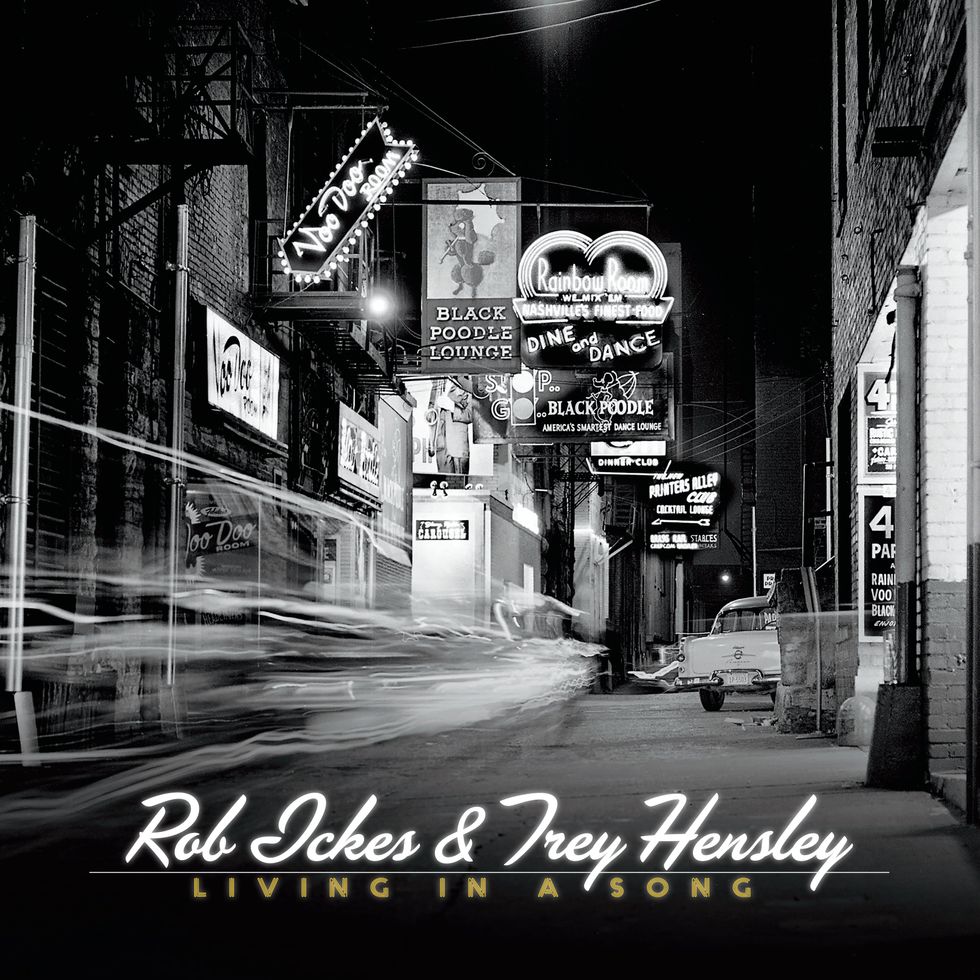
For Living In A Song, the picking duo worked with producer Brent Maher, with whom they collaborated on 2019’s World Full of Blues.
“Actually, I think we borrowed one of Johnny’s tube mics to record vocals this time,” Hensley says with a smile. In the same train of thought, he name-drops Luther Perkins, whose licks on Cash’s “Folsom Prison Blues” were an early inspiration, as well as Roy Nichols—the understated but precision flatpicker on Cash’s classic “Tennessee Flat Top Box,” and later known for his long and legendary stint with Merle Haggard’s band. When it comes to knowing his craft, Hensley is still just as much a student as he is an innovator of country, bluegrass, rockabilly, and good old-fashioned rock ’n’ roll.
All that experience came to bear on Living In A Song, which has its roots in the songwriting sessions that Ickes and Hensley took up in earnest with Brent Maher at his Blueroom Studios in Berry Hill, just outside of Nashville. “Mostly I come at it as a guitar player,” Hensley says with his usual modesty. “I’m a guitar player first, a singer way out in second somewhere, and a songwriter in distant third, you know? So from my perspective, here’s a guitar thing from me or Rob, and then all these cool melodies that Brent would just come up with, seemingly out of thin air. I mean, we wrote 30 songs or more, so that was a totally different experience, and I think that’s the overlying theme of this record. It’s just us being songwriters. That’s how this one is so much different.”
“I mean, we wrote 30 songs or more, so that was a totally different experience, and I think that’s the overlying theme of this record. It’s just us being songwriters.”—Trey Hensley
Maher has worked with all the major players—his biggest songwriting success was “Why Not Me” by the Judds, but he’s engineered and produced sessions with Willie Nelson, Kenny Rogers, Nickel Creek, Shelby Lynne and plenty more. “We had written with Brent a little bit before,” Ickes notes, referring to 2019’s World Full of Blues (which also features guest shots from Vince Gill and Taj Mahal), “but with this record, we definitely made a conscious decision to write most of it. Then when the pandemic came along, it was like okay, we’ve got a little bit more time now. And I wouldn’t say he taught us, but just by working with somebody like that, you learn a lot. I know Trey and I both gained a lot of confidence from the experience, because you just start with nothing, and then after a couple of hours, you’ve got something.”
Rob Ickes' Gear
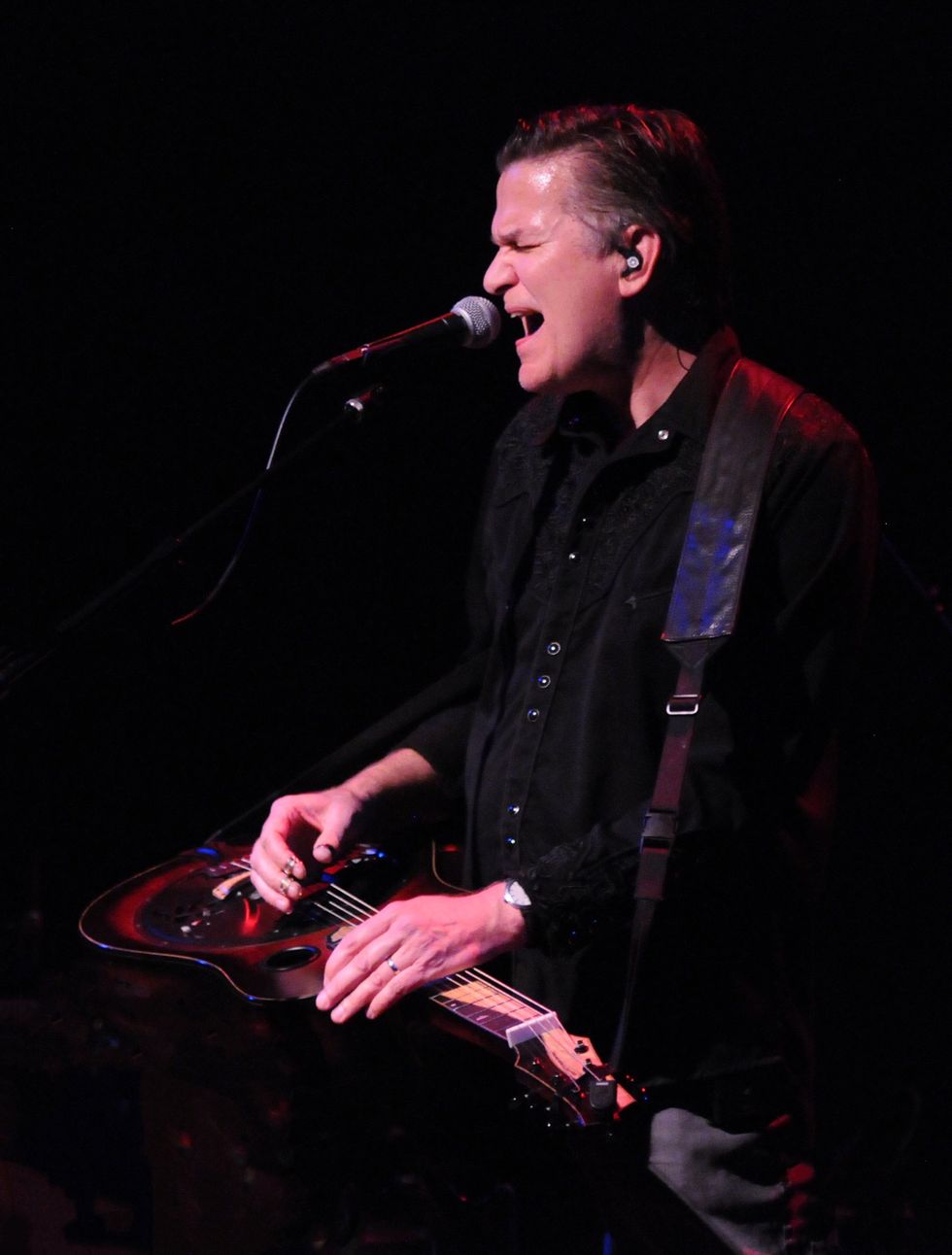
Ickes has two resonator signature models: one from the Wechter Scheerhorn 6500 series and the other by Byrl Guitars.
Photo by Jim Summaria
Guitars
- Byrl Guitars Rob Ickes Signature Series resonator
- Byrl Guitars flamed-maple shallow-body resonator
- ’40s Oahu Tonemaster lap steel
- 1932 Rickenbacker Frying Pan
- Fishman Nashville Series Resonator Guitar pickups
Amps
- ’65 Fender Deluxe black-panel
Effects
- Fishman Spectrum DI box
Strings & Picks
- D’Addario Medium Bronze (.016–.056)
- BlueChip Reso thumb pick
- Cobalt BP gold-plated finger picks
The album jumps off with the title cut—a slow-building ode that quickly grows inspirational, channeling tastes of Kris Kristofferson and Beggars Banquet-era Rolling Stones. Playing Maher’s full-sounding ’80s Gibson J-200 acoustic (his main guitar throughout most of the album), Hensley captures the feeling of solitude from the first line: “Well, I’ve been on this highway for about eight hours now….” with Ickes following on one of several resonators made by Indiana-based luthier Byrl Murdock (who designed and debuted a signature model with Ickes just last year). When the rest of the band kicks in—Pete Wasner on keyboards, Mike Bub on bass, and John Alvey on drums—and Ickes proceeds to rip a lap-steel solo on a vintage Oahu Tonemaster running through Maher’s ’65 black-panel Fender Deluxe, it all becomes clear what they’re going for: a rich, tone-heavy experience, tracked mostly live in the studio with few overdubs, and harking back to a time when capturing the pure essence of the song was the only goal.
“It wasn’t like they got the tape measure out to see how close the microphone was to my guitar, you know?” Hensley jokes. “But there’s a lot of attention to detail. We even toyed around with the idea of cutting analog, but tape just breaks the budget before you even get started. In the end, it didn’t matter. With Brent and his engineer Charles [Yingling], it just seems like they get great sounds in that room without really thinking about it too much.”
And when they plugged in, the same principles applied. You can hear a taste of the Allman Brothers in the barrelhouse anthem “Moonshine Run,” where Hensley grabs a ’52 Telecaster copy, built by Bristol, Tennessee’s own Chuck Tipton. “I talked Chuck into building me a Tele because he had just taken all these blueprints of a real ’52, or maybe even a ’51 Broadcaster—one of these really killer guitars,” he explains. “It’s been my main electric up until recently, and the Fender Deluxe just crushes the damn thing. I hooked up my wah on the third verse for five seconds just to please myself [laughs]! That amp makes anything sound good.”
“We even toyed around with the idea of cutting analog, but tape just breaks the budget before you even get started. In the end, it didn’t matter.”—Trey Hensley
And once again, it’s this commitment to capturing a sound, always in service to the song, that makes Living In A Song such a compelling document. Whether it’s in the poignant Glenn Campbell-isms of “Backstreets Off Broadway” (with Ickes blending seamlessly on background vocals), or the rapidfire energy that propels their version of the Doc Watson classic “Way Downtown” (a Martin D-28 vehicle for Hensley, with bluegrass ace Stuart Duncan burning up his fiddle in tribute), or the spontaneous mischief that sparked “Louisiana Woman” (a jam inspired from-the-hip by Buck Owens’ famed “Diggy Liggy Lo,” and rounded out by Tim Lauer on accordion), Ickes and Hensley are so sympatico with where they’re headed, at this point it just seems to come naturally.
“Most of our favorite records are very live-in-the-studio,” Ickes observes, “so that’s typically the way we operate. And it goes really quick. I don’t think we’ve taken more than two days to make a record yet.”
Trey Hensley's Gear
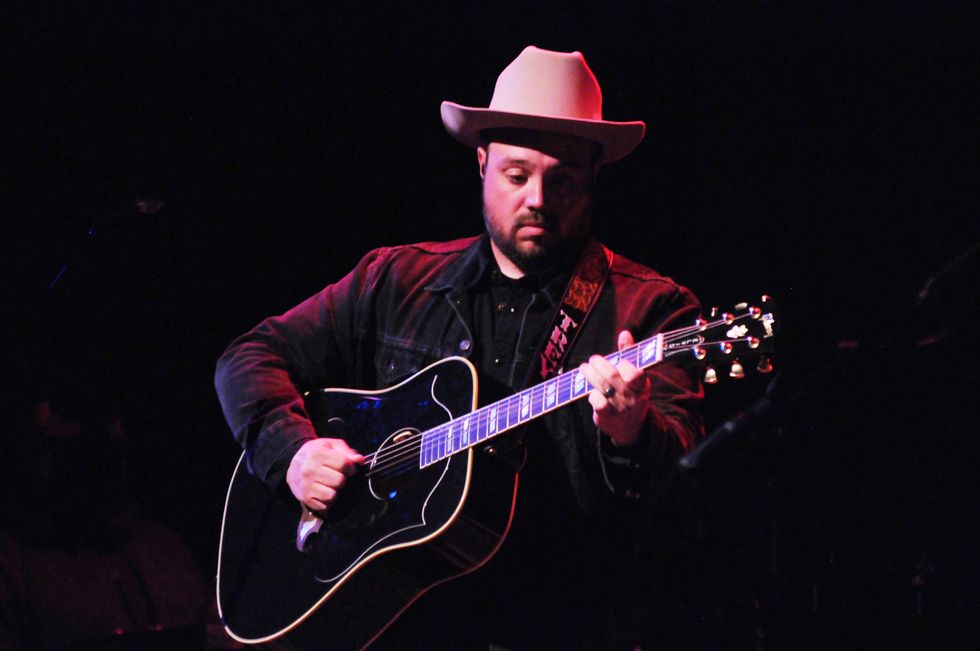
Hensley made his debut at the Grand Ole Opry, playing with Earl Scruggs, when he was just 11 years old.
Photo by Jim Summaria
Guitars
- ’80s Gibson J-200
- 1954 Martin D-28
- 2021 Martin D-41 standard (on tour)
- 1965 Harmony Sovereign Deluxe H1265
- Preston Thompson acoustic with Gene Parsons B-bender
- Chuck Tipton T-style
- L.R. Baggs Anthem SL pickup
Amps
- ’65 Fender Deluxe black-panel
- Fender Tone Master Deluxe (live)
Effects
- L.R. Baggs Voiceprint DI box
- Boss CE-2W Waza Craft Chorus
- Boss HM-2W Waza Craft Heavy Metal Distortion
- DigiTech Whammy Ricochet
- Electro-Harmonix Micro Q-Tron
- Grace Design ALiX preamp
- Keeley Reverb
Strings & Picks
- D'Addario Nickel Bronze (.013–.056)
- BlueChip TAD60 picks
For his part, Ickes also finds it easier to tap into a deeper level of expression, and some of that has to do with his main instrument. “I was playing Scheerhorns forever, but Byrl’s guitars have just a little more crispness,” he says. “What I like in a really good dobro—and I think a lot of this actually has to do with the way they do the bridge, but there’s a response time. I mean, this guitar is in your face frickin’ immediately. It just seems like it gets to my ear quicker than any other guitar I’ve played. And that’s exciting, you know? It’s like a force or something.”
The excitement becomes visceral on songs like A.P. Carter’s “I’m Working On A Building” and the haunting ballad “I Thought I Saw A Carpenter,” which Ickes wrote for his dying father. His flawless instincts on lap steel are beginning to reach that rarified zone where the chord choices that would ordinarily originate with a pedal-steel guitar have crept into his playing—sometimes unexpectedly, but always with a relaxed sense of intention that still keeps him grounded.
“Most of our favorite records are very live-in-the-studio, so that’s typically the way we operate. I don’t think we’ve taken more than two days to make a record yet.”—Rob Ickes
There’s one player he cites as a key influence. “Jerry Byrd, man,” he says without hesitation. “He had this way of playing that was like a voice, you know? Obviously on a slide instrument, the pitch is very critical, and very difficult, and he just never missed it. It came from his soul, and at the same time he was just a great technician. You never heard the bar; you never heard the pick. All you heard was the music.”
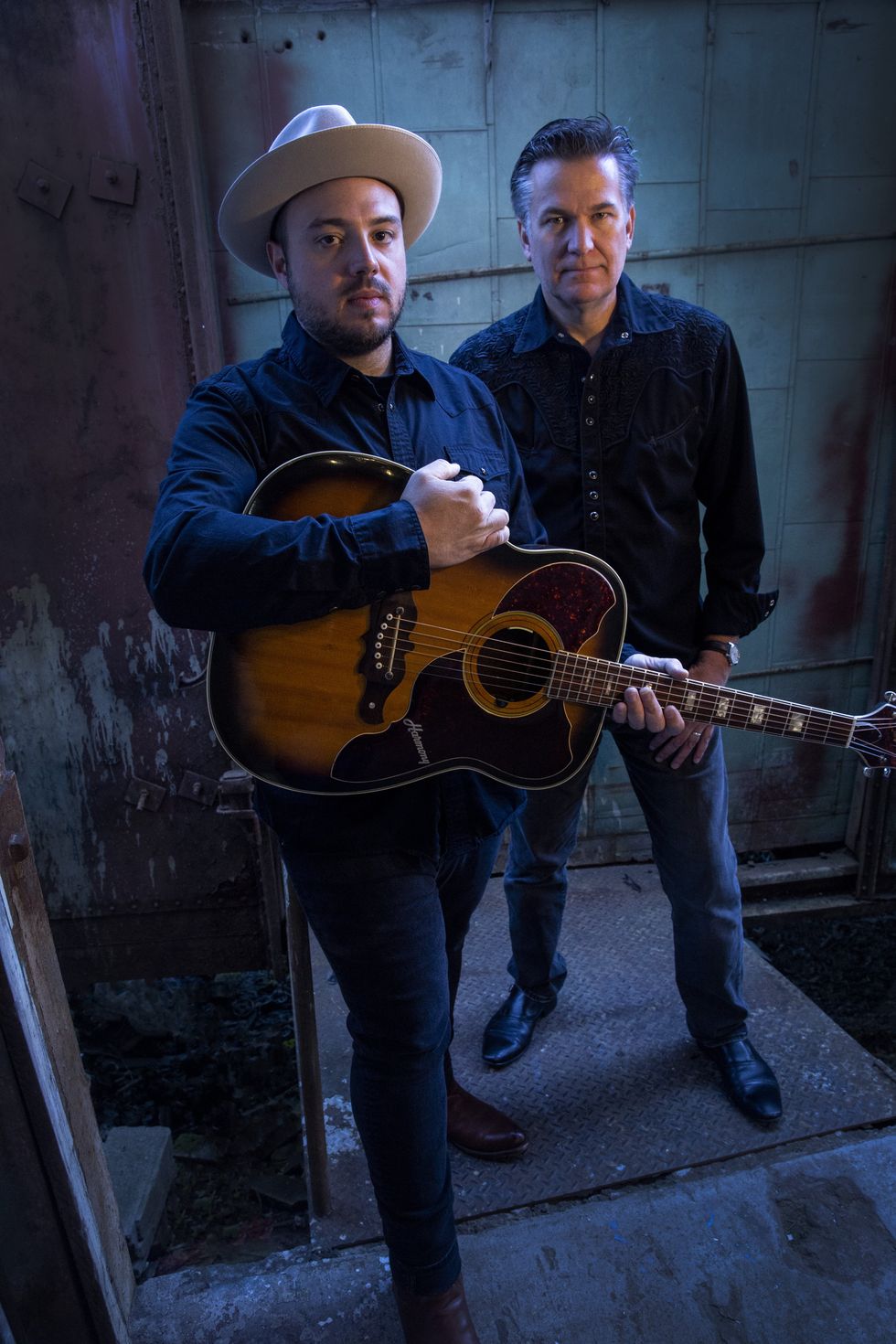
For Living In A Song, as the title suggests, Rob and Trey explored their songwriting abilities more earnestly than on previous records.
Photo by Jeff Fasano
“Technically on the dobro, we don’t usually give a lot of vibrato,” he continues, “but he did, and it didn’t sound nervous. To me, that opened up a whole new way of playing using my left hand that I had never considered, because I didn’t want that nervous sound. And I honestly don’t know how he does it, but it’s kind of rubbed off on me. Somehow I’m able to do it, and it just sounds more in tune.”
Of course, the act of songwriting itself describes an ongoing journey toward self-discovery—the “long and winding road” that can lead to enlightenment, or wisdom, or redemption, or any exalted state you can imagine when you’re tapping into what Harlan Howard called “three chords and the truth.” As if to accentuate the point, Hensley takes the album’s concluding song, “Thanks,” as an example of the serendipity that can unfold so suddenly when you attune yourself to what’s right in front of you.
“I mean, this guitar is in your face frickin’ immediately. It just seems like it gets to my ear quicker than any other guitar I’ve played.”—Rob Ickes
“A friend of mine, Lyle Brewer, had written the melody,” he recalls, “and he asked me if I might want to write something to it. And honestly, it just sat there for a bit, because I didn’t listen to it with enough intention to really focus on it, but the title of the song as he had written it was ‘Thanks.’ And of course I’m a big Tom T. Hall fan, and as soon as I heard it, it sounded like something he would have written. It just came to me and it was done. It was done before it ever began, really. I feel like that song always existed, and I just stumbled on it, you know?”
When the duo convened with Maher at the studio to record it, lightning struck again. “It was just us, me and Rob and Brent, sitting in the studio with a few mics up, with no real intention other than we’re gonna get this down as a demo. And I remember Brent—you can hear it. He picks up a guitar about a verse in, and starts hitting the back of it, as a percussion thing, you know? We got to listening to it, and Brent told us, ‘What do you think if we just use this version? It has a vibe to it, and it’s silly to try it again if we’ve already got it.’ And I love it, because that’s the version that made the record. Every time I hear Brent pick up that guitar, it just makes me smile.”
YouTube It
Ickes and Hensley perform the title track from Living In A Song, with Trey leading with his rich vocal and acoustic textures before Rob enters with his signature resonator twang and harmonies.


![Rig Rundown: The Black Crowes’ Rich Robinson [2026]](https://www.premierguitar.com/media-library/youtube.jpg?id=66952027&width=1245&height=700&quality=70&coordinates=0%2C0%2C0%2C0)