Featuring industry-first AmpNet multi-parametric capture, cross-platform performance including iPad, and GENOME Intro, GENOME2.0 delivers uncompromised power, accessibility, and precision.
Twonotes Audio Engineering announces GENOME 2.0—a major evolution of the GENOME platform. Building on its rapidly growing ecosystem, GENOME2.0 expands the platform across iOS delivering a fully unified, cross-platform rig-building experience with zero compromise.
At the core of this release is Twonotes Capture Studio, a free standalone capture application enabling users to bring their own gear into GENOME. Supporting both static NAM captures and industry-first AmpNet multi-parametric models, it introduces a new level of realism and control to amplifier capture.
GENOME2.0 introduces several major advancements:
AmpNet Capture Technology Compatibility, delivering multi-parametric, control-aware amplifier modelling beyond static snapshots via the all-new PARADEX component
GENOME Intro, a free entry point on Desktop and iOS, offering a complete rig-building environment from day one
iPad Compatibility, bringing the full GENOME experience to a touch-first, mobile workflow
Global Transpose, enabling real-time pitch control across the entire rig
Expanded TSM™-Ai Amplifier Range, significantly broadening the platform’s tonal foundation
Together, these innovations position GENOME2.0 as the most powerful, flexible, and forward-thinking rig-building platform Twonotes has ever released.
The southern rockers’ lead guitarist wields some serious firepower on the Crowes’ latest tour.
Earlier this year, PG’s John Bohlinger sat down with the Black Crowes’ Rich Robinson for an interview and jam session. The two linked up again for this brand new Rig Rundown ahead of the Crowes’ gig at Nashville’s Bridgestone Arena, where Robinson and tech Derek Phelps showed how vintage vibes—with some modern fixings, of course—are still difficult to beat. [Brought to you by D’Addario.]
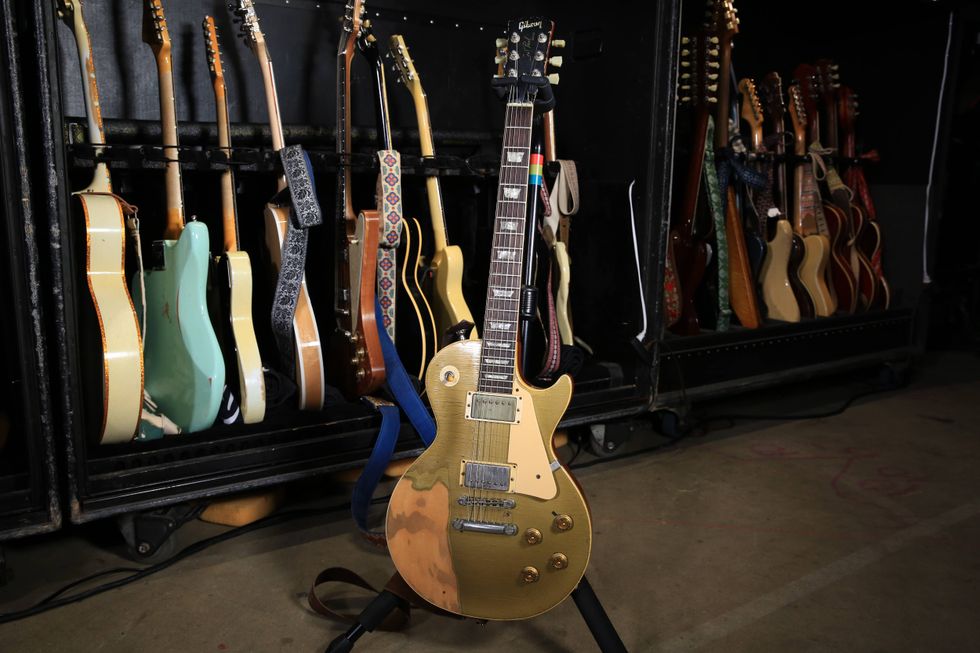
Goldtop
Robinson bought this 1968 Les Paul in the late 1980s for $400, just before the creation of Shake Your Money Maker. It has been played on every record since, and was restored by RS Guitar Works after being damaged in the floods caused by Hurricane Sandy in 2013.
Robinson uses D’Addario NYXL strings (.010–.052) on his electrics
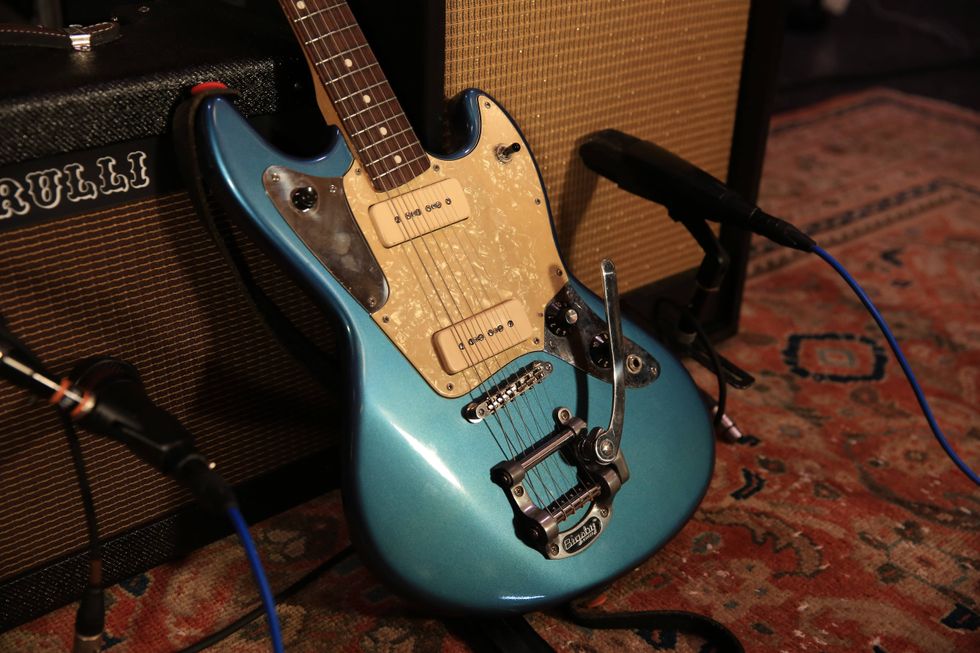
Jaw-Dropping Junior
When Robinson received this 1959 Gibson Les Paul Junior, its condition was so pristine that he thought it couldn’t be genuine. His tech confirmed that it was.
Triple Threat
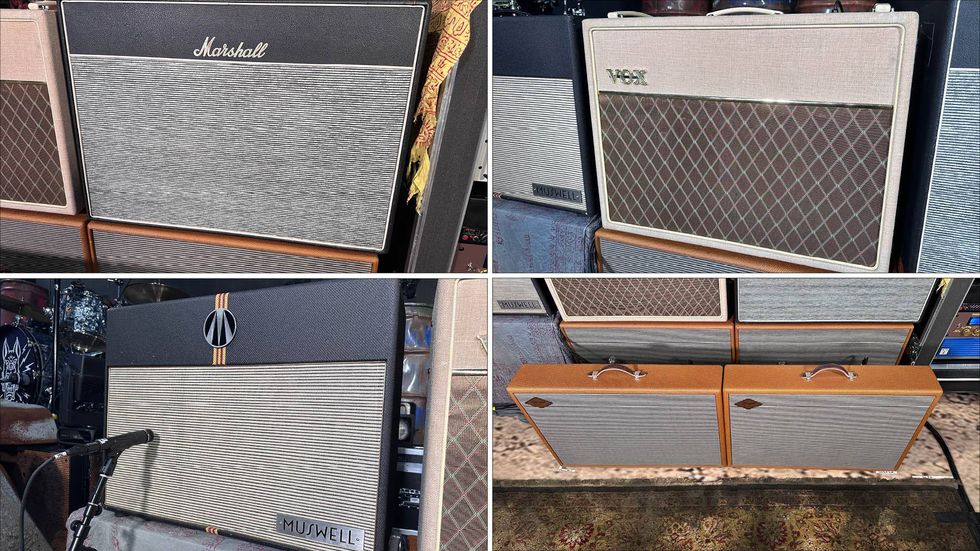
Robinson’s main amp is his 50-watt Marshall Super Tremolo, which has been rehoused in a combo format. It’s paired with a Vox AC30 that fills in some of the higher frequencies. Robinson’s signature Muswell, which reproduces the Marshall’s circuitry, is always on hand as well.
The amps run through custom-made cabinets, loaded with Celestion Celestion G12H Anniversary 12″ 30-watt speakers.
Rich Robinson’s Pedalboard and Effects Rack
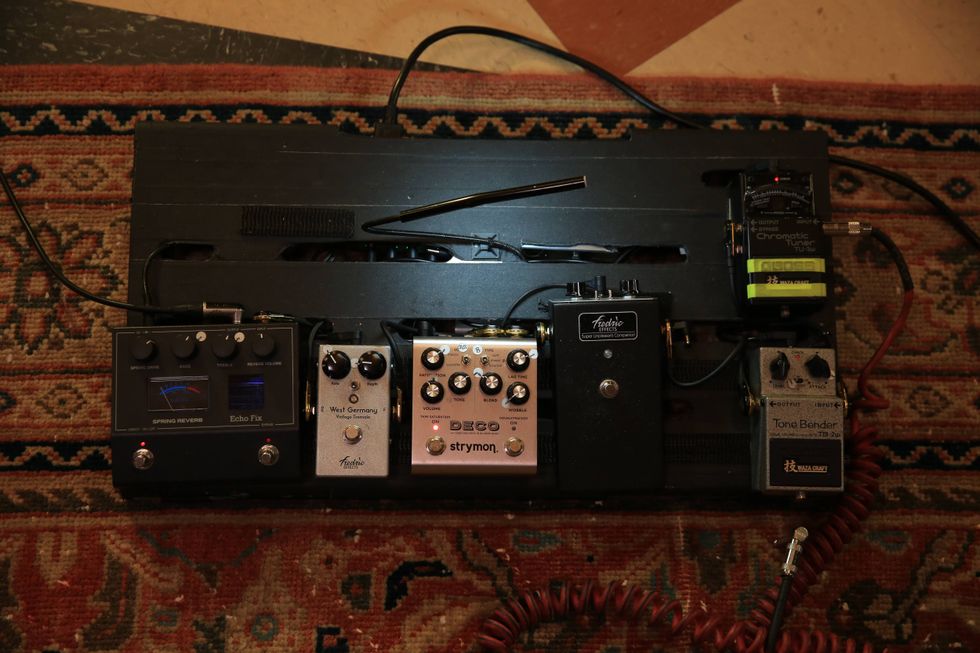
Robinson’s onstage board, built around an RJM Mastermind GT switcher and Mini Effect Gizmo, carries a handful of effects: a Peterson StroboStomp HD, Keeley Rotary, Lehle volume pedal, Fulltone Clyde Deluxe Wah, Way Huge Red Llama, Behringer Octavia, Vemuram Budi G, Keeley Zoma, and Lehle Dual SGoS.
Elsewhere, Robinson’s signal hits two Fulltone Tube Tape Echo units, and the rest of his pedals live in a rack. They include a Way Huge Angry Troll, BMF Effects Sisyphuzz, Pedal Pawn AC128, another Behringer Octavia, D’Amico FX Artemis, Boss AC-3, Shaw Direct Injection, EHX Mel9, EHX Ravish Sitar, and EHX Stereo Memory Man with Hazarai. Utility units include an ISP Technologies Decimator X and a pair of Strymon Zumas to power the setup.
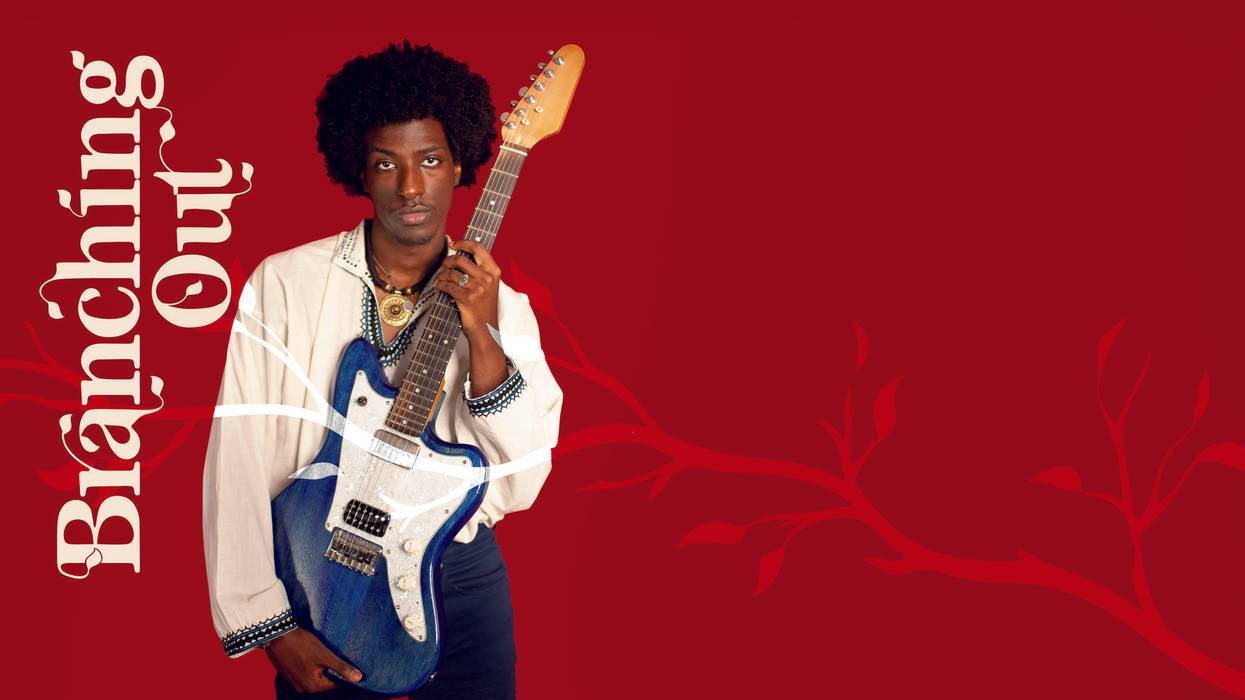
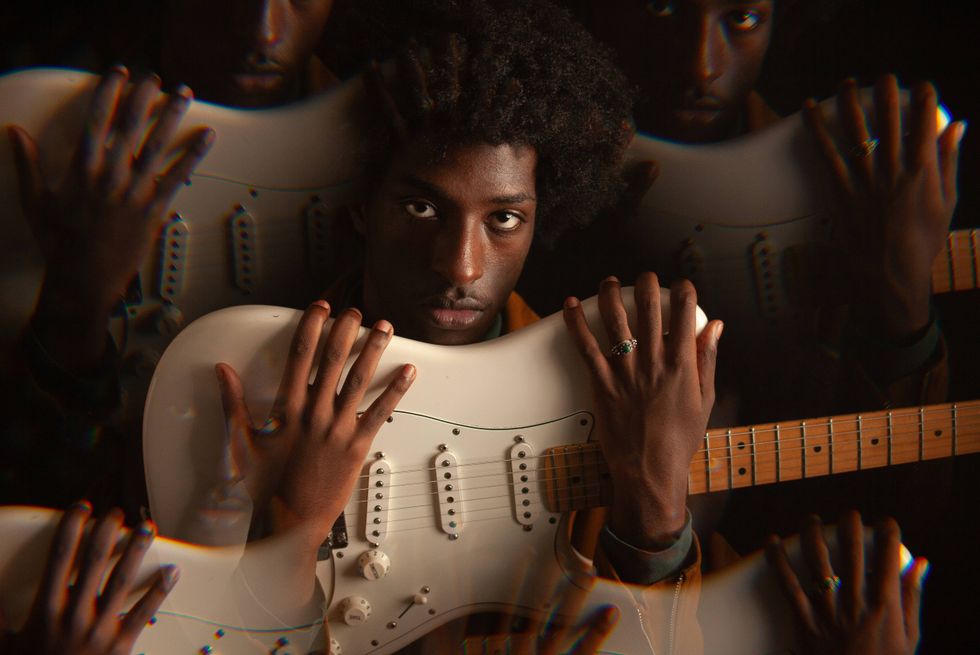
“By the end of senior year in high school, I was like, ‘I want to do guitar. I want to have a career in music.’ In order to do that nowadays, you have to do online posting with TikTok and Instagram,” Amani Burnham says. “So from September of 2023, I started posting, and the rest is history.”
From being an unknown bedroom guitarist to potentially becoming the next big thing in blues, Burnham’s journey has moved at a breakneck speed. His debut album, Roots & Wings, dropped the day before his 21st birthday. He also recently opened up for Ted Nugent at Heritage Hall in Ardmore, Oklahoma. For the evening closer, Nugent invited him, along with Phil X and Jared James Nichols, to jam on several songs. At last count, Burnham has amassed around a quarter of a million followers, with combined views of almost 30 million between his Instagram, TikTok, and Facebook accounts. It’s hard to believe that less than three years ago, Burnham wouldn’t even show his face in his videos.
“I was definitely shy at the time, because the only people who followed me were just friends and random people I had known from high school,” Burnham says. His very first clip, a take on Hendrix’s “Remember,” only showed a domed ceiling light fixture onscreen. Burnham was nowhere in sight and, as is to be expected, engagement was modest.
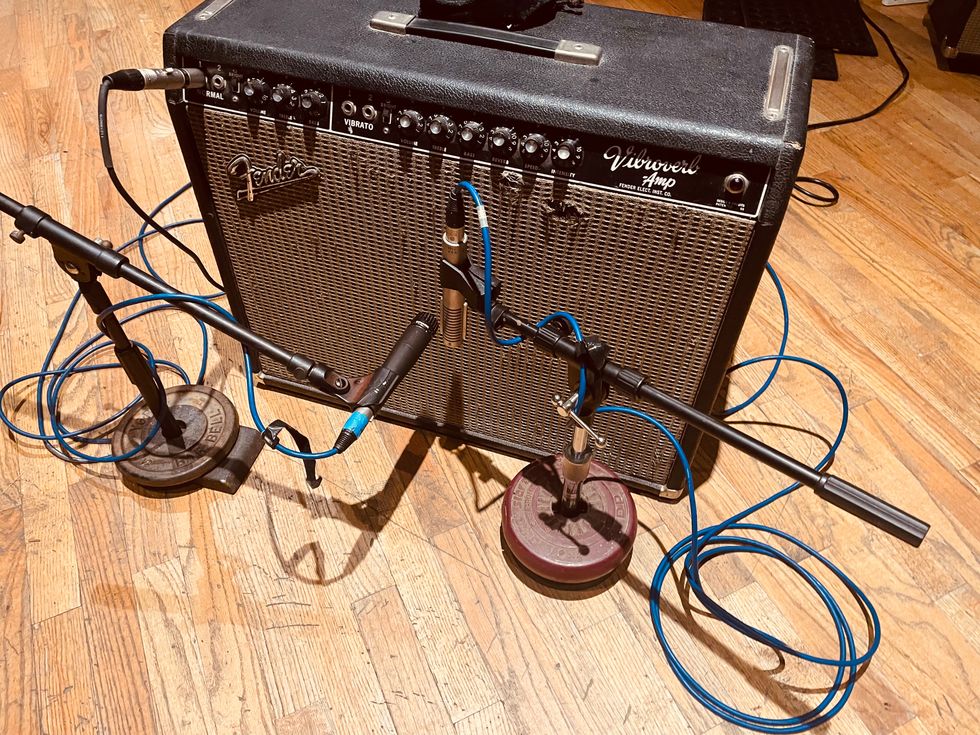
1964 Fender Vibroverb (borrowed from Jeff Schroedl)
1965 Fender Pro Reverb (borrowed from Jeff Schroedl)
Effects
Dunlop Fuzz Face
Vox Wah
Dawner Prince Viberator (used on “Midnight Waterfall”)
Ibanez TS808HW Hand-Wired Tube Screamer (borrowed from Jeff Schroedl)
Strings
D’Addario (.010–.046)
After posting a handful of similar videos and getting similar results, Burnham had a revelation. “I realized pretty quickly that to make a career, people need a face to see in order to create an identity of who that artist is,” he explains. Burnham reinvented his online persona, and his videos started showing him shredding blues licks while explosively performing Hendrix-like movements, with the guitar played over his head, under his legs, and all points in between. People began taking notice.
“I realized pretty quickly that to make a career, people need a face to see in order to create an identity of who that artist is.”
Word spread like wildfire, and Blind Pig Records also identified the young talent as a person of interest. About a year after Burnham’s first post, while he was playing guitar in his dorm room at Central Connecticut State University, a life-changing email came in. Blind Pig Records president Jeff Schroedl had followed Burnham for a while, and was so impressed that he reached out to him directly. “It was a simple email where I said, ‘I’m really impressed with your talent. If you want to explore ways of working together, give me a call,’” Schroedl recalls.
“It was a little like, ‘Dude, this is too good to be true,’” Burnham says. “l was like, ‘Nah, that can’t be it.’ And it turned out to be real.” After establishing that it wasn’t a prank or a scam, Burnham got back to Schroedl. “I had to go to the study area in my dorm to call him. We were introducing ourselves and he was telling me about the label and stuff like that,” Burnham says. “He didn’t give me an official offer then because, at that time, I had just formed a band, and I really couldn’t sing that well. I was honestly still working on my voice and stuff like that. So we decided that we’d stay in touch, see what happens, and I’ll get some vocal lessons.”
Schroedl’s 1964 Fender Vibroverb miked up at Carriage House Studios for the Roots & Wings sessions.
Photo by Jeff Schroedl
After a few more conversations, they eventually met in-person in Memphis, where they started to put together a deal. By April 2025, Burnham was ready for prime time, and Schroedl offered him a multi-album contract with Blind Pig.
Schroedl produced Roots & Wings, and together they spent three months writing 10 out of the album’s 12 songs, using a mix of existing riffs and new ones. “Some of those riffs I’ve had since I was, like, 15. I’m 20 now, so some of those I’ve been sitting on for a very long time. And then some of them less than others,” Burnham explains.
Joining Burnham on Roots & Wings are session players Ray Hangen on drums and Matt Raymond on bass. “I was really excited when we were making this album because it was like, ‘I’m going to be able to hear these songs fully realized with bass, drums, and maybe some tambourines for the first time ever,’” he says.
“Everybody starts off first learning guitar with the thumb, and I was just too lazy to graduate to a pick.”
The lyrical content of Roots & Wings runs a gamut of topics, from sleep paralysis to a reflection on Burnham’s African heritage. The guitarist was adopted from Ethiopia when he was only a few months old, and raised in Connecticut. The title track’s lyrics—“Father, mother, sister, brother, all my life I’ll always wonder”—allude to this. “I specifically came up with ‘roots and wings’ for the album,” he says. “That was one of the first few titles that we came up with when Jeff and I were calling over the summer. I knew we wanted to call it Roots & Wings because it ties into the adopted thing. I’m just curious about my heritage, and we kept that in mind when we were writing the song.”
Burnham cheekily borrowed Hendrix’s signature phrase “kiss the sky” for a line in “Roots & Wings.” Since the beginning, Burnham has posted numerous Hendrix covers on social media where he mimics Jimi’s attire and mannerisms. However, he’s not as much of a devotee as you might think. “I mean, I love Hendrix, but there are other artists that I love and have more to offer me,” he says, “Back when I was first starting out, Hendrix was a giant hero to me, so a lot of the songs just came out that way. I started getting really into the Beatles again because that was the first band I listened to when I was a kid. Nowadays, I’ve gotten way better at songwriting and [my songs are] a lot more structured. Some songs may not even have a solo, you know what I mean?”
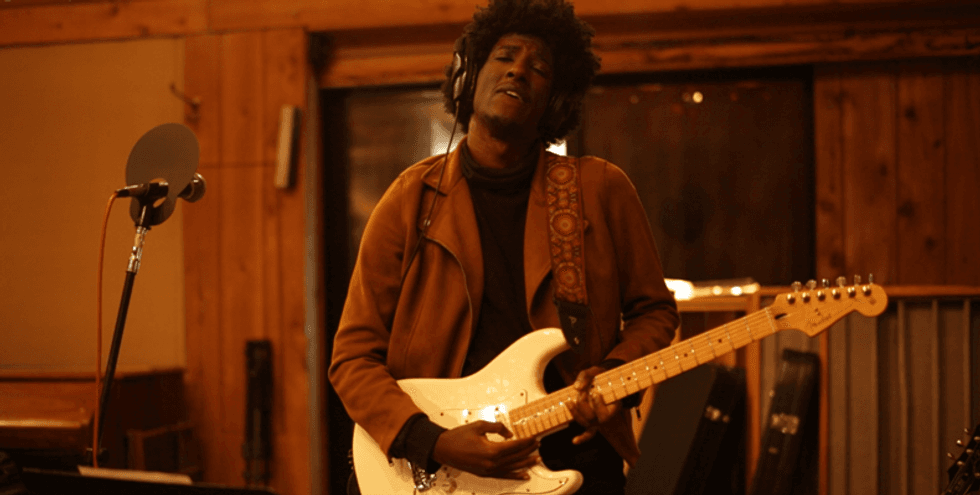
Burnham rips a solo at Carriage House Studios.
Photo by Jeff Schroedl
Case in point is “Midnight Waterfall,” which boasts an ethereal intro, some colorful chord moves, and a short, four-measure guitar interlude, but not an all-out solo. Burnham says, “That was one that Jeff showed me and I just came up with some of the stuff after, but I knew that—especially for the intro—since it was called ‘Midnight Waterfall,’ I had to make something that would sound like a waterfall. And I have a pedal called the Waterfall [the RFO Electronics Waterfall vibrato/chorus].” They didn’t use that pedal in the studio, but instead used a Dawner Prince Viberator to get the same effect.
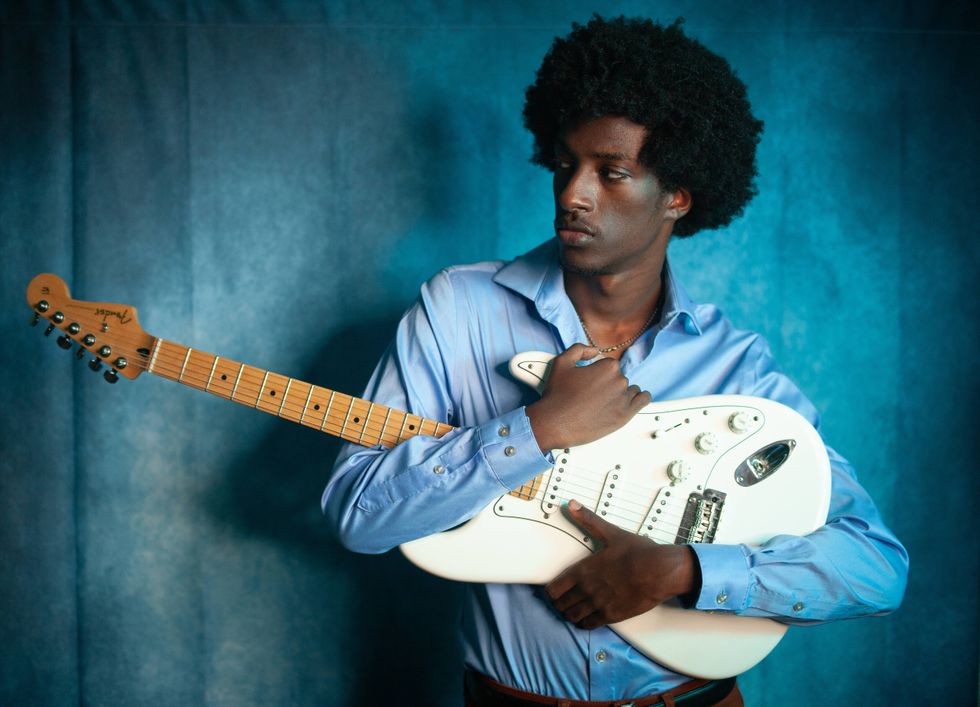
There are two slow blues on Roots & Wings, each with notably different characteristics. The album closer, Elmore James’ “Bleeding Heart,” is the only cover song on the album. For that track, Burnham pulled out his first full-sized guitar, an Epiphone Les Paul. The half-step tuned-down “The Last Thing I Remember,” meanwhile, is a slow blues in G that hints at Stevie Ray Vaughan’s “Texas Flood,” which Burnham has covered several times in his short videos. His white Fender Stratocaster was employed for that one. “I always liked ‘Texas Flood,’ and since we wanted to have two slow blues on the album, I didn’t want them to be the same, where they’re both, like, chill, because ‘Bleeding Heart’ is a more traditional solo,” he says. “It’s not as in-your-face, and you can calmly listen to it. But I wanted to make ‘The Last Thing I Remember’ this big thing that’s right in your face. It might be in the same key as ‘Texas Flood,’ but that wasn’t necessarily intentional.”
“I know for a fact that there’s people that follow me that probably have never heard of Buddy Guy.”
If fate hadn’t intervened, Burnham might have made his mark on drums instead of guitar. He recalls, “My dad introduced me to a lot of older music; stuff like the Beatles, the Rolling Stones, and a lot of jazz stuff. From there, I wanted to learn to play drums, and started off with drum lessons at nine. When I was 10 or 11, I started guitar lessons. I had three different guitar teachers, and I stopped when I was 18.”
When it was time for college, Burnham enrolled at Central Connecticut State University as a percussion major, gaining acceptance by auditioning with the jazz standard “Take Five” and the Pointer Sisters’ “Cloudburst.” “If I knew how to read music on guitar, I definitely would have tried out for guitar there,” he admits. “But for some reason, being able to read drums was a lot easier, just because it’s more like beats and patterns. That was always easier than, ‘What note is that?’”
Photo by J.B. Lawrence
There’s a fresh rawness about Burnham’s approach. While he took lessons for almost half his life, he’s not tied to convention. He’ll tune down a half-step like Hendrix or Stevie Ray, but he’ll also tune down a whole step, or “way down,” when he’s on his acoustic. His most notable departure from the norm is that he doesn’t use a pick at all. Rather, he articulates everything only using his right-hand thumb (à la Wes Montgomery, who Burnham has recently started checking out), or a combination of thumb and fingers. “Everybody starts off first learning guitar with the thumb, and I was just too lazy to graduate to a pick,” he says. “It was always uncomfortable for me to use a pick. Flicking the thumb up and down just kind of happened. It wasn’t really anything that I planned. Usually, if I’m soloing, I just use my thumb. If I’m strumming, I pretend like I’m holding a pick and I use all my nails.”
Burnham is re-introducing the blues to a whole new generation, many of whom would have no connection to the genre otherwise. “I know for a fact that there’s people that follow me that probably have never heard of Buddy Guy and stuff like that,” he says. “But they still like me, which means they’re still technically liking the genre, because that’s the sort of genre that I’m in. I feel like the way to keep a genre alive is to change it, but also have the same sort of feeling. If you want to keep blues alive, you’re going to want to have the essence of it there in the album, but you’re also going to want to change it so that you can make it interesting for the new generation that are going to listen to it.”
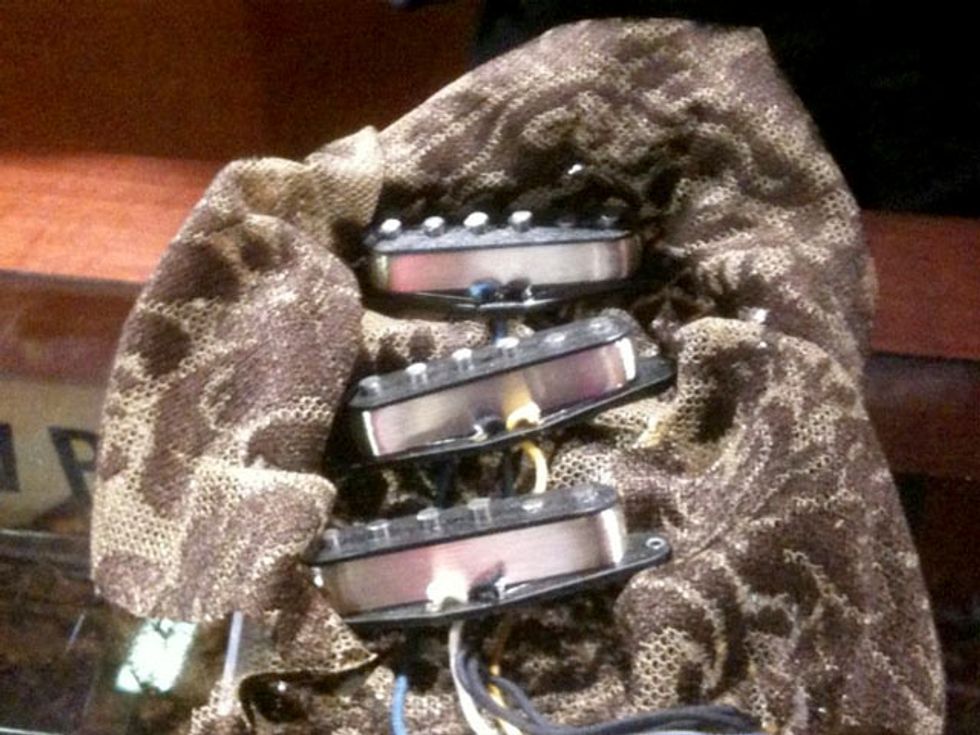
After successfully replicating Sayce’s ‘50s “Mother” Strat® pickups in 2025, Sayce and Seymour Duncan have teamed up to recreate the sound of his other treasured vintage Strat – Big Daddy.
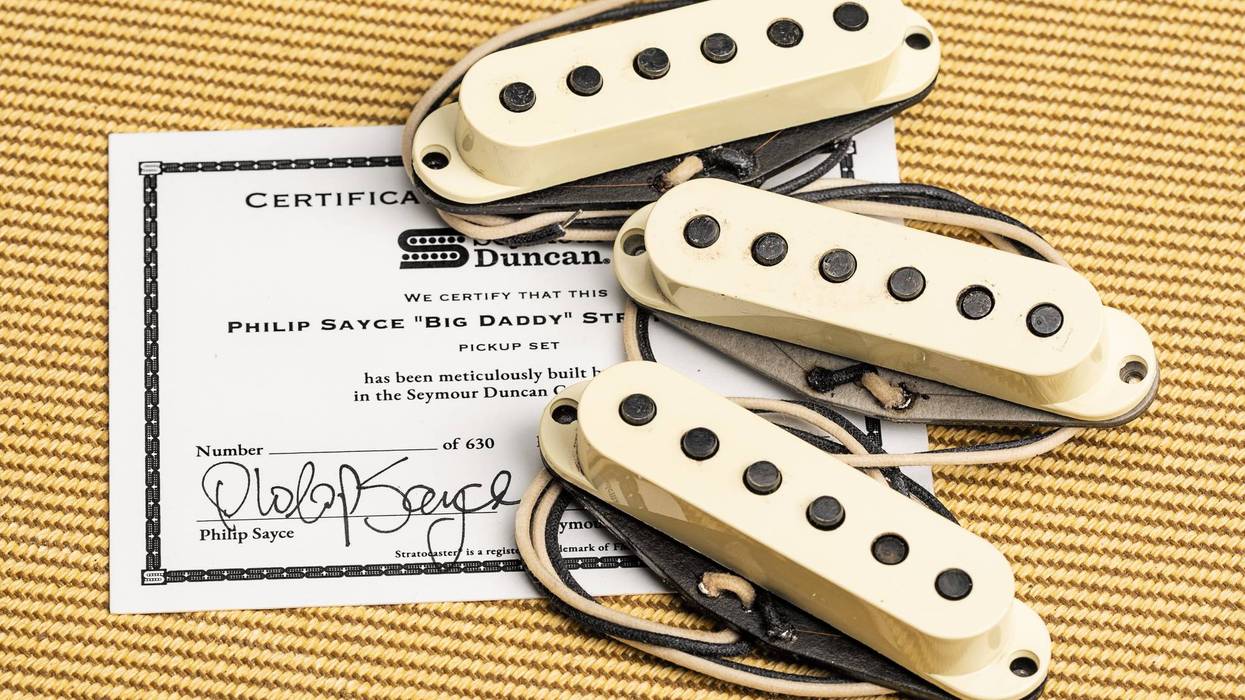
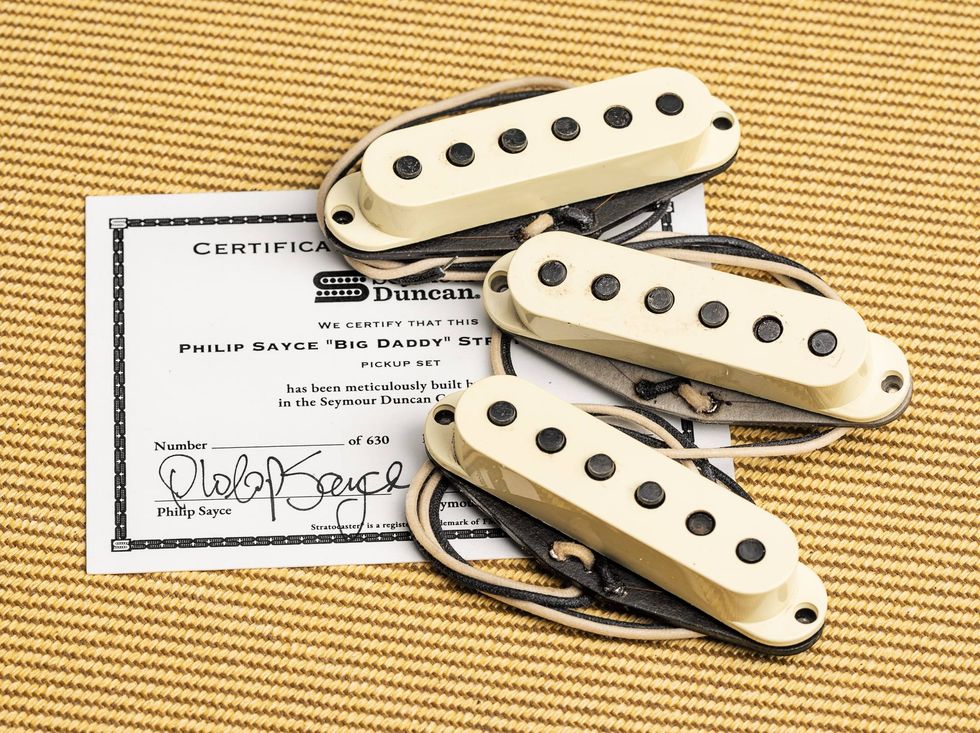
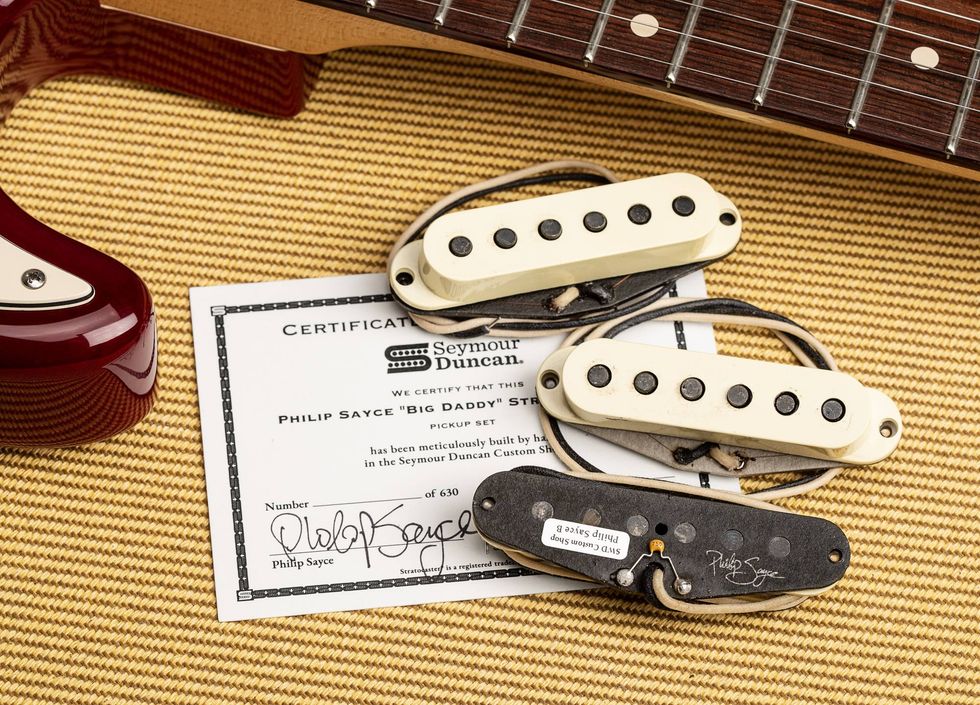
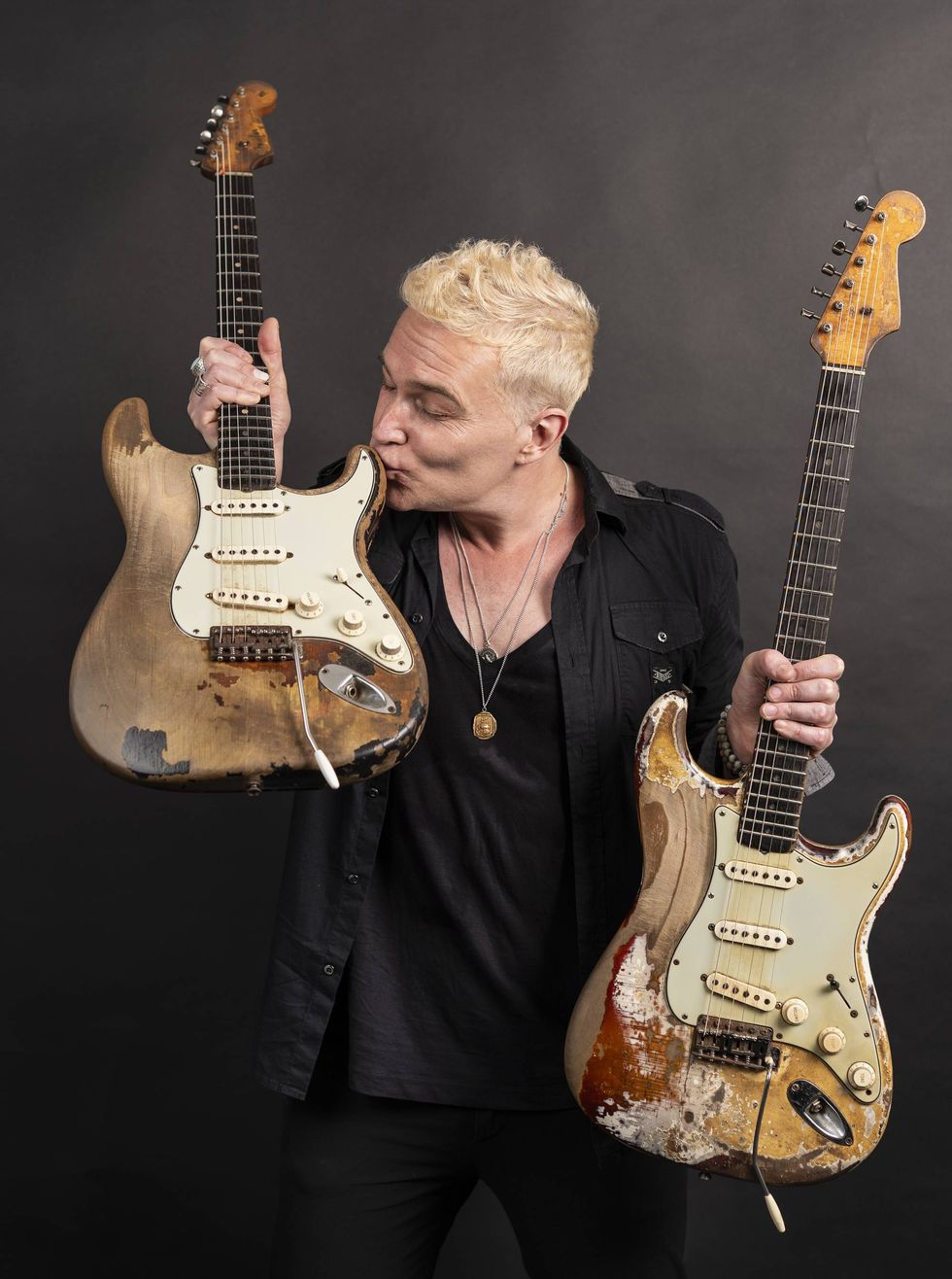
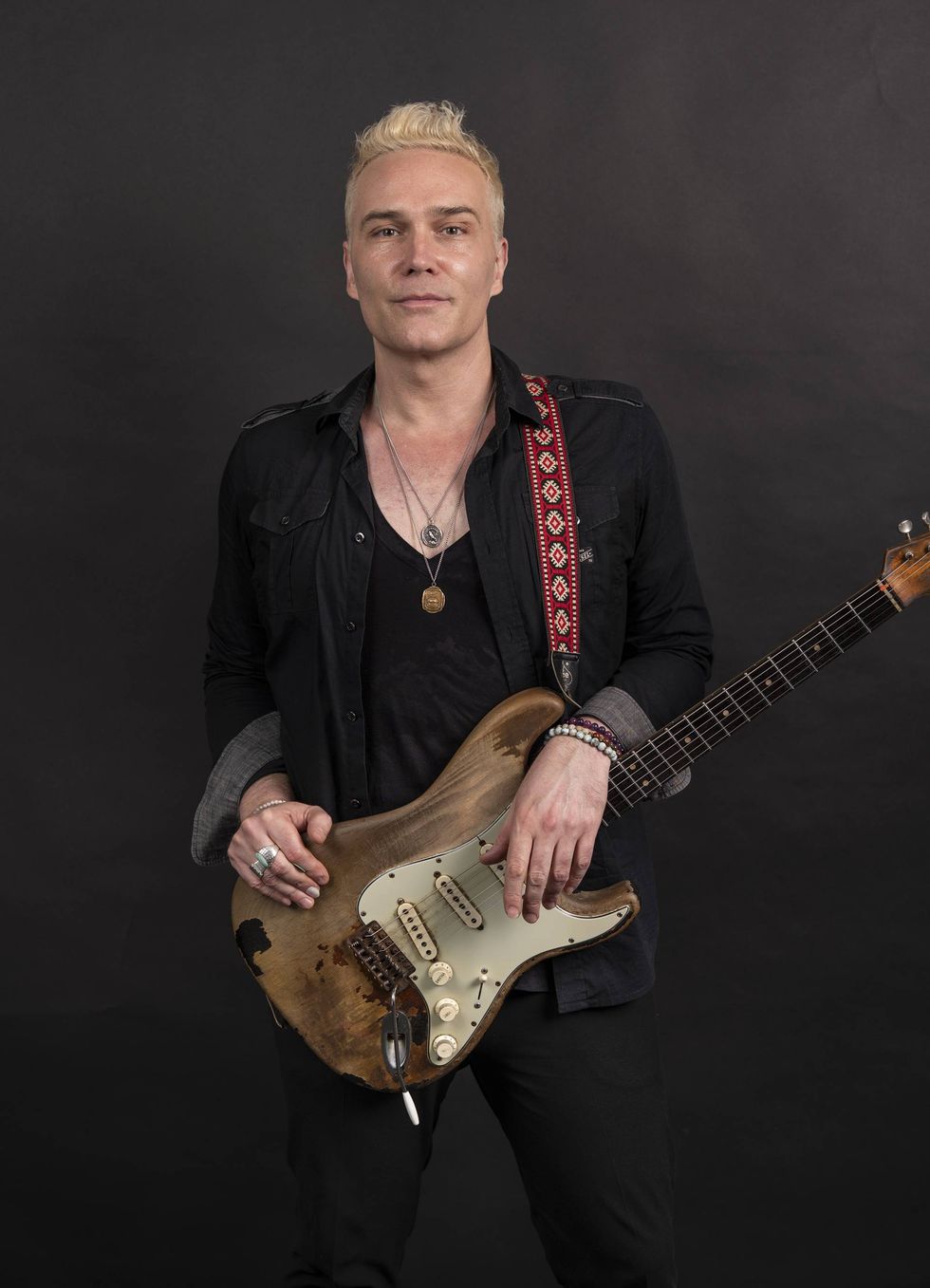
Santa Barbara, CA – June 16th, 2026 – Seymour Duncan has introduced The Philip Sayce “Big Daddy” Stratocaster® Pickup Set. After successfully replicating Sayce’s ‘50s “Mother” Strat® pickups in 2025, Sayce and Seymour Duncan have teamed up to recreate the sound of his other treasured vintage Strat – Big Daddy. These powerful pickups have been fine-tuned in the Custom Shop to match the hard-hitting tone that these ‘60s Strats are famous for.
Early 1960s voicing for a powerful vintage Strat® tone
Alnico 5 Magnets
75 pF Capacitor on the bridge to reproduce the original pickup’s sweet high end
Philip Sayce’s signature pad printed on the vintage-correct flatwork
First 630 sets come aged in the Custom Shop with limited-edition packaging and certificate of authenticity signed by Philip Sayce and Seymour W. Duncan
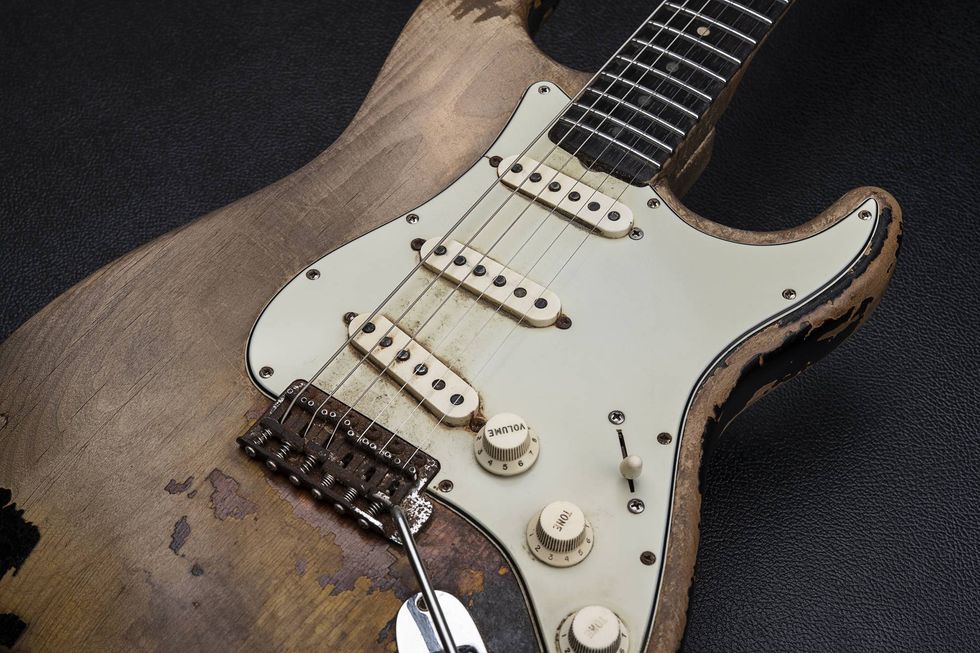
The Philip Sayce “Big Daddy” Stratocaster® Pickup Set is a tonal tribute to the pickups found in one of Philip’s favorite vintage guitars. Capturing all the power and character that ‘60s Strat® pickups are known for, the Big Daddy set is a snapshot of how a great set of pickups sound after 60+ years of aging and countless high-intensity performances.
Philip Sayce has solidified himself as one of blues guitar’s modern powerhouses, and anyone who hears his signature licks can tell you: he really knows his way around a Stratocaster. Sayce is known for playing two iconic vintage Strats: Mother and Big Daddy. While they’re both from 1963, they have completely different personalities. Mother sports a set of pickups from 1958, slightly underwound, with an articulate and airy tone characteristic of '50s Strat pickups. Big Daddy is big and muscular, epitomizing the best of what ‘60s Strats have to offer.
In the early 1960s, Fender’s Stratocaster pickups changed slightly – with higher output and a punchier sound. This led Philip to seek out 1963 Strats throughout his time playing with Jeff Healey, Melissa Etheridge, and in his solo career. After years of searching, he found Big Daddy, a 1963 sunburst Stratocaster that became one of his favorites on stage and in the studio. Today, the neck and bridge pickups are original to the instrument, and the middle pickup was swapped for a carefully selected early-1965 gray bottom Strat pickup. The combination made Big Daddy “like a steamroller” in Philip’s words – the guitar he reached for when looking for a massive Strat sound.
To recreate these special pickups, the Seymour Duncan Custom Shop and engineering team took special care to develop a recipe that would sonically match the tone, feel, and output characteristics of the originals: A full-bodied neck pickup, “greasy” and expressive middle pickup, and a unique bridge pickup with the perfect amount of power and highs that cut through without being too harsh.
Through careful measurement and sound testing – the Custom Shop team was able to deliver a pickup set that perfectly nailed the tone and attitude of Philip’s guitar. As Philip’s original bridge pickup aged, the copper wire made direct contact with the Alnico 5 magnets, resulting in a subtle smoothing of the high end. To recreate this signature sonic fingerprint, Seymour Duncan’s engineering team introduced a micro-capacitor soldered to the back of the pickup. This gently shifts the resonant peak, producing the sweet treble response needed to round out this balanced set.
In honor of Big Daddy’s 1963 vintage, the first 630 sets of the Philip Sayce “Big Daddy” Stratocaster® Pickups are specially aged in the Custom Shop to match the look of the originals. They include a certificate of authenticity signed by Philip and Seymour W. Duncan inside the limited-edition packaging. All sets are pad-printed with Philip’s signature on the flatwork.
Seymour Duncan’s Philip Sayce “Big Daddy” Stratocaster Pickup carries a street price of $375.00. For more information visit seymourduncan.com.
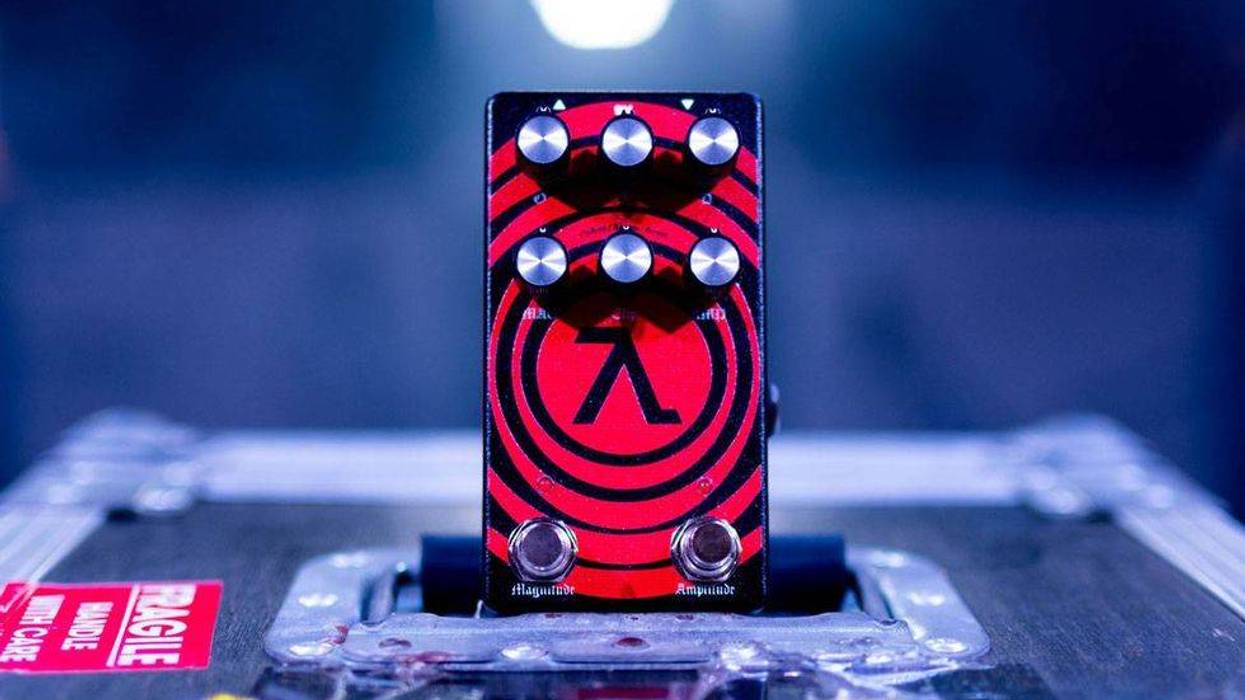
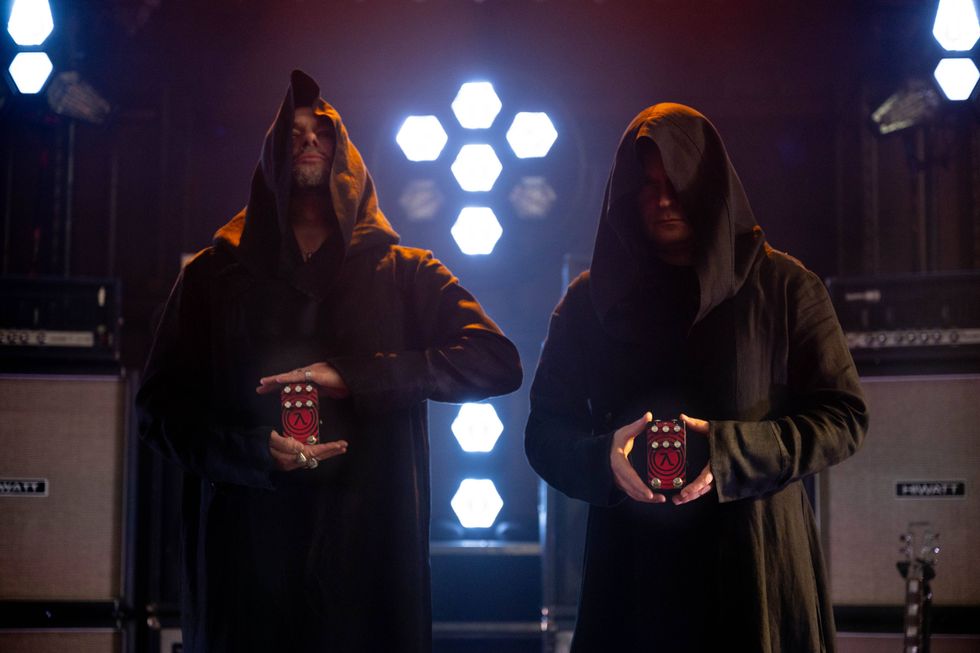
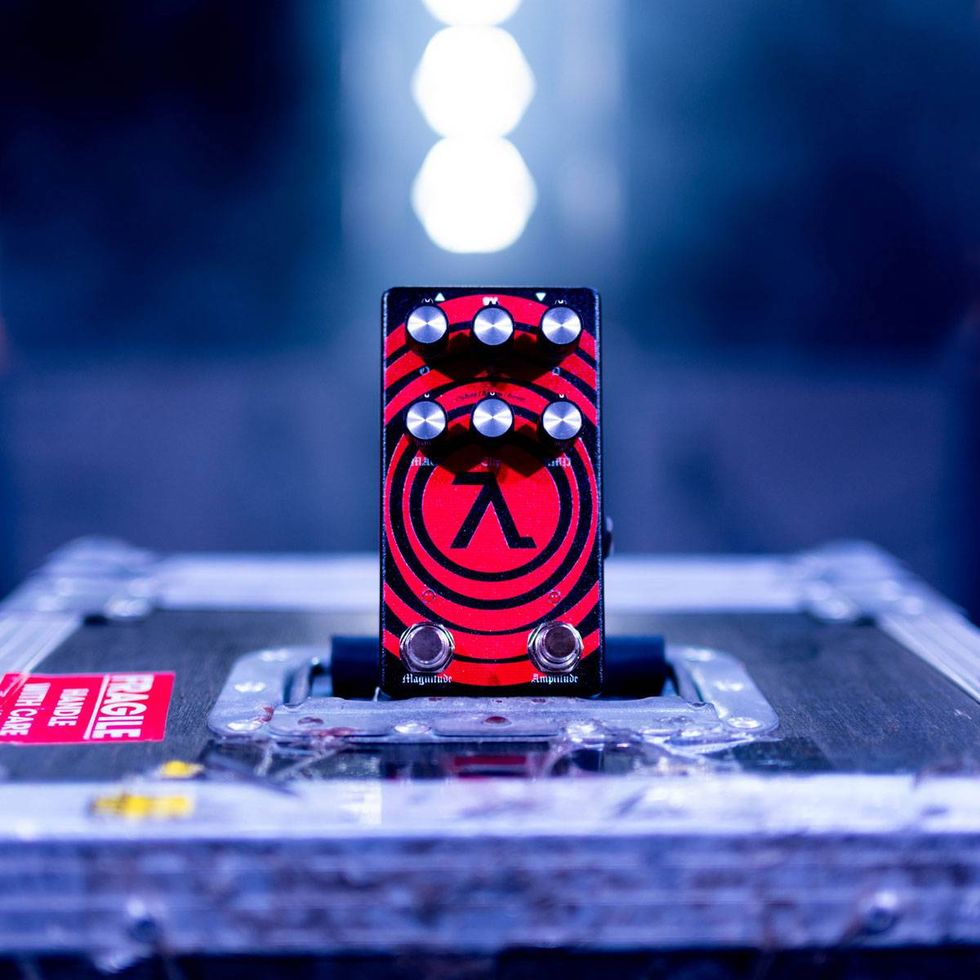
Sunn O))) and EarthQuaker Devices are pleased to announce that the Sunn O))) HalfLife Octave Distortion + Booster has officially joined the permanent production lineup. Combining the crushing power of the Life Pedal V3 with a compact, pedalboard-friendly footprint, the HalfLife offers all the sonic devastation of its predecessors at roughly half the size.
“I’m pleased to unveil the HalfLife, the new mutation and creation in the Life Pedal lineage,” said Sunn O)))’s Stephen O’Malley. “Graced with our sonic and visual aesthetic sensibilities, the continuous path of honing the core conceptual matter of the O))) story in the broadest possible way. Enjoy this filthy pleasure.“
The Sunn O))) Life Pedal circuit was originally designed to capture the specific front-end chain used during the Steve Albini-produced Life Metal recording sessions. The original hand-numbered V1 release in 2019 was limited to 1,000 units and sold out almost immediately.
Photo by Dan Price
It quickly became a defining modern doom and drone-metal pedal, leading to the more compact Sunn O))) Life Pedal V2 in 2020. Limited to 2,500 units, it disappeared from the market just as quickly as its predecessor.
“At one point I felt like people were genuinely angry that we didn’t make more,” recalls EarthQuaker Devices Founder and President Jamie Stillman.
After the V2 release, Stillman meticulously refined the circuit to squeeze every last drop of crushing tone from modern, reliable components that were more readily available than the N.O.S. (new old stock) parts used in the V1 and V2. He also fine-tuned the octave section, making it more pronounced while retaining the low end.
The resulting Sunn O))) Life Pedal V3 arrived in 2022, bringing the pedal into permanent production for the first time. Today, the Life Pedal is ubiquitous not only among doom, noise, and experimental guitar players, but also among bassists, synthists, and studio engineers. It has even become EarthQuaker Devices’ most-cloned design.
Functioning as a three-headed sonic beast, the HalfLife begins with an octave-up fuzz inspired by vintage Shin-Ei FY2 and FY6 units. This feeds into a brutal take on the classic “rodent” distortion circuit, featuring three distinct clipping modes—OpAmp, Asymmetric, and Symmetric—for a wide range of grit and compression. The final stage is a discrete MOSFET clean boost engineered to push vacuum tubes into harmonic saturation and feedback bliss.
Though sonically closest to the Life Pedal V3, HalfLife offers some subtle variations in terms of functionality compared to the V3 to accommodate its form factor. In homage to the V1 and V2 designs, the octave is integrated directly into the distortion circuit rather than being independently switchable. The control layout has also been refined, with the Amplitude and Octave knobs swapping positions for a more intuitive experience when dialing in textures.
The results are astounding: there is breadth and luminosity of colour, vast sonic cosmoses, flashes of abstract colour (synthetic and objective) through resulting themes which emerged from the mastered depths of saturation and circuits between the two players and their mountains of gear.
“I’m ecstatic for the continuation of this LIFE-affirming collaboration with Earthquaker Devices,” Sunn O)))’s Greg Anderson said. “May the sounds you create from the Half Life be as deep as the forests and massive as the mountains"
Designed and manufactured by EarthQuaker Devices in the dark corridors of Akron, Ohio.
Features:
Sunn O))) HalfLife is a distortion with a blendable analog octave up and a booster
Features 3 different clipping options: Symmetrical Silicon, Asymmetrical Silicon & LED, and pure OpAmp Drive
Distortion and booster can be used independently
Expression pedal control over analog octave up
Octave blend allows total control over how much Octave is mixed into the circuit
True bypass with silent relay based soft touch switches
Features EarthQuaker Devices’ proprietary Flexi-Switch® Technology
Lifetime Warranty
Octave Distortion Input impedance: 1 MΩ
Octave Distortion Output impedance: <1 kΩ
Booster Input Impedance: 500 kΩ
Booster Output Impedance: <1 kΩ
Current Draw: 15 mA
Dimensions: 5" x 2.75" x 2.25" / 12.7 cm x 6.985 cm x 5.715 cm






![Rig Rundown: The Black Crowes’ Rich Robinson [2026]](https://www.premierguitar.com/media-library/youtube.jpg?id=66952027&width=1245&height=700&quality=70&coordinates=0%2C0%2C0%2C0)