Chris Kies has degrees in Journalism and History from the University of Iowa and has been with PG dating back to his days as an intern in 2007. He's now the multimedia manager maintaining the website and social media accounts, coordinating Rig Rundown shoots (also hosting and/or filming them) and occasionally writing an artist feature. Other than that, he enjoys non-guitar-related hobbies.
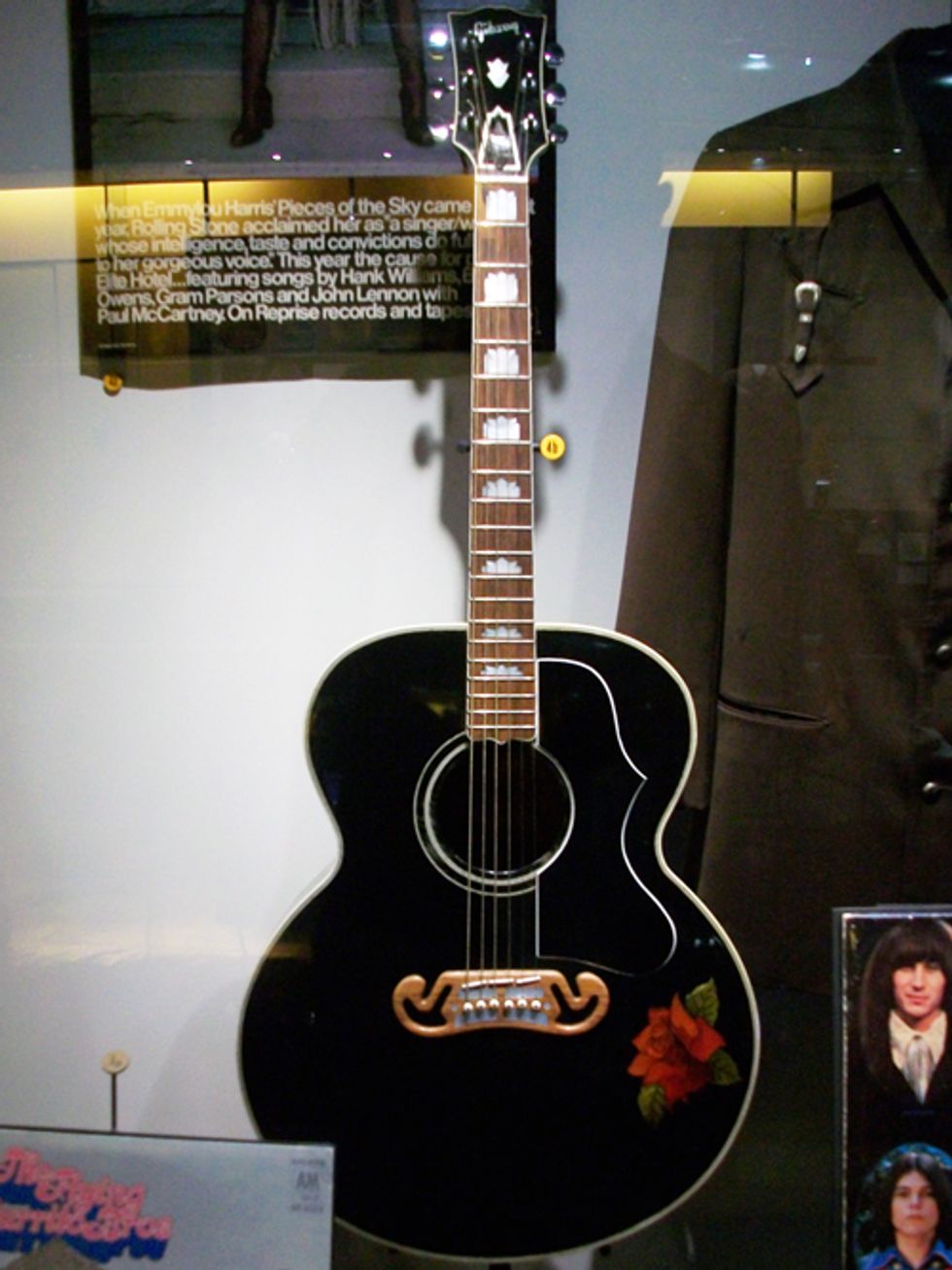
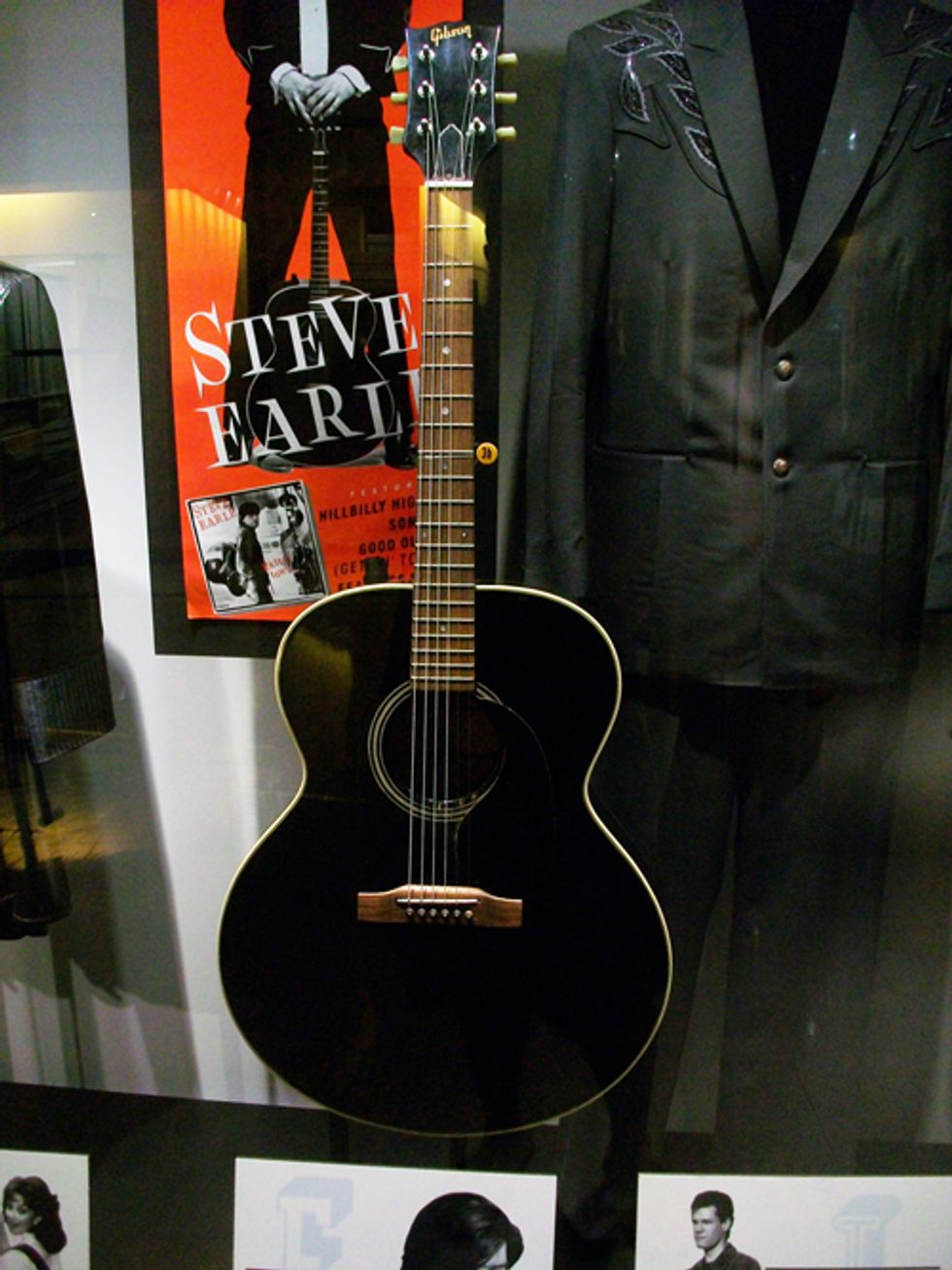
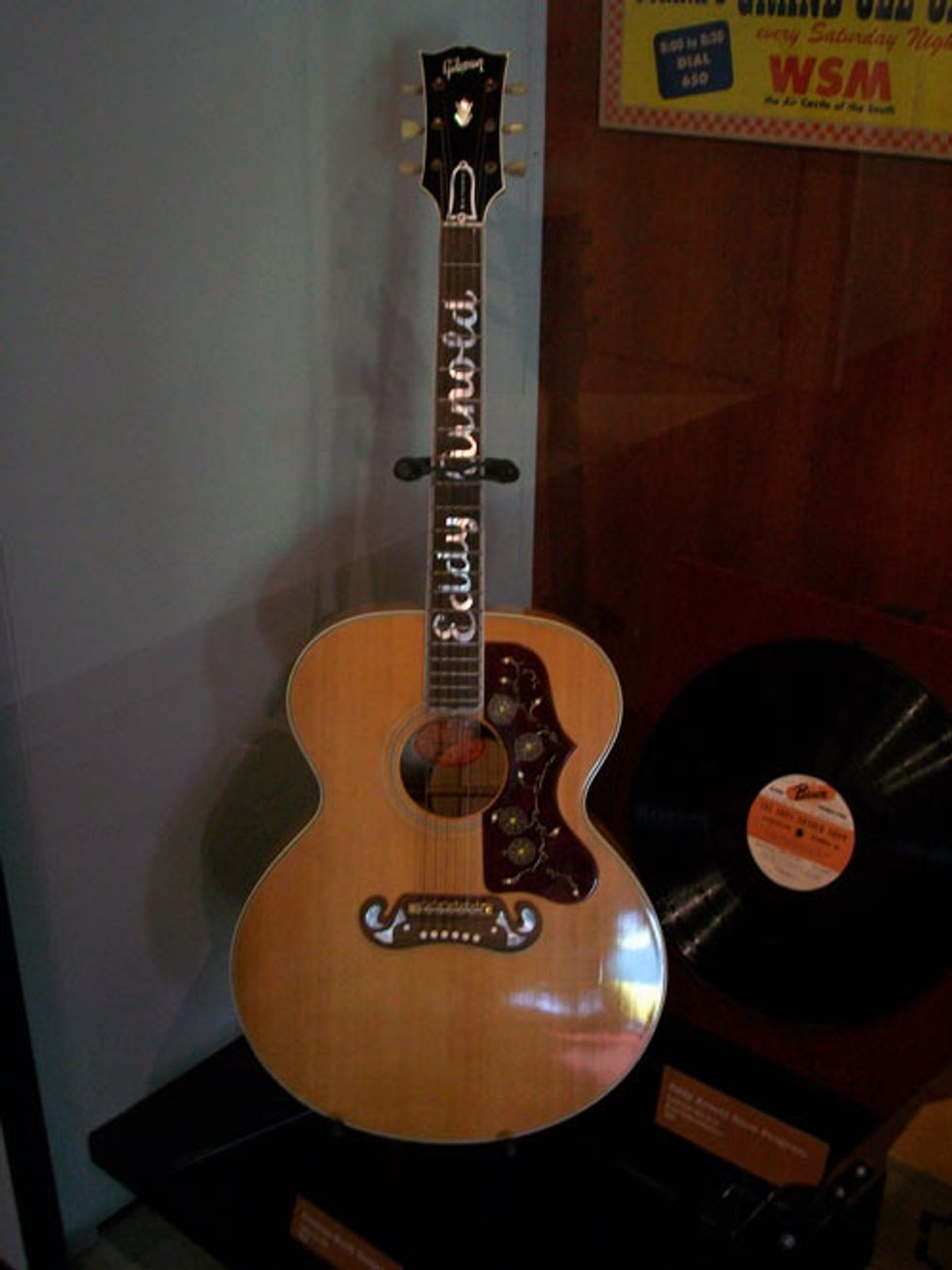
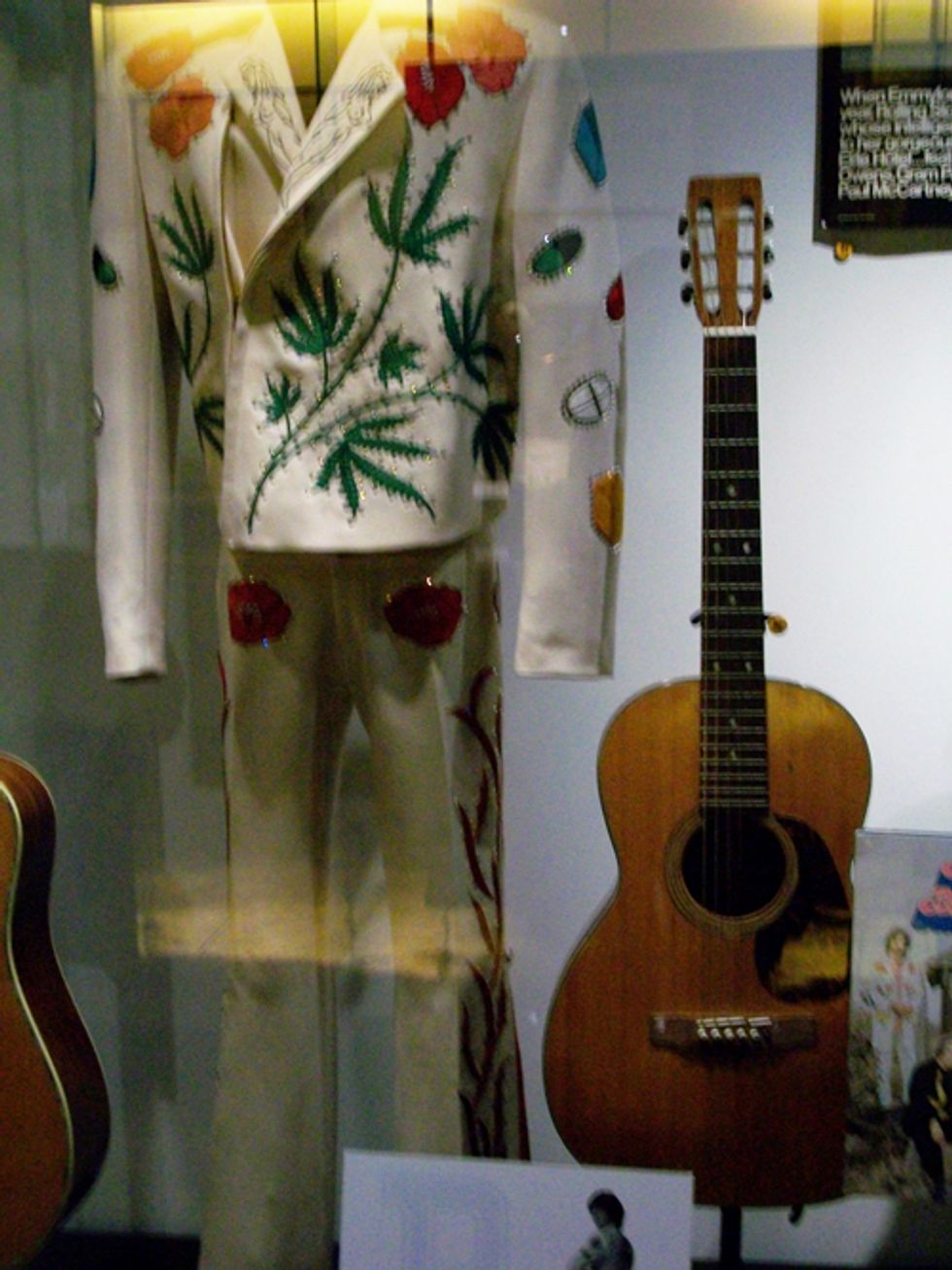
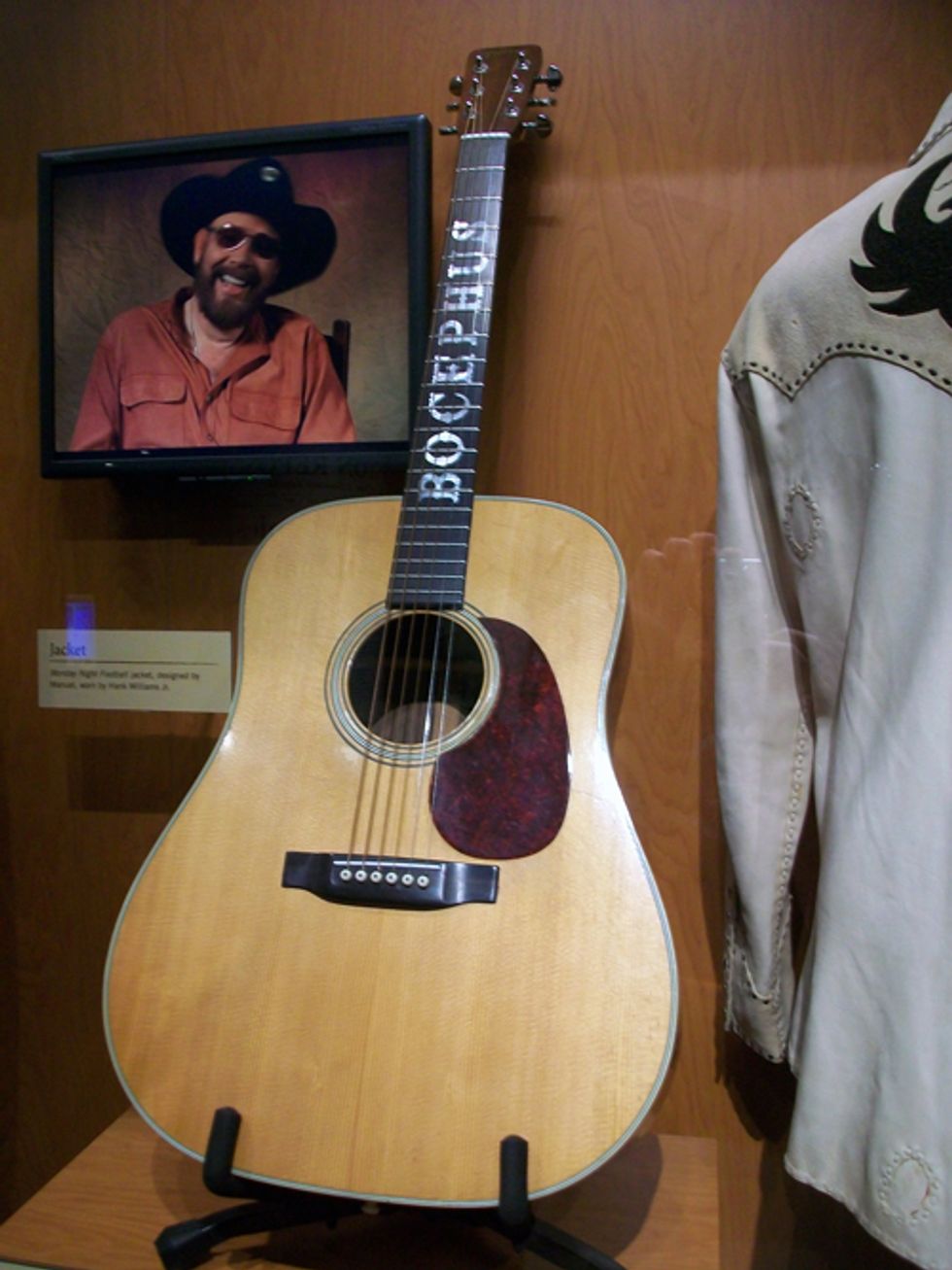
"Emmylou Harris broke through with her 1975 album Pieces of the Sky and its follow-up, Elite Hotel, and has consistently appealed to folk, rock and country fans. This is her custom Gibson J-200 acoustic used on countless songs and concerts."
Attack—essentially the rate and intensity with which a note rises in volume from its point of creation—is one of the coolest musical expressions you can mess with. If you play an instrument from the violin family it’s a fundamental part of your vocabulary. It’s used frequently in synthesis to conjure spooky, low-gravity atmospherics, and it’s an essential tool for taking the front end off some psychotic Moog sound that might otherwise explode like a foghorn six inches from your ear.
Guitar players know the potential of this effect well too. Volume swells can drastically recast a guitar line—evokingreverse tape,pedal steel, and deep space. But doing it well is not easy. Even on guitars like theStratocaster that lend themselves to volume swells by design, it takes technique, practice, and usually a very flexible pinky finger to make it work right. Electro-Harmonix’s Swello, which has origins in the attack filter section of the POG2, can do a lot of that work for you. But it’s capable of more than simple swells, with the ability to generate envelope filter- and wah-like sounds, big synth-style pads that are ripe forlooping, and much stranger fare.
Swing in Smoothly
Though they can be mellowing, soft attack and volume swell effects aren’t always subtle. For many players that prize precise, immediate attack, they are anathema. Swello—especially in the sans-filter “green” mode—is great at backgrounding the effect and making it more subliminal. At the lowest attack levels, you can use Swello in a capacity similar to a compressor to soften picking irregularities. At slightly higher but still subtle settings, it imparts a beautiful legato quality to melodic lines—especially enchanting in understated or deeply ambient delay and reverb contexts. At much slower attack rates, it evokes lush pedal steel tones and remarkably natural volume pedal or cello-like effects. There’s a lot of range to explore in the attack control alone.
"Swello ’s capable of more than simple swells, with the ability to generate envelope filter- and wah-like sounds, big synth-style pads that are ripe for looping, and much stranger fare."
While the Swello’s control set is minimal, players without experience in synthesis or in using filters and envelopes with guitar may find them less than intuitive. This isn’t a shortcoming of the EHX design—it’s simply inherent to the complex interplay between filter and attack effects. If you start twisting knobs casually and with no particular intent you can end up with filter and attack combinations that make a guitar sound 30 feet underwater—if not altogether absent. So, it pays to move slowly though these controls, observe the sensitivities in their interactions and pay attention to how very small, incremental changes—as well as where you play on the fretboard—can alter the response and output. Though getting to your destination can be tricky and require patience, there are many surprises to find along the way.
Overtone Organizer
As a player that uses volume swells as both an expressive tool and crutch, I loved Swello’s very natural volume pedal and cello-like effects. But I also own a POG2 and treasure that pedal’s capacity to add -2-octave content to an upswelling tone. That can be a preposterously big sound with reverb (the low synth parts in Vangelis’ Blade Runner opening sequence and the Golden Gate Bridge foghorn at the distance of a couple miles are a couple handy points of reference). And there’s plenty of it here when you get a deep resonant peak, slow attack, and filter modulation working in sync, and hang out on the low strings.
As with the POG2, boosting the high frequencies can make the pedal sound less organic—and at times even a bit cloying. Some settings also introduce digital artifacts, most noticeable in the quackier, mid-forward envelope filter-style tones. These sounds can be fun, but they’re not the Swello’s strong suit (and may disappoint players that demand vintage Mu-Tron authenticity from envelope filters). That said, there are plenty of ways to use high-frequency emphasis for pleasant coloration and to shape the attack, and at many such settings the output is largely free of digital aftertaste.
The Verdict
Swello, as the name suggests, specializes in very cello-like volume swells that sound organic, and enable you to keep your fingers on the strings and your feet away from expression pedals. At less than $150, it’s a great value for the slow-attack effects alone. However, players who explore its compression-like dynamics and the vast, unconventional tones found at atypical filter frequency and modulation settings will discover that the Swello is far more than it appears—truly greater than the sum of its parts.
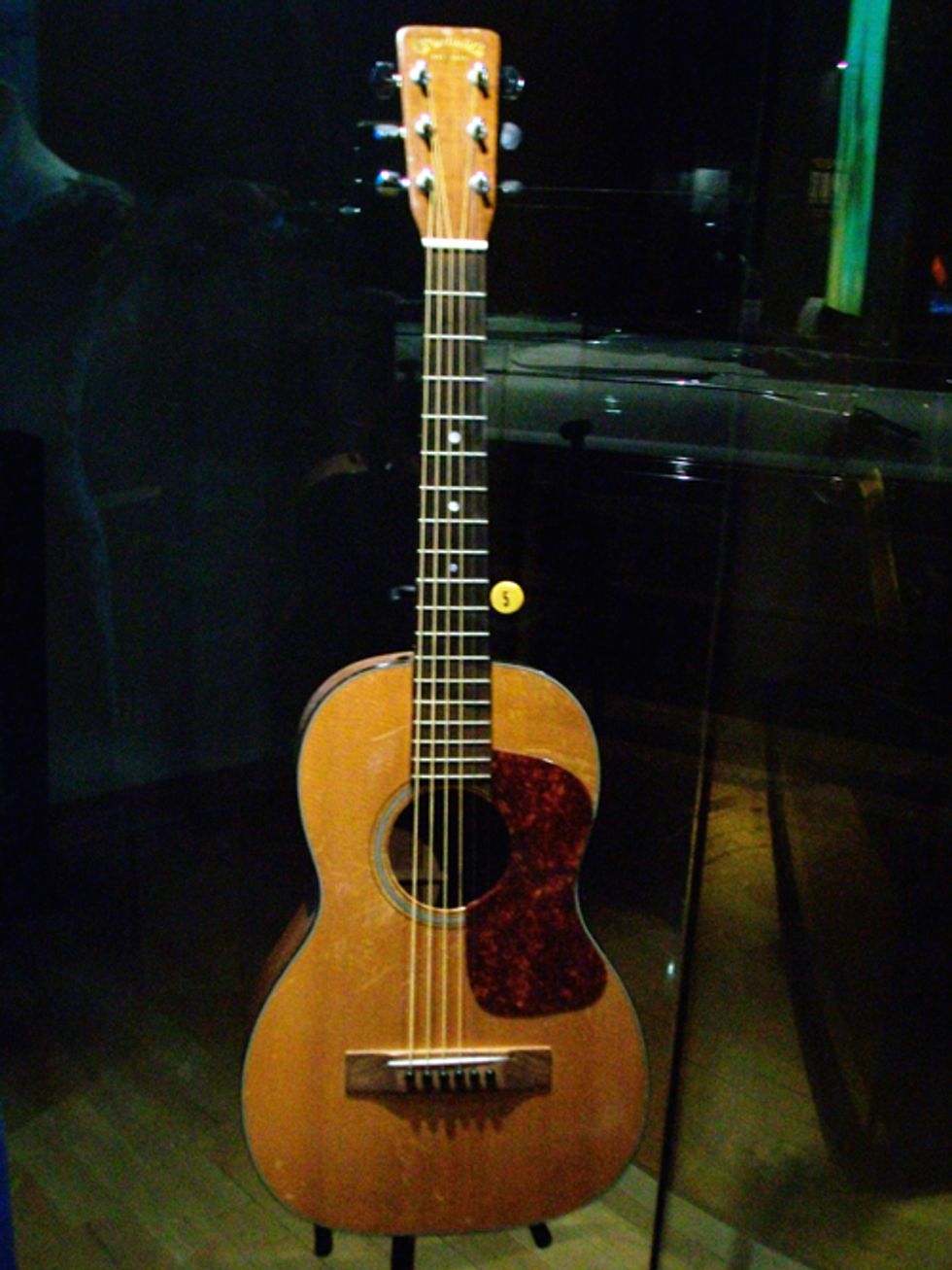
On November 14, 2025, I’ll be giving a presentation at the Royal College of Music in London. It’s in conjunction with a unique guitar they have on display: Kurt Cobain’s 1959 Martin D-18E, the one he played on MTV Unplugged. To honor the occasion, we’ve built a modern reproduction of that particular guitar for my friend Craig Thatcher to play at the event—because I don’t think they’ll let him play the original. (Yes, that one … the guitar that sold for $6 million at auction in 2020.)
MTV Unplugged: What a good idea that was! And talk about good timing. The 1980s were not a good time to be in the acoustic guitar business. My dad joined the family business in 1955, the year I was born. The mid-’50s were the era of the folk revival. Acoustic music was taking hold in coffeehouses and on college campuses. Thanks to bands like the Kingston Trio, folk music was becoming pop music.
By the early ’60s, demand for Martin guitars outstripped the capacity of our old factory on 10 West North Street in Nazareth, Pennsylvania. My dad convinced my grandfather that we needed a new factory to keep up with the boom. So in 1964 we opened the new plant at 510 Sycamore Street. What else happened in 1964? The British Invasion.
Yes, Bob Dylan went electric, but the acoustic guitar remained a mainstay on many folk-rock songs. Crosby, Stills, Nash & Young and others drove demand skyward. We couldn’t keep up. These were good times. Politics, the Vietnam War, and the fight for civil rights … it all gave the younger generation reasons to speak out and speak up, and the acoustic guitar became an integral part of that messaging.
By the late 1970s, music was changing. Disco was taking over. The Eagles were the last significant folk-rock supergroup. By the 1980s, it was tough going for acoustic guitars. Several of our smaller competitors closed their shops. Pointy electric guitars were flying off the shelves, thanks to hair metal. The Yamaha DX7 and other digital keyboards were everywhere.
“By the end of the 1990s, our production had increased fivefold compared to the start of the decade.”
Our business struggled. My dad retired and moved to Florida. I had just graduated from college and joined the family business full-time, at a difficult moment. My grandfather passed away in 1986, and at 31, I became CEO. I was scared. My dad had encumbered the company with a crushing level of debt. We were on the verge of bankruptcy. I wasn’t sure exactly what to do, but I was determined to not allow my multi-generational family business to disappear. We cut back expenses and focused on what we did best: flat-top acoustic guitars. One of my dad’s better decisions was to acquire a string company. String sales helped us survive those lean years.
One day, my friend and colleague Dick Boak walked into my office. “I got a call from MTV,” he said. “MTV? The rock video station?” I inquired. “Yes,” he replied. “Why did they call us?” I asked. “They have this idea,” Dick said. “They want to get rockers into the studio and have them play their famous songs on acoustic guitars.” Hmmm. Not a bad idea.
“Why did they call us?” “They weren’t sure if the rockers they were going to ask even had acoustic guitars,” he said. “And they’re going to film some shows in New York. Could they borrow some guitars from us if needed?” I looked at Dick and smiled. He took that as a “yes.”
MTV Unplugged launched in 1989. It started slowly. Initially, few people noticed. But it built momentum. In 1992, Eric Clapton recorded his Unplugged segment at Bray Studios in London, playing his 000-42 Martin. The subsequent album became a phenomenon, garnering multiple Grammys, selling millions of copies, and becoming the best-selling live album of all time.
In 1993, Nirvana performed one of Kurt Cobain’s last televised sets. After his death, MTV Unplugged in New York was released. It sold over 5 million copies and won a Grammy for Best Alternative Music Performance. As the momentum grew, our phones started to ring. And ring. Players were rediscovering how cool it is to hold a wooden box against their body and feel it vibrate as they played their favorite songs. The acoustic guitar was back. Thank you, MTV Unplugged. (Fun fact: Many of the guitars played on MTV Unplugged were actually plugged in!)
What started as a simple TV concept helped usher in a full-fledged acoustic revival. For Martin, it arrived just when we needed it most. By the end of the 1990s, our production had increased fivefold compared to the start of the decade. Sometimes, all it takes is a well-timed idea and a few beautifully-built guitars.
Get ready to dive into the gear-head dream: we teamed up with our friends at eastside music supply and pedal-wizard Blair White to build a pedalboard inspired by Queens of the Stone Age. From fuzz to filter sweeps, octaves to tape echo, we traced the band’s signature sound and then assembled a stacked board you could win. Whether you’re chasing heavy riffs or sculpting atmosphere, this one’s for pedal lovers and riff monsters alike.
The groundbreaking DC7 has a one-inch (25,4mm) profile and weighs 1.1 pound (500 grams) thanks to the pure 2-stage switch-mode technology inside. The profile may be low but the power ratings are certainly not – the DC7 puts out a maximum of 48W and allows the user to connect multiple high-current effects such as devices from Effectrode, Line 6 and Eventide without noise of any kind.
The Whammy Ricochet lets you bounce your playing up or down in pitch in controlled or crazy shifts. A momentary switch and customizable independent rise and fall time ballistics, allow you to get the Whammy action you know and love without the use of a treadle. Just hold your foot on the footswitch and let the Ricochet do the rest. Seven pitch selections – 2nd, 4th, 5th, 7th, Octave, Double Octave, and Octave+Dry, as well as a toggle to select up or down for the selected pitch.
The Whammy Ricochet also has latching footswitch mode so you can rise or fall to pitch and stay there, and an LED ladder that shows your shift trajectory at all times.
All these controls combine to create classic Whammy pitch-shifting as well as new sounds never heard before.
We've brought back the most sought after Parametric EQ pedal with groundbreaking updates. We kept everything people loved about the original ParaEq and added more fidelity and control.
In late 2023, we had a cool idea for a compact pedal, based on a recording technique pioneered in the 1950's… This radical, yet deceptively simple technique elevated great recordings to downright incredible, enhancing the depth, character and tonality through a process called Double Tracking. This simple, yet elusive concept was initially executed by recording a track twice and overlaying the two [nearly] identical takes on top of each other.
Fast forward 70-some years and we can now create "double-tracked" sounds in real-time, delivering the full, rich and complex intensity that was once only possible by employing slick studio tricks during a session!
The 2023 compact DoubleTracker was an instant hit, and we received a ton of feedback and praise regarding the pedal, but there was a reoccurring theme within…
Make it STEREO!!
Well, it wasn’t easy, but we are VERY proud to say: we did it! And it sounds marvelous. (Literally marvelous, as in something one will marvel at/about.)
XPND is the pedalboard that adapts to you. With its patented telescoping technology, XPND lets you instantly change the size of your board and number of pedals – forever expanding your sonic potential. XPND also features a unique cable management system and comes fitted with loop Velcro, keeping everything neat, while making swapping pedals super easy. XPND 1 is built to accommodate one row of pedals and is expandable from 14" to 24" and XPND 2 is built to accommodate two rows of pedals and is expandable from 17"to 31".
D’Addario’s Custom Series Flat Patch Cables optimize pedalboard space by allowing you to place pedals closer together while accurately transferring all the subtle details of your playing. Utilizing the latest in high-quality instrument cable manufacturing technology, these cables feature an oxygen-free coaxial copper conductor with two layers of noise-rejecting shielding, formulated for extremely low capacitance and handling noise. The lower cable capacitance allows your instrument’s brilliance, presence and character to be transmitted with the utmost transparency. The Flat Patch Cable plugs feature the patented Geo-Tip™, ensuring a secure connection in any instrument, pedal, or amplifier. Additionally, encapsulated soldering points and molded strain relief combine to deliver the ultimate long lasting, high-performance patch cable.
A warm grittiness to the warble, a rippling, wooshing, bubbling irregularity to the modulation and a dynamic response to your picking are all hallmarks of the true vibe experience.
Thicker and chewier than any chorus, earthier than any phaser and uniquely magical in front of a driven amp, the perfect vibe pedal moves you to dig in and play without inhibition.
This feeling has been difficult to find outside of large and expensive fully-analog boutique units, but the search for that elusive experience is now over.
Delivering vintage vibe tone that’s second to none with simple and powerful controls for instantly obtaining a rich variety of captivating sounds, UltraViolet is the vibe pedal you’ve been looking for.
The StroboStomp Mini™ delivers the unmatched 0.1 cent tuning accuracy of all authentic Peterson Strobe Tuners in a mini pedal tuner format. We designed StroboStomp Mini around the most requested features from our customers: a mini form factor, and top mounted jacks.
Introduced in 1974, the Roland RE-201 Space Echo stands among the most legendary and sought-after effect units ever produced. This tape-based classic remained in production for over 14 straight years, and its distinctive rhythmic echo sounds, warm character, and highly playable sonic quirks still inspire musicians, producers, and audio mixers over four decades on.
Backed by intensive R&D and our latest innovations, the RE-202 faithfully delivers the authentic sound and behavior of the Space Echo like never before. Built by the company that designed the original, this advanced pedal captures the RE-201’s magic in flawless detail, from the magnetic tape and motor properties to the vibrant spring reverb and colorful preamp circuit. And to take things even further, we’ve expanded the vintage Space Echo experience with lots of new features tuned for today’s music.
The Dispatch Master is a hi-fi digital Delay & Reverb Device that combines independent delay and reverb effects into one space-saving enclosure, so you can keep deep ambient echoes (or just a quick slapback) on speed-dial.
The best-selling EarthQuaker Devices pedal just got bester [sic] with new Flexi-Switch® Technology! Want to dip into ambient delay and reverb sounds for just one note? Press and hold the footswitch for as long as you use the effect, release it when you’re finished, and resume your regularly scheduled dry sound. To use the Dispatch Master as a normal effects pedal, press the switch once to activate and again to bypass.
Yesterday Effects Private Military Auditor - Eastside Exclusive
The Private Military Auditor is a collaboration between Yesterday Effects and us, your favorite real life music store in the whole world, eastside music supply.
What we got here is a highly tuned, 2-in-1 fuzzstortion + filter. One knob a piece, with the optional expression port out to sweep the frequency of the filter if you should choose to do so!
Left side of the pedal is the fuzz, the knob controls the volume. That's all you need because this baby is DIALED. Harmonically rich, with great note definition and insane sustain. The volume cleanup is killer and reminiscent of how fuzz faces feel. Plays well with every pickup combo we've thrown at it. And gives a surprisingly large amount of tonal variation depending on your pickup/volume/tone situation. Just a really great fuzz/distortion on it's own.
Right side of the pedal is the filter, the knob controls the sweep of the frequency. Kick this baby on when you're ready for your leads to stand out, or just to give yourself that gnarly parked wah tone.
this is an analog preamp inspired by the Decade practice amp, which was the secret to the bassist of Stone Temple Pilot‘s tone. Get that on your board and secure the crunch for whatever you run through it! Works with 9v or 18v (for a more amp-like response).
Packed with knobs that let you control everything from tight, radically fuzzy sounds that gate off instantly when you stop playing, to intermodulating oscillations that fight for control of your guitar as your notes decay, to shortwave radio sounds, ripping velcro and octave-like fuzz. Includes an on/off LED and center-negative DC power jack.
The Argonaut is a no frills pedal offers a clean-ish octave up sound. Using it alone offers you a gnarly, ring mod-esque sound that is pretty funky. The fun begins when you combine it with your favorite overdrive or fuzz pedals. Once combined all the iconic octave tones we know and love begin to jump out of your signal. It’s very touch responsive, weird, and fun all rolled into a small little package. The Argonaut uses a pair of Hand matched NOS Germanium Diodes, this gives the most prevalent octave up effect that is present all over your guitar neck. Unlike traditional octave pedals the octave effect can be heard up and down the guitar neck, so get ready to get weird once you add this bad boy to your setup.
We like the Argonaut after a fuzz pedal but before an overdrive. Like all things though, your mileage may vary and there is no right answer with guitar tones. Experiment and you’ll find what works best with your setup and hands.
he Echodriver Limited-Edition Reissue has been the core distortion sound of Troy Van Leeuwen (Queens of the Stone Age), delivering a harmonically rich, mid-scooped voice with the clarity and power to cut through any mix over his last few years of touring.
The tone stack uses a notch-style filter, similar to classic fuzz circuits, offering a broad sweep of EQ flexibility. The Tone control scoops mids at center, rolls off low end when turned down, and rounds off highs when pushed up—letting you shape the pedal’s response to your guitar and amp with surgical precision.
Clipping is handled by a dynamic combination of MOSFET and NOS Germanium diodes, producing warm, touch-sensitive gain. A right-side toggle engages Silicon clipping for a more aggressive, compressed response. The left toggle bypasses the tone stack completely, delivering a full-range, unfiltered drive straight to your amp.
The in-demand gunslinger brings a load of silverware to arenas across the world.
Devon Eisenbarger, session ace and touring shredder for stars including Chappell Roan and One Direction’s Zayn Malik, met up with PG’s Chris Kies at Nashville’s Bridgestone Arena before hitting the stage with Katy Perry to show off the sleek 6-string rig she’s using on Perry’s Lifetimes tour.
Eisenbarger cut her teeth on a Stratocaster, and its sonic character still feels like home. She filmed a demo for Fender using this American Professional II Strat with a coil-splitting humbucker in the bridge—the best she’s heard so far. This one and all other electrics run D’Addario strings (.010–.046).
Fiery Fiore
Eisenbarger just scored this PRS Fiore before this tour. It has a beefier, slightly more midrange-y sound than the Strat.
Silver Surfer
This Ernie Ball Music Man StingRay II, designed in collaboration with Cory Wong, was made for Eisenbarger just before this run of shows.
Saintly Signature
Eisenbarger uses this Ernie Ball Music Man St. Vincent Signature for “I Kissed a Girl.”
Taped-Up Taylor
This Taylor 814ce, wrapped in silver tape, comes out for a mid-show acoustic set.
Devon Eisenbarger’s Rack Setup
Eisenbarger runs an all-digital rig, contained in this rack backstage. The key pieces are a Radial JX42, two Shure AD4Ds, a Kemper Profiling Amplifier, and a Fractal Axe-Fx. The Kemper runs a SELAH SOUNDS pack of profiles and impulse responses.
With no onstage monitors, Eisenbarger’s signal runs only to in-ear monitors and front of house.
The cosmic-country cowboy touts a rig inspired by the greats and powered by a mix of vintage and modern-day gear.
Hot on the heels of his new record, Horizons, Daniel Donato took PG’s John Bohlinger on a trip through his live setup, which spans more than 70 years of electric-guitar history.
This Fender Custom Shop 1963 Telecaster has “everything that a great traditional Telecaster needs,” says Donato.
Jack of All Trades
This DGN Custom Guitars T-style, built by Dan Neafsey, is dubbed the Epoch. Donato wanted a Tele that he could play all night without tiring of the tones, so Neafsey assembled this do-it-all electric. Its body is an eighth of an inch smaller than a traditional Tele’s, and its flame-maple neck sports a compound radius. Neafsey wound the PAF-style pickups, which can be configured as overwound single-coils via a coil-tap function. The steel ashtray bridge was cut to fit a humbucker.
Donato plays Dunlop Jazz III picks, and loads his guitars with a .010–.052 set of Ernie Ball Slinky strings.
Pro Tip
This 1966 Fender Pro Reverb is the first black-panel amp Donato ever purchased. It’s been converted to a 2x12 configuration in place of the usual 1x15, and it’s loaded with Weber 12F150 speakers.
Daniel Donato’s Pedalboard
Donato says that while the Pro Reverb is the steak, the Fender Tonemaster Pro is the best thing to season it with. His effects run into this floor unit, which is set to a black-panel Twin Reverb program, through a Radial Highline, and out to the front of house at a clean, crisp level. Donato uses some of the Tonemaster Pro’s onboard effects, too, like a graphic EQ and tape echo.
The rest of the board, designed by XAct Tone Solutions, carries a Dunlop X Volume Mini and CAE Wah, Gamechanger Audio Plus, Greer Lightspeed, a Keeley Noble Screamer, Cosmic Country Phaser, and Rotary, a Strymon TimeLine, Walrus R1, Universal Audio Max, DigiTech FreqOut, and Eventide H90.
An EHX Hum Debugger, always on, rests on top of his amp to keep his Teles in line.