
Like many guitar players, I occasionally find myself watching old Premier Guitar Rig Rundowns. I do not necessarily watch them because I am shopping for gear. Often, I watch them because they feel like documentaries about a parallel civilization that happens to exist within the guitar universe. After enough episodes, certain patterns begin to emerge. Certain guitars appear repeatedly. Certain amplifiers seem incapable of going extinct. And certain pedals survive every trend, every technological leap, and every wave of collective obsession.
That is how I arrived, once again, at the realization that Tom Morello uses two Boss DD-3s. I understand that choice because I have made a similar one myself. Over the years I have owned several digital delays, but whenever I play live, I almost always return to a Boss Digital Delay. The reason is not particularly romantic. A Boss pedal is simply easy to stomp on. When you are singing, moving around a crowded stage, trying to remember lyrics, and avoiding a collision with cables or bandmates, simplicity becomes a virtue.
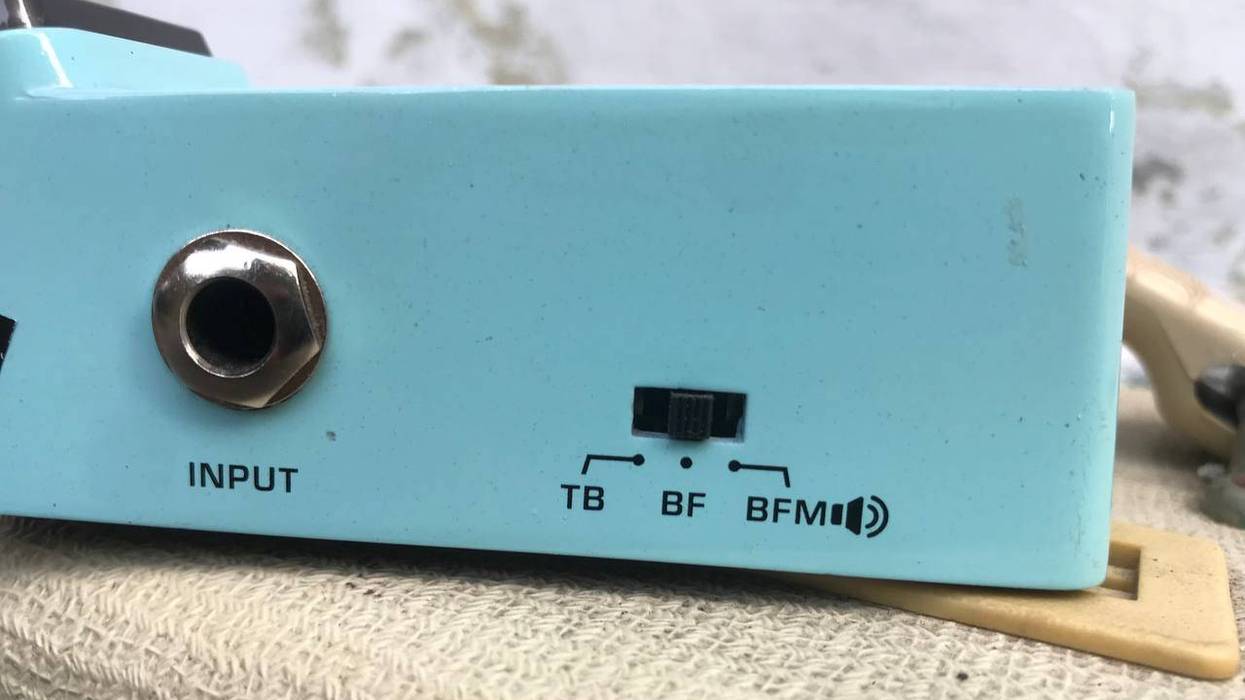
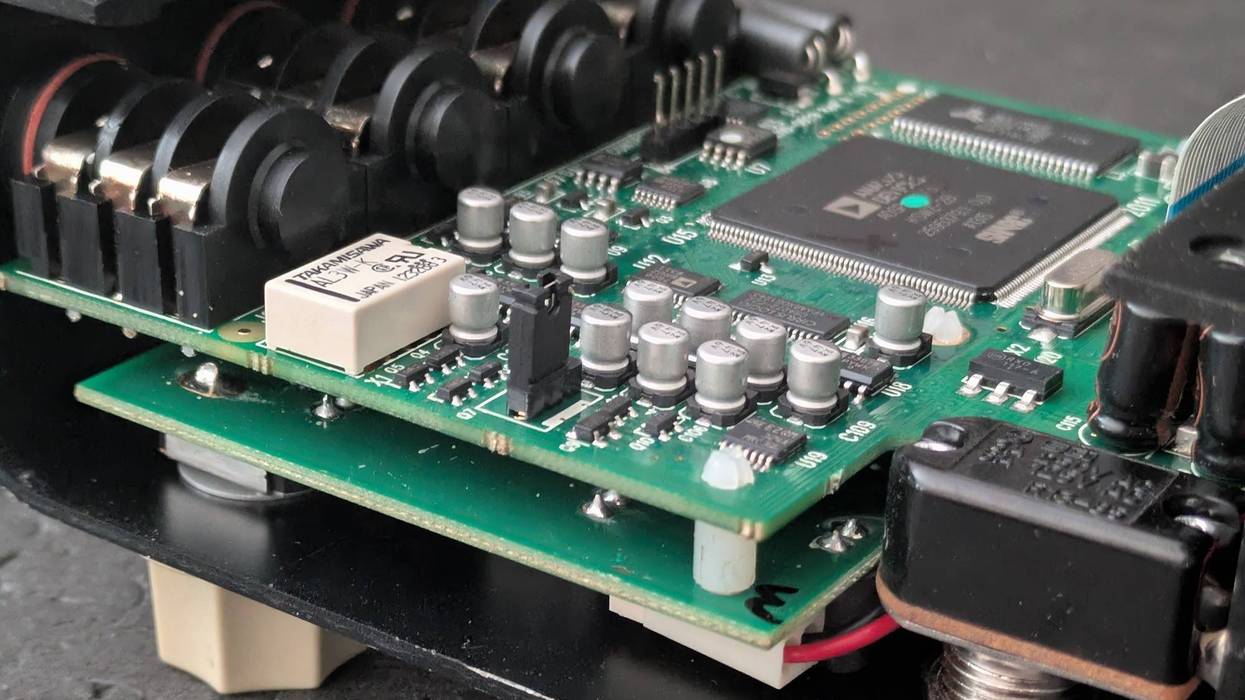
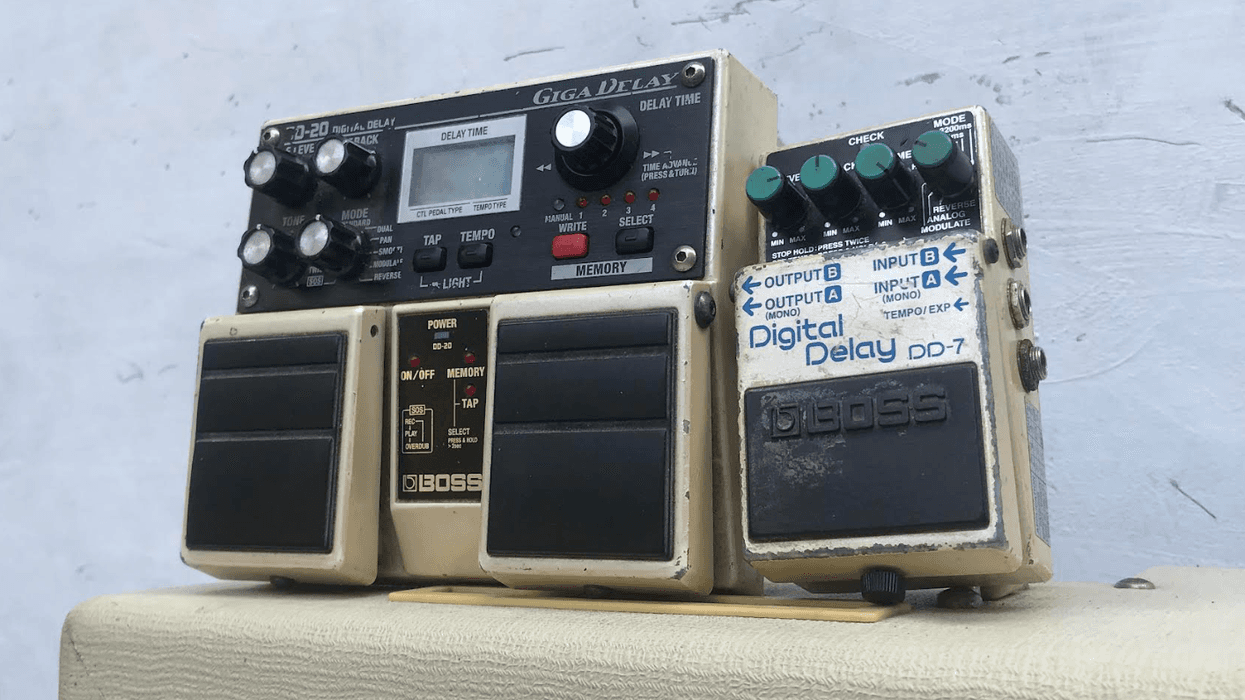
For me, the DD-20 remains the best-sounding, most stable, and most durable delay pedal Boss has ever produced. At the time of its release in 2003, it was a flagship product and not something every guitarist could afford. Since then, the delay market has evolved dramatically. The arrival of the Strymon TimeLine, for example, changed the way many players thought about delay. Yet, throughout all that innovation, the DD-20 remained exactly what it had always been.
Part of its appeal is that it never seemed interested in chasing the future. It offered no MIDI implementation, no USB connectivity, and no expression pedal input. In an era increasingly defined by feature lists, the DD-20 remained focused on its original purpose. When it came out, it was not trying to be everything for everyone. It simply presented a particular vision of what a delay pedal should be.
“For me, the DD-20 remains the best-sounding, most stable, and most durable delay pedal Boss has ever produced.”
The DD-3 occupies an even stranger place in the history of guitar gear. Since its introduction in 1986, it has remained in continuous production, eventually evolving into the DD-3T in 2019 because tap tempo became the yin/yang counterpart that every delay pedal ultimately seeks. The metaphor is important because delay and tap tempo seem to complete one another.
Three-thousand years from now, I can easily imagine the Boss DD-3 being misunderstood as alien technology, much like the popular theories claiming that the ancient Egyptians could not possibly have built the Great Pyramid of Giza without assistance from intelligent beings in a neighboring galaxy. The comparison sounds absurd, but so does the fact that a digital pedal introduced in 1986 remains a standard tool for working musicians today.
The DD-3 serves as evidence of something uniquely human. At some point, we learned how to transform time itself into an aesthetic tool. That is what delay really is. It is more than an effect. It is an argument about time. It asks whether time can be repeated, stretched, echoed, or made beautiful.
I was a DD-3 user before eventually moving to a DD-7. Like many pedalboard enthusiasts, I became curious about features like Reverse Delay and Modulated Delay, despite having little practical need for them. The irony is that I ended up using the DD-7 within what was essentially a DD-3 framework. I gained more options but continued relying on the same core approach. We often search for new answers even when the old ones are still working perfectly.
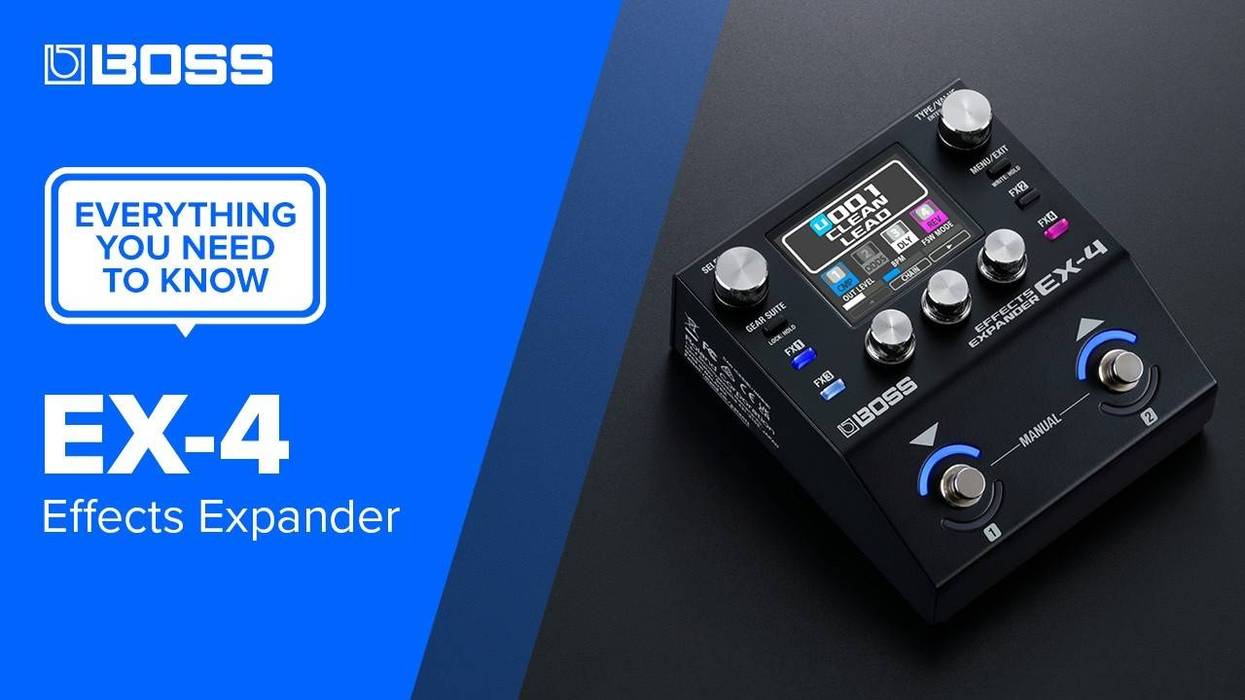
Boss eventually released the DD-500 in 2015 as a response to technological progress and changing expectations. Yet the DD-20 continues to appear on stages everywhere. They are not always the newest, the most exciting, or the most discussed. They are simply dependable enough to become part of everyday life.
None of this is meant to diminish other delay pedals. There are countless products that are newer, more powerful, and more innovative. The upper tier of today’s delay world arguably belongs to the Strymon Timeline and the generations of pedals that followed in its wake. Delay itself has become nearly universal, appearing in almost every modern multi-effects unit. In many ways, the category has never been healthier or more sophisticated.
Yet a simple digital pedal from the 1980s remains firmly planted on professional pedalboards around the world. Perhaps the Boss Digital Delay has proven so difficult to replace because it solved the problem from the very beginning. When a tool performs its task efficiently, consistently, and without interrupting creativity, additional features cease to be progress and become a matter of preference. Forty years after its introduction, the Boss Digital Delay continues to demonstrate that manipulating time as efficiently as possible may have been enough all along.