
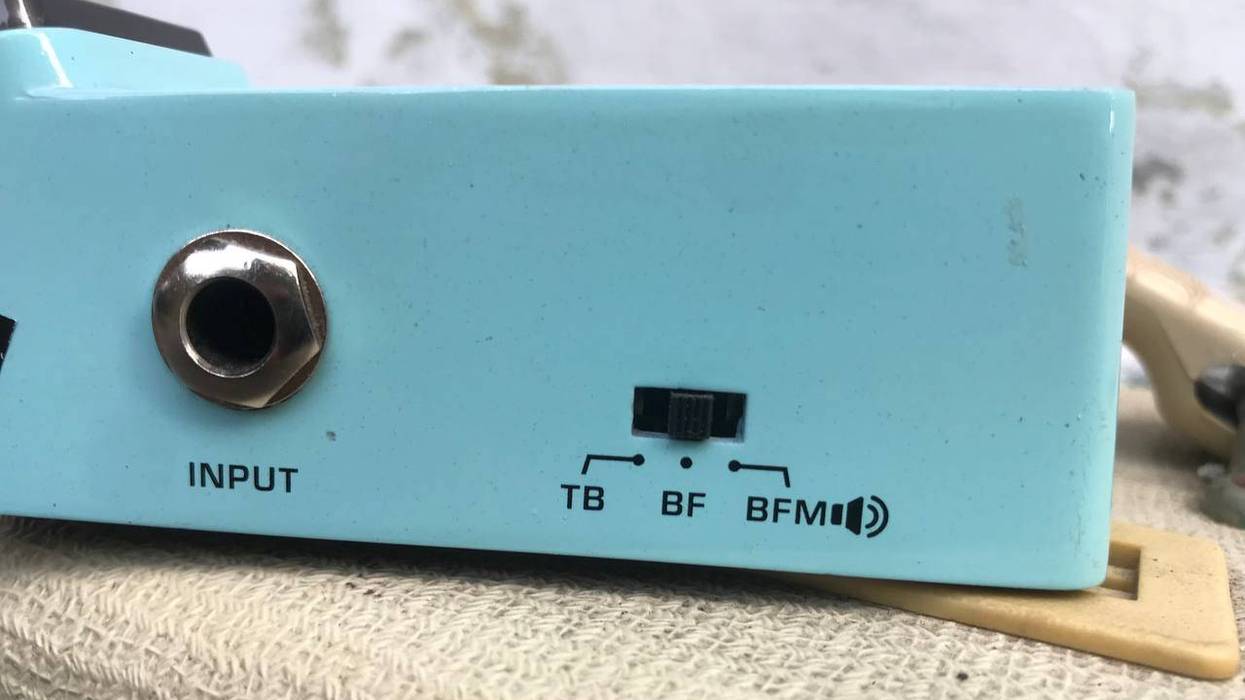

Let’s talk about the true bypass versus buffered bypass debate—an argument that, nearly two decades into the 2000s, somehow still refuses to die. As pedal builders, we’re constantly asked if our latest circuits are “true bypass.” For the vast majority of players, true bypass is treated like the bleeding edge of technology, a mandatory feature. Somewhere along the way, true bypass evolved from a mere engineering choice into an essential marketing buzzword. But why? We’re going to break this down from the perspectives of history and engineering, and explain why this whole debate is ultimately missing the forest for the trees.
In the early days of guitar effects—think Maestro Fuzz-Tone FZ-1s or Vox Tone Benders—switching was primitive. Manufacturers used basic mechanical SPDT (Single Pole Double Throw) or DPDT (Double Pole Double Throw) footswitches. Functionally, they did the job: step once for ON, step again for OFF. But unlike most electronic devices like radios or TVs, where a power switch just kills the circuit, a stompbox has the added, critical responsibility of passing a signal along to the next device in the chain. This gave guitarists a very specific set of expectations regarding what “ON” and “OFF” meant. Problems arose because, back then, there was no standard for status indicators (bulbs or LEDs weren’t yet commonplace), so the only way to know if your pedal was engaged was to rely on your memory—and the sound hitting your amp. Furthermore, when these pedals were in “bypass,” they suffered from massive “tone suck” because the switches of the era couldn’t accommodate a true bypass signal path, and these heavy-duty mechanical switches were prohibitively expensive and inefficient to manufacture.
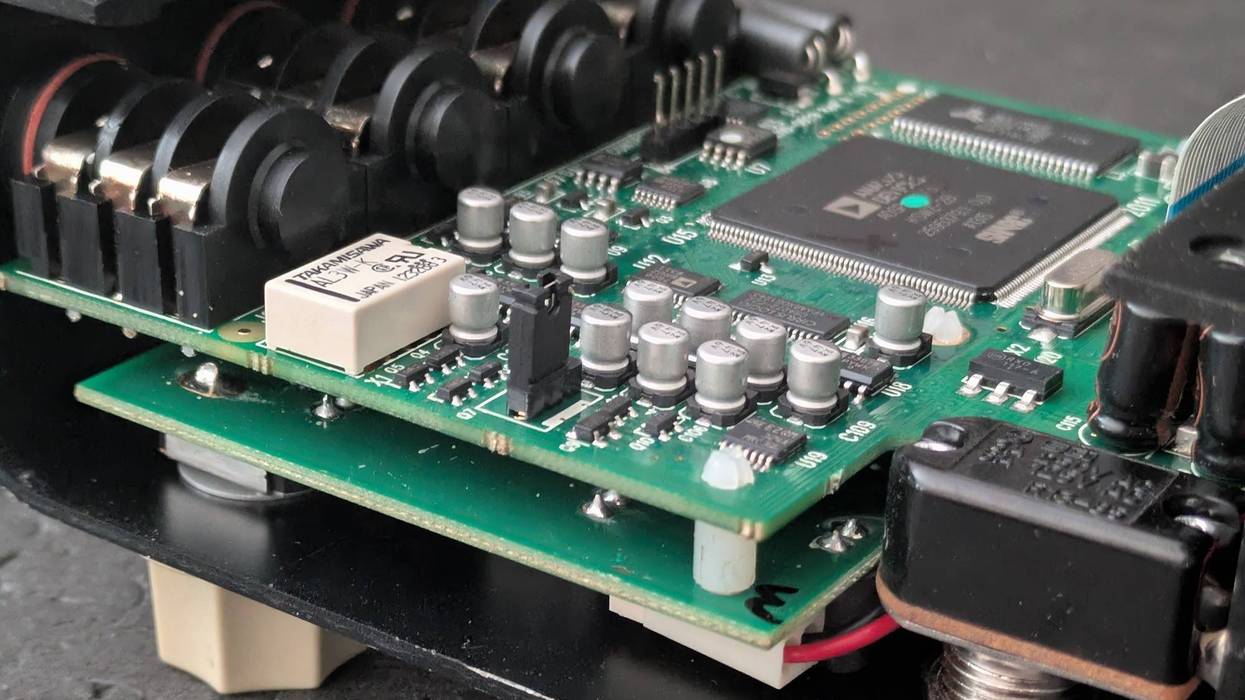
Enter the 1970s and ‘80s, when Japanese companies like Boss (Roland) and Ibanez (working with Maxon) pioneered mass-produced electronic switching. This system utilized a flip-flop logic circuit triggered by a momentary tactile switch. The flip-flop acts as a gatekeeper for a JFET (Junction Field Effect Transistor), which serves as the electronic switch for the audio signal. Because this system requires power to stay active, they integrated a buffer.
The magic of a buffer is its ability to transform a high-impedance (high-Z) signal from your guitar into a low-impedance (low-Z) signal. A low-Z signal is a workhorse—it can drive long cable runs and multiple pedals without succumbing to the high-frequency roll-off caused by cable capacitance. FET switching is also silent, eliminating the mechanical “pop” of traditional switches. However, early buffer designs were often criticized for coloring the original tone (adding a bit of brightness or a mid-bump), and if you daisy-chained too many buffered pedals, the tone could start to feel “sterile,” with the noise floor of each active circuit stacking up.
“What matters is the music your fingers create, not whether your signal is ‘pure’ or ‘buffered.’”
In reaction to the perceived tone-coloring of ‘80s-era buffers, boutique builders started pushing true bypass as the gold standard. The goal was 100% signal integrity—essentially turning the pedal into a patch cable when bypassed. Initially, this was achieved using DPDT switches with the “Millennium Bypass” trick (using extra circuitry to power an LED without compromising the signal path). Later, Mike Fuller pioneered the 9-pin 3PDT (Triple Pole Double Throw) switch, which guaranteed 100% true bypass and became the standard for Fulltone pedals. It was a massive disruption in the stompbox world. True bypass promised zero coloration when off. But there was a catch: if your entire board is true bypass and you’re using long cables (say, 20 feet to the board and another 20 feet to the amp), the total cable capacitance will inevitably eat your passive guitar’s treble, resulting in that very “tone suck” true bypass was meant to fix. Plus, there’s the issue of “switch popping”—the transient voltage from a capacitor being mechanically connected can cause a loud DC offset spike through your amp.
So, this isn’t about whether true bypass is the “truest” method, or if buffered bypass is inherently junk that ruins your signal. It’s an engineering and UI/UX trade-off of equal weight. Do builders who choose buffered bypass do it just to save pennies and ditch mechanical switches, sacrificing your tone for profit? Or are those who exclusively use true bypass chasing a “boutique” luxury vibe that ignores technical reality? The truth is far more complex.
Designing a great buffered bypass circuit requires serious engineering precision, and there are many ways to skin that cat. Look at Boss, which uses JFET switching, or the Klon Centaur—which, despite using a DPDT mechanical switch, actually employs a buffered bypass approach while retaining the heavy-duty tactile feel of a mechanical footswitch.
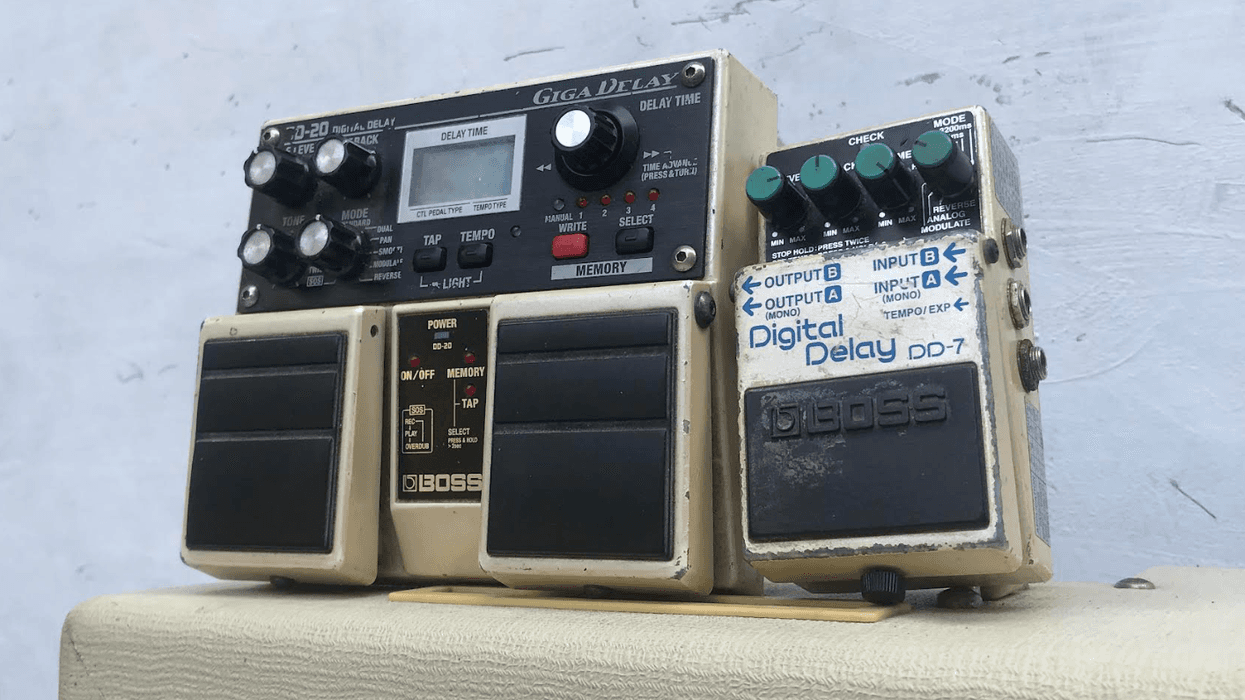
Boss’s JFET switching and soft-click footswitches come with the benefit of being famously pop-free and reliable. Plus, the inherent nature of the JFET acts as a natural low-pass filter, which can actually help dampen noise oscillations in high-gain setups. Yes, the trade-off is that if you put ten or more Boss pedals in a row, some tone suck becomes inevitable. But honestly— who is running ten Boss pedals simultaneously?
Both true bypass and buffered bypass come with their own distinct set of trade-offs. Vintage circuits—particularly fuzz and wah pedals—notoriously despise buffers, which is exactly where true bypass shines brightest in your signal chain. Conversely, true bypass is often susceptible to annoying “pop” noise when engaged, and piling up a dozen of them can significantly increase capacitive loading over a long cable run, killing your high-end sparkle.
The solution? It’s all about finding a balance by combining true bypass and buffered designs (or even running a dedicated buffer). If your board is packed—say, ten or more pedals—with fuzz and wah sitting at the front of the chain, running true bypass at the start and placing a buffer at the output stage is a killer compromise. It delivers superior signal integrity and stability, easily outperforming a rig that relies strictly on one philosophy or the other
Ultimately, the debate between true bypass and buffered bypass has been largely nonsense from the start. What matters is the music your fingers create, not whether your signal is “pure” or “buffered.”