

When he was 10 years old, Graeme McKinnon walked into a pawn shop near his home in Edmonton, Alberta, and bought his first guitar for $50. It was a sharp-angled, all-black axe made by the Japanese company Profile as a low-cost imitation of a Jackson, with a knife-like headstock that jutted curiously upward.
“It looked like a reaper’s scythe,” McKinnon says, recalling the way he’d carry it around town in an awkwardly shaped gig bag. “Everyone thought I had a hunting rifle.”
It was the early ’90s, in the thick of the Seattle grunge movement, and McKinnon’s older cousin would often come over and play him Pearl Jam songs, which he didn’t really like. But when his guitar teacher showed him the Ramones, something unlocked in the youngster. As he improved his chops, McKinnon and his older brother, a bassist, would jam Dead Kennedys and Beastie Boys songs together. McKinnon was hooked on punk rock. “That’s how I cut my teeth,” he says. “The downstrokes from the Ramones stuck with me forever. I always practiced my right hand.”
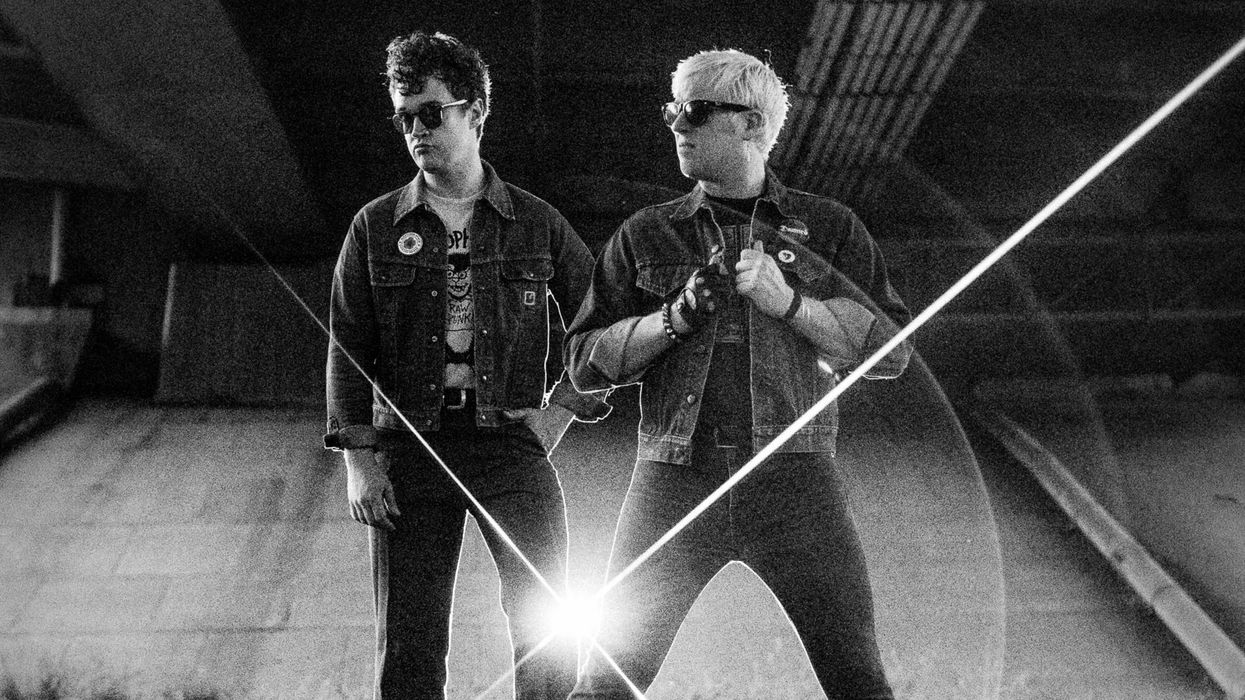
Fast forward 30 years, and today McKinnon is one half of the post-punk duo Home Front, one of the most hyped-up bands to emerge from Canada in recent years. And the outfit’s new album Watch It Die should earn them a spot on the Mount Rushmore of the current post-punk revival, alongside other breakouts like Fontaines D.C., Idles, and Viagra Boys.
In 2021, McKinnon’s hardcore punk band No Problem was on hiatus and he was looking for a new outlet. That’s when his childhood friend Clint Frazier, previously a member of the electro dance-punk outfit Shout Out Out Out Out, asked him to start a synth-driven band.
“The downstrokes from the Ramones stuck with me forever. I always practiced my right hand.”—Graeme McKinnon
The style that they created combines the jangly sheen of synth-pop, the sneering attitude of old-school punk rock, and the hard-stomping force of oi! and hardcore. The band nicknamed it “bootwave,” a reference to the distinct sound of winter boots marching on ice-crusted snow or the cold concrete of the streets of Edmonton. “Our sound has this duality,” McKinnon says. “There’s the punk side, there’s the synth side, and it’s always these two forces.”
“We’re just trying to find enough space in the songs to do both of them well,” adds Frazier. “I’ve been trying to do that for over 20 years.”
Graeme McKinnon’s Gear
Guitars
Fender Classic Series ’72 Telecaster Deluxe (with new humbucker and graphite saddles)
1979 Gibson Marauder (with P-90 pickup and kill switch)
Hagstrom Viking
Basses
Fender Steve Harris Precision Bass
Fender Bass VI
Guitar Amps
1979 Marshall JMP
Hiwatt Custom 50
Marshall 4x12 cabinet
Bass Amps
Peavey Super Festival Series F-800B
Peavey Roadmaster Vintage Tube Series
Ampeg 6x10 cabinet
Effects
Roland SDE-3000
MXR Carbon Copy
EHX Holy Grail
Van Hall fuzz
MXR Analog Chorus
Various Pro Co RAT models
MXR Blue Box
Strings & Picks
Ernie Ball Regular Slinky (.010–.046) (Telecaster)
Ernie Ball Power Slinky (.011–.048) (Marauder)
Ernie Ball Regular Slinky (.045–.130), unchanged since 2019 (bass)
Dunlop .73mm picks
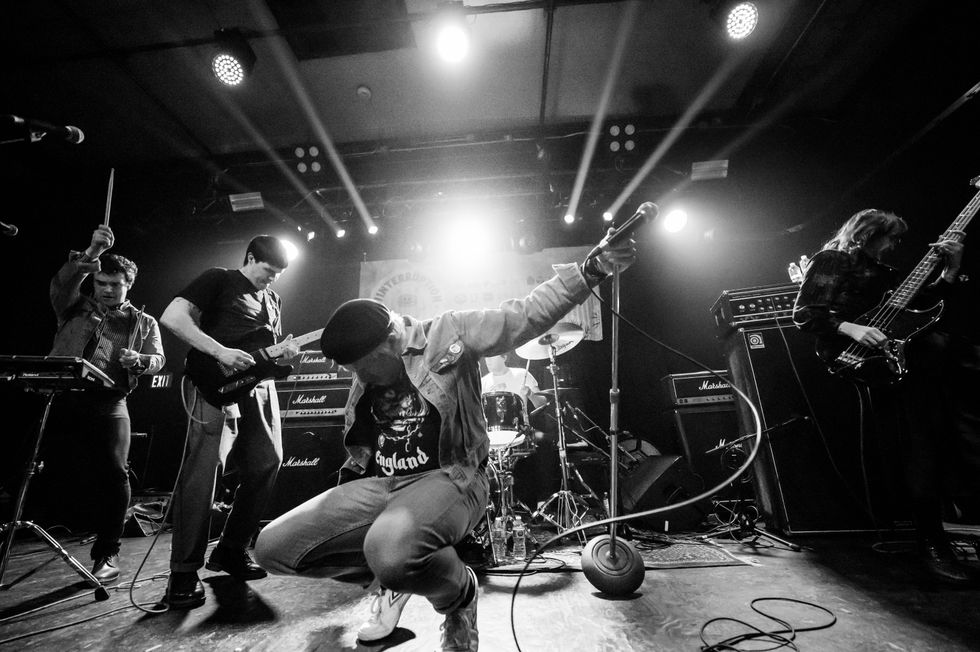
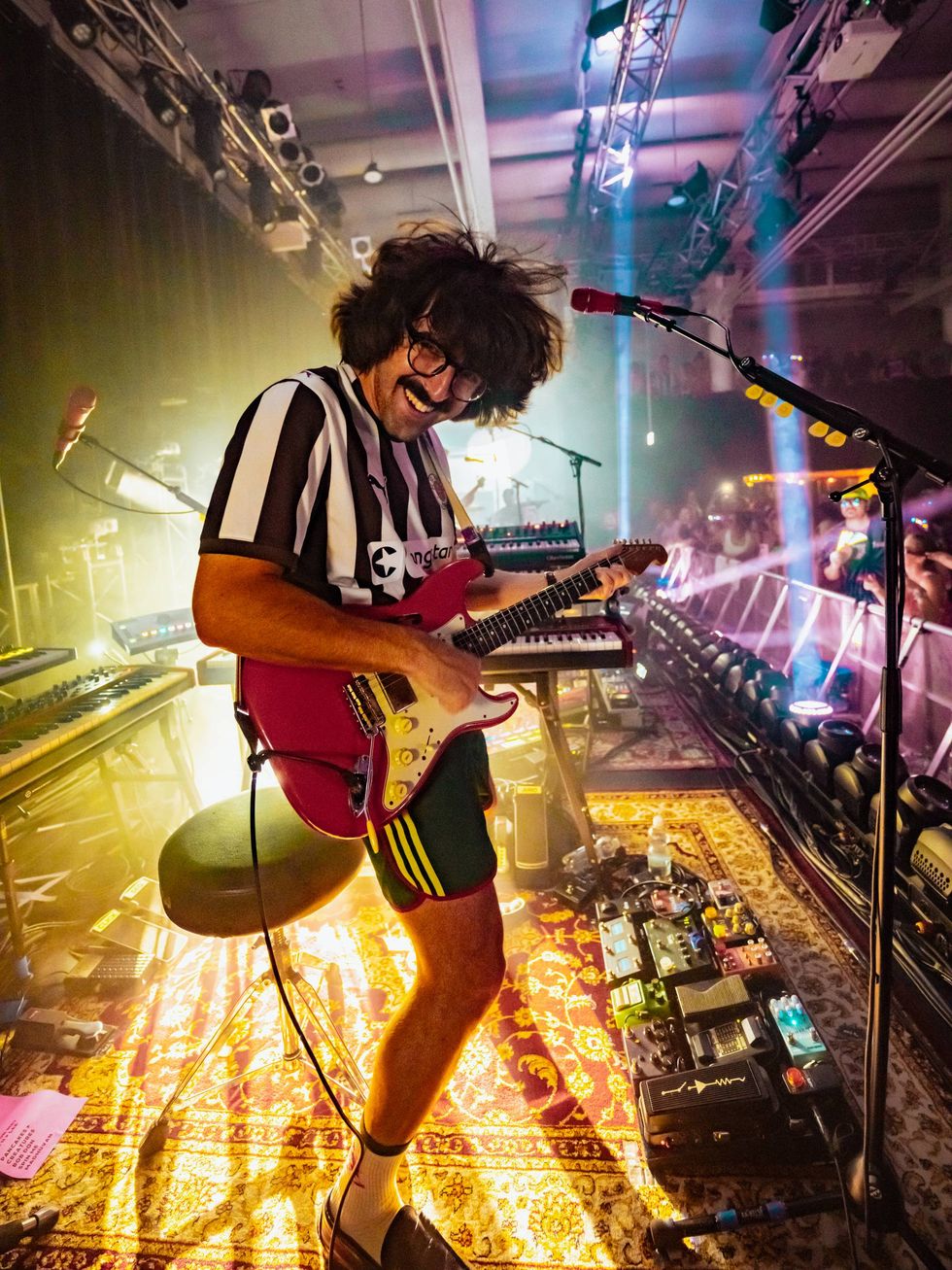
Home Front, anchored by Clint Frazier (center) and Graeme McKinnon (second from left), perform at Edmonton’s Starlite Ballroom in 2023.
Eric Kozakiewicz
Watch It Die follows Home Front’s full-length debut, 2023’s Games of Power. That album earned them positive press from some of the indie-rock scene’s key tastemakers, and it was longlisted for the Polaris Music Prize. The band hit the road hard to support it, embarking on multiple tours of the U.S., the U.K., and mainland Europe, including dates with punk veterans like Dillinger Four and Cock Sparrer, as well as fellow newcomers the Chisel and High Vis.
Like its predecessor, Watch It Die is a record that posits that life is hard, the world is cruel, and it’s easy to feel powerless to make any difference. It’s a headspace that stops just a few yards short of nihilism. But this time around, McKinnon and Frazier are channeling something else, too: hope.
“Our sound has this duality. There’s the punk side, there’s the synth side, and it’s always these two forces.”—McKinnon
“I was using a metaphor of a flower being picked and becoming an ornament in someone’s place, and it’s slowly dying,” McKinnon says. “The secret, the bit that brings a little bit of hope, is that the seed is still in the ground. They can’t see it and they can’t steal it. You watched this part die, but underneath, there’s something else.”
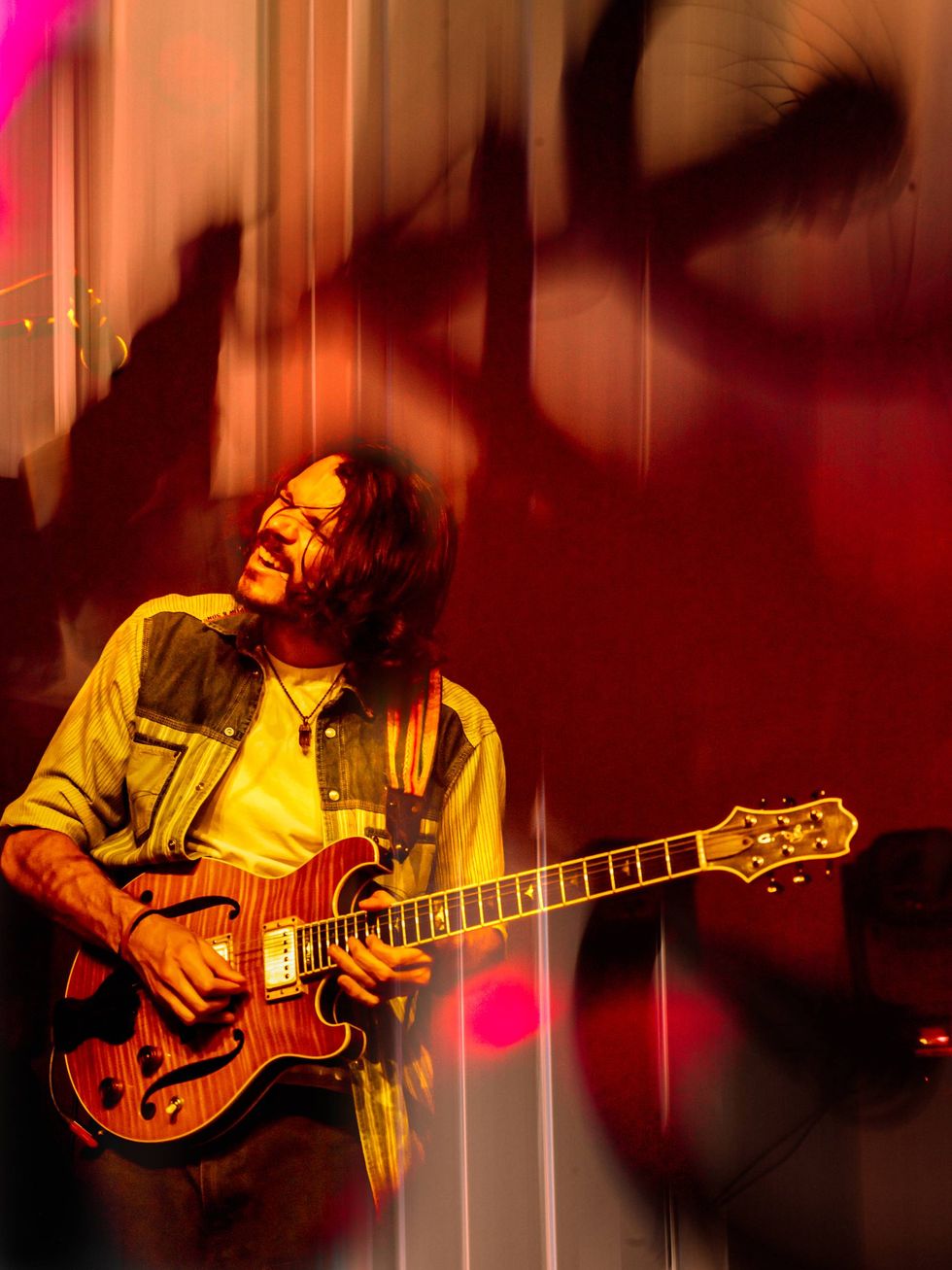
With his previous bands, McKinnon had approached his instrument in much the same way he had since he was a kid: Ramones-style power chords and fast-and-furious downstrokes on his trusty Fender ’72 Telecaster Deluxe. With Home Front, McKinnon had to rethink his playing so that it could coexist with Frazier’s ordnance of analog synths and drum machines.

Watch It Die, Home Front’s second LP, is a glorious blast of frantic, hopeful post-punk.
He looked for inspiration from bands he had always loved but hadn’t previously channeled: England’s ’80s post-punk and new wave exports like New Order, Joy Division, Depeche Mode, the Cure, A Flock of Seagulls, and Blitz. But he wasn’t just looking to do what they did; instead, he wanted to bring his hard-nosed punk style to the mix. “If the electronics are covered, then maybe the play is to bring that punk attack to the guitar to accent the synths,” he says.
On Watch It Die, McKinnon played almost everything through a 1979 Marshall JMP, giving him bright, saturated power chords that tracked well whether he was palm muting or fully strumming. The main exception was a cigar box amp made by a friend who works at an auto shop. It was miked close and cranked, giving them the trashy ’70s punk sound on “Young Offender.”
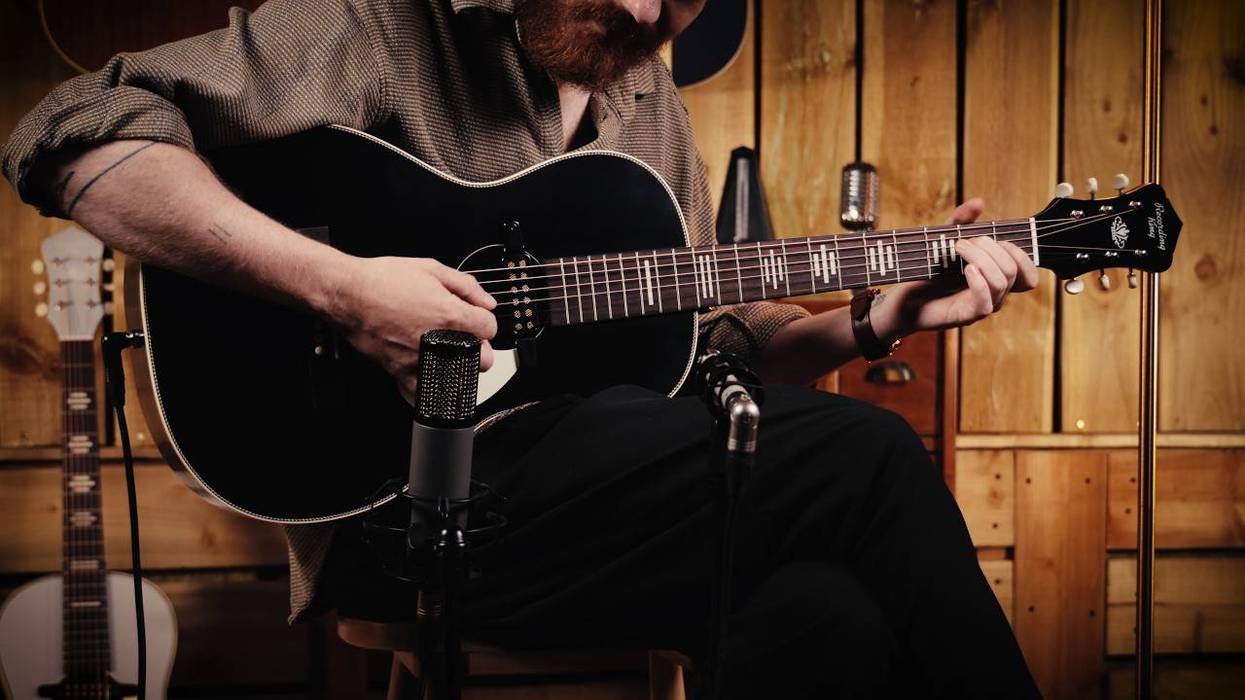
McKinnon used his Telecaster for most of the record, but he also brought out a 1979 Gibson Marauder with a swapped-in P-90 pickup, which he coupled with a German-made Van Hall fuzz pedal to find the nasty, scooped-out tone that appears on some of the record’s more straight-ahead punk songs like “Young Offender” and “For the Children (F*ck All).” On the new wave jams “Kiss the Sky” and “Between the Waves,” he pulled out a Hagstrom Viking that engineer Nik Kozub recorded by miking the semi-hollow body itself, giving the songs a thin, percussive jangle without having the low end of a proper acoustic muddying the mix.
For McKinnon, it was important to get his palm mutes sounding clean and punchy, and to have them perfectly aligned with the synth arpeggiators—even when he’d add swirls of reverb and delay in his chain. Enter his secret weapon: an old Roland SDE-3000 digital delay that he got from the TV studio where he works. McKinnon and Frazier used its BPM-sync function to dial it in to precisely match the tempo of the drum machines.
McKinnon also records all of the bass lines for Home Front. That, of course, comes with its own military-grade arsenal. On “Empire,” he pulled out all the stops. For the grand finale, he chained the Van Hall into a fully cranked Pro Co RAT, into the MXR Blue Box octave fuzz, and finally into a dimed-out Peavey Super Festival F-800B. It was “the nastiest fuzz bass I’ve ever played,” he says, creating a wall of sound inspired by My Bloody Valentine. Frazier accentuated that enormous gain-fest with eighth-note Roland 808s that he painstakingly tuned, note by note, so that each kick would follow the bass line, creating a pulsating effect that makes rhythmic sense of McKinnon’s fuzzed-out chaos.
That is, fittingly enough, the thematic throughline of Watch It Die: making sense of the madness. “Our lives are chaos all the time,” says McKinnon. “We have jobs that are going to end at any moment. The rent is too high, the groceries are too expensive, all these stresses, and then every time you open up your phone, there’s atrocities in the world. There’s shit your government’s doing, police breaking families apart, this is stuff you’re constantly thinking about, and it’s always hitting you.”
But Home Front aren’t just going to wallow in their sorrows. “On this record, I didn’t want to sound like, ‘Shit’s bad. I’m just gonna be kicking rocks,’” McKinnon continues. “It’s more like, ‘Shit’s bad, but this is how we’re gonna work through this, by having outlets that allow us to form like Voltron to terrorize the oppressors.’” PG