

Hello, and welcome back to Mod Garage. This month’s installment in our “Tonewood Teardown” series will be the most important one, dealing with the electrified tone of our guitar. We’ll start work on the wiring, which is the key component of every electric guitar. I really like the analogy that the pickup is the heart, the wiring the brain, and the wires themselves the neural system of an electric guitar. This means we should take care to do everything as carefully as possible here.
While playing our Harley Benton out of the box, I noticed that everything was okay with the stock electronics in this guitar; it sounds unmistakably like a Telecaster. The switch and the controls do what they’re supposed to, but the tone lacks in a few key areas: definition, clarity, twang, and string separation. Adjusting the height of the pickups didn’t change this, so it was time to have a look under the hood and think about a solution.
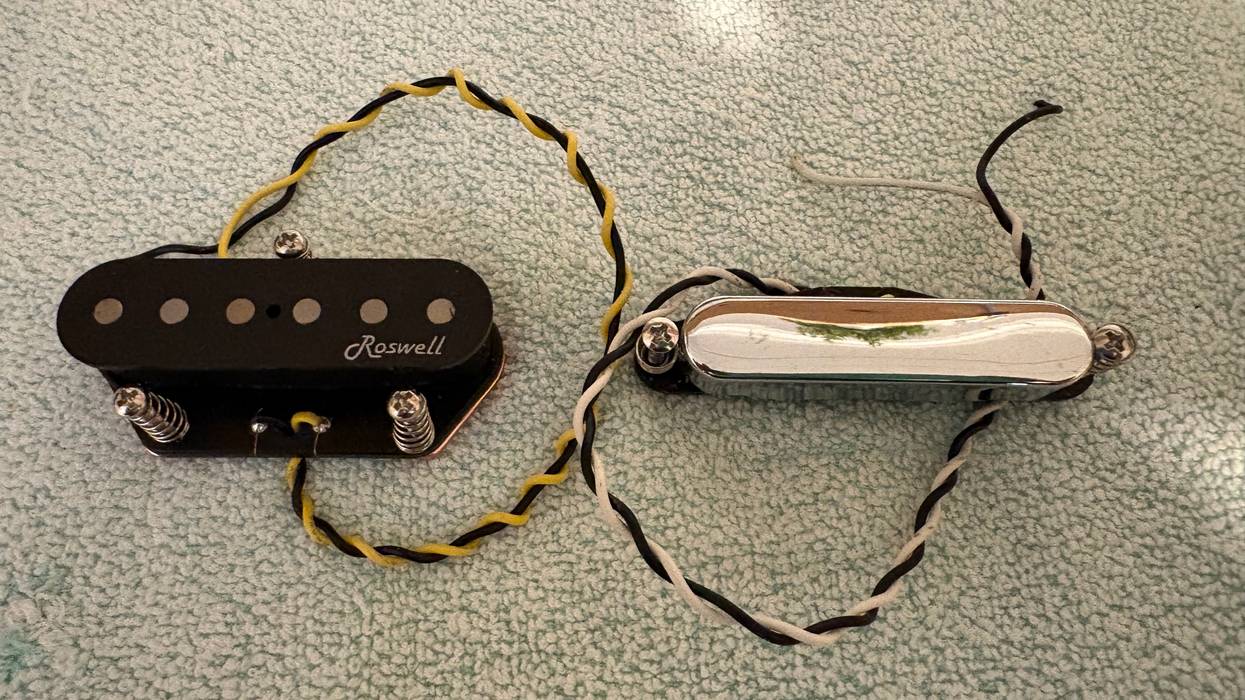
Both pickups are made by the Roswell company, which is the pickup-making branch of the WSC Music company (aka “Partsland”) with production plants in China and South Korea. Roswell is one of the biggest pickup factories worldwide, and it’s an open industry secret that they supply many guitar builders, including the leading big guys. Our Harley Benton comes with their Vintage Alnico 5 pickup set that is a modern interpretation of the ’50s-’60s Telecaster pickups. You can find a lot of good reviews about these pickups. For the price, they’re solid, but they definitely leave room for improvement, so out they come.
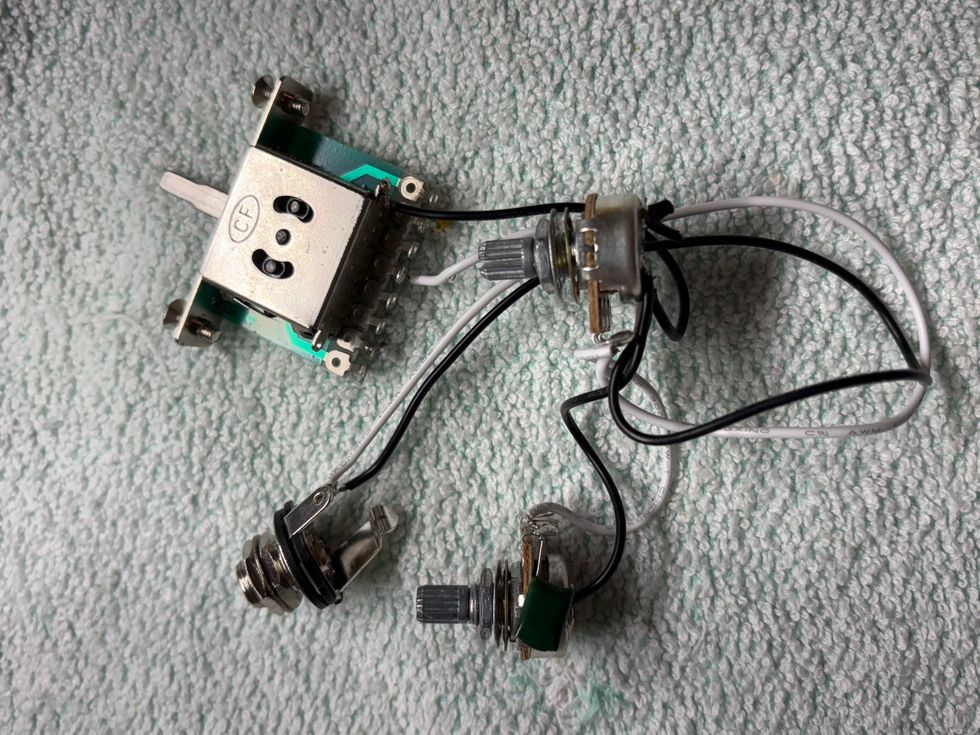
photo courtesy SINGLECOIL (https://singlecoil.com)
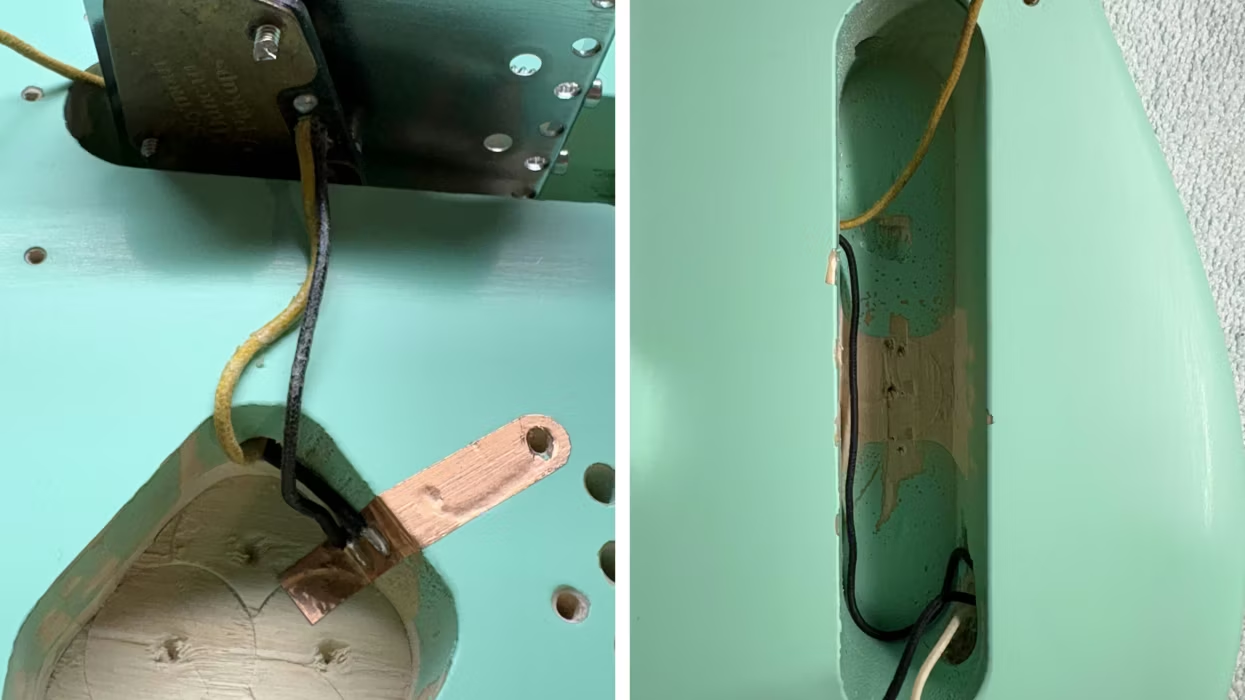
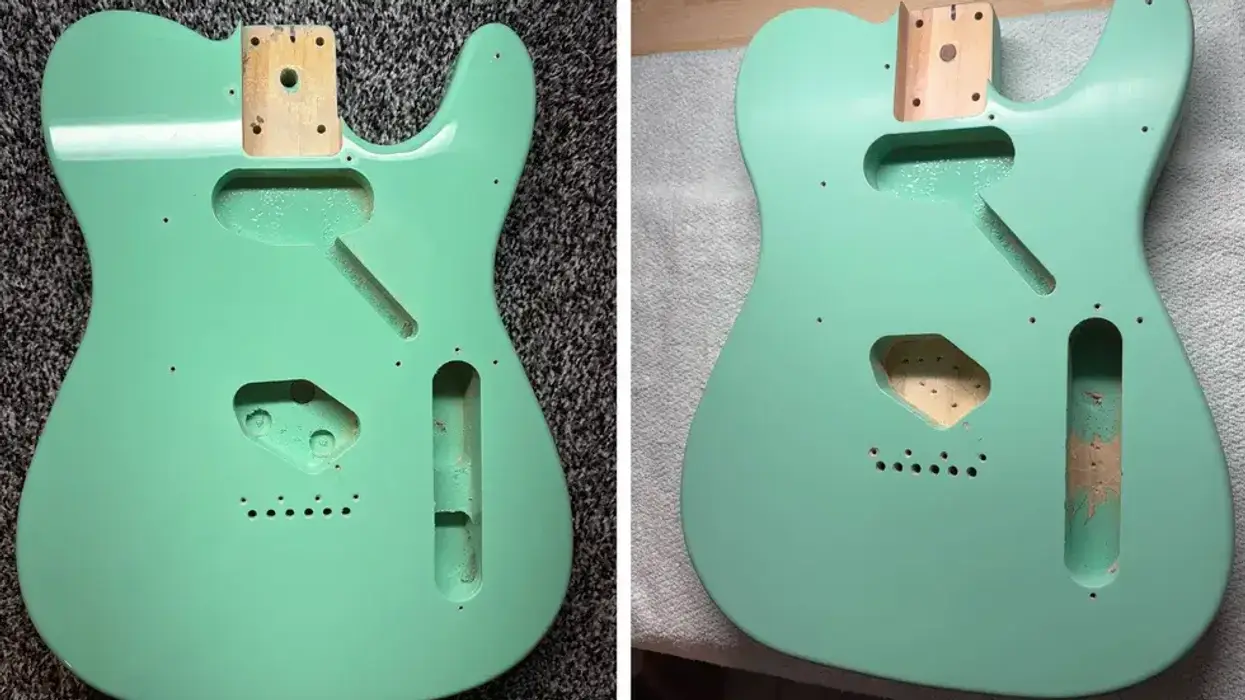
Under the hood of the control plate, I found decent-quality budget components as expected, and the soldering job was tight. I was surprised with the 3-way switch: It’s one of the typical budget switches with a PCB, but the switching haptics feel smooth and precise. Sadly, its lever is made for metric switch tips with a small slit; otherwise, I would have reused it with the new wiring. After detaching all components, the complete electronics system can be taken out in one piece.
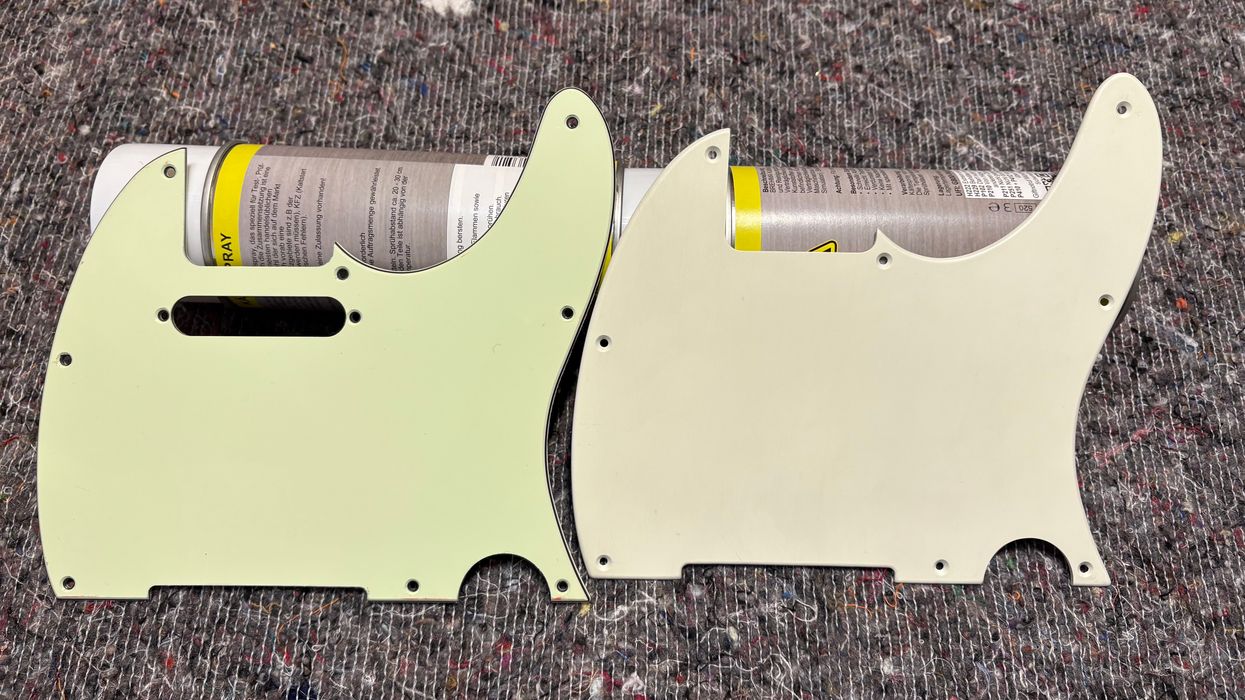
There were several reasons behind my idea to turn this Harley Benton into a single-pickup Esquire-style guitar: It’s one of the most underrated electric guitars ever; it saves some weight thanks to having no neck pickup; and I really like single-pickup Esquires!
Because an Esquire typically sports only one bridge pickup, people usually think it’s a tonally inflexible guitar: Many view it as a poor-man’s Telecaster, but this is simply wrong. It is its own model, with its own tone. This is mostly because of the different wiring of the electronics, plus the lack of a neck pickup which causes less magnetic pull on the strings, a feature that further differentiates the sound of an Esquire from a Telecaster. Because of this, the Esquire is more responsive, and has a more percussive attack and more harmonic overtones compared to a Telecaster. With well-designed electronics, this single-pickup configuration is plenty of things, but definitely not inflexible, in my opinion.
Naturally, you can follow a different track for your own project: You could leave the stock pickups untouched, put in two new pickups of your choice, or even create an Esquire look with a neck pickup hidden under the pickguard—amazing your audience, who will wonder where the neck pickup tones are coming from! Maybe you want to follow the Keith Richards route, putting a humbucker in the neck position for some Micawber-style flair. It’s your guitar; you decide what to do with it. Remember, I’m showing just one possible way of doing this type of project.
To get closer to an early-’50s Esquire tone, I had a look at Reverb and eBay for a used Broadcaster/Nocaster-style bridge pickup that fell within our tiny budget. I ended up with a used Seymour Duncan STL-1B Vintage Broadcaster Tele bridge pickup from the mid ’90s for $40. This pickup is very close to the original Fender specs, including the slightly larger magnets, and is a perfect choice for an Esquire-type guitar. I’ve used this pickup on a few guitars before and they always sound fantastic, but many pickup makers will have a similar pickup in their portfolios, if you want to look for an alternative.
When the pickup arrived, I noticed that one of the previous owners used it within a 4-way switch configuration, because there was an additional third ground wire soldered to the baseplate to separate it from the ground of the pickup. You usually need this mod when you want to put two pickups together in series on a Telecaster, but we don’t need this option for our single-pickup wiring, so I removed the third wire and re-connected the baseplate to the pickup’s ground. Both pickup wires were shortened for some reason, but after a quick measurement, it turned out that the remaining wire lengths will suffice for our wiring. Another benefit was that the pickup was naturally aged, so no further work was required to give it an aged look. After a short check with a multimeter measuring DC resistance and inductance, it turned out that the pickup was very close to its factory specs.
After the pickup purchase, our remaining $259 budget went down to $219, but to top it up a little bit, I sold the two stock Roswell pickups for $35 total, so our budget is up to $254 again for the rest of the project.
Now, it’s time to plan the electronics. I wanted to stay close to early-’50s specs, which call for two 250k pots, a 3-way switch, and cloth wire, all of the highest possible quality within our budget. But I didn’t want to copy the original switching matrix with the famous “dark circuit” that Leo Fender thought would be perfect for guitarists playing bass lines. I decided to go with a kind of modified Eldred Esquire wiring with this switching matrix: first position, pickup with volume and tone control; second position, true bypass with pickup connected directly to the output jack; third position, pickup with an additional capacitor and volume control.
I’ll explain more about the individual switching positions and why I chose them in the next part, but for now, these are the parts I selected to set up this wiring:
—two 250k mil-spec pots with a 60/40 taper ratio, U.S. inch, solid shaft
—3-way Duesenberg switch (in my book, this is the best lever switch available)
—custom-made, vintage-style output jack
—Silver Mica treble-bleed network for the volume pot, film caps for the tone pot, and Eldred mod caps
—seven-stranded vintage reissue cloth wire
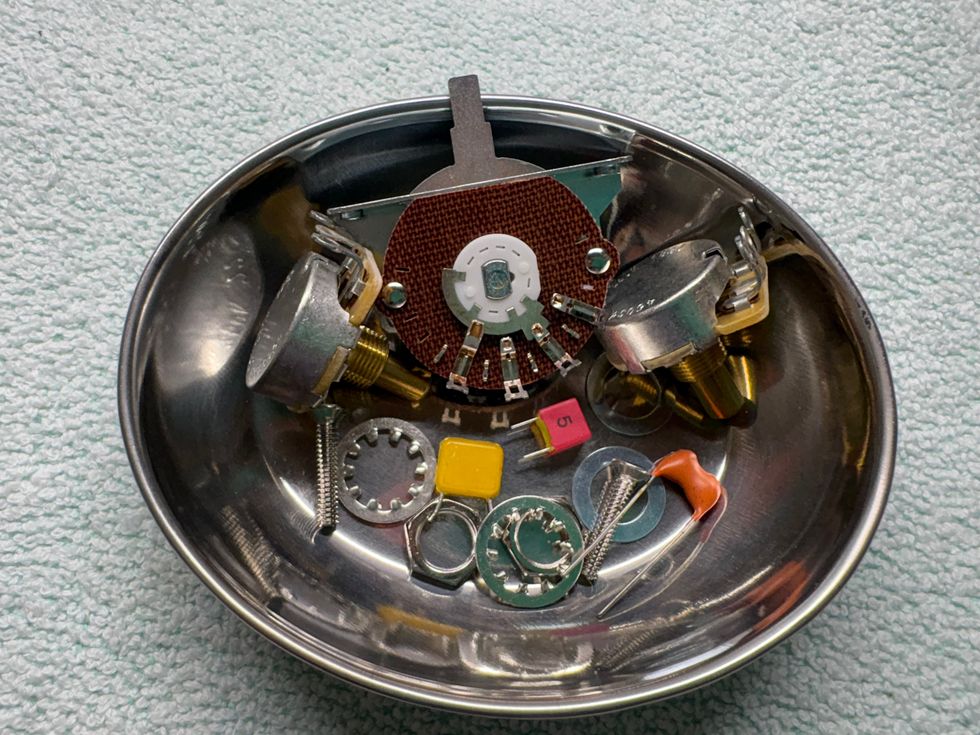
photo courtesy SINGLECOIL (https://singlecoil.com)
With these parts, our budget is now down to $196, but I’m optimistic that we can finish the guitar without going over.
Next month, we will continue with installing the pickup, our wiring diagram, and an explanation of the individual switching positions. After that, the body of our Harley Benton will be completely finished, and we’ll continue with the neck, so stay tuned.
Until then, keep on modding!