

All it takes is a minute or so of listening to Just Mustard’s music—a bewitching and unruly blend of fuzzy, guitar-driven post-punk and shoegaze-y noise rock—to make one thing abundantly clear: They’re not exactly aiming to challenge Taylor Swift for chart supremacy. “No, we’re not really interested in having pop singles,” says David Noonan, who, along with fellow guitarist Mete Kalyon, delights in creating cavernous, atmospheric walls of sound for the Irish quintet. “We’ve always been trying to make music that’s more avant-garde. I know it’s a cliché, but we like to push boundaries.”
He pauses for a second, then adds, “Which isn’t to say that we don’t want to be popular, because that would be great. We just want to do it our way.”
Just Mustard (which also includes singer Katie Ball, bassist Rob Clarke, and drummer Shane Maguire) have a doozy of an album with their new We Were Just Here, which builds on the strengths of its predecessors, 2018’s Wednesday and 2022’s Heart Under. Like those records, it’s an immersive sonic extravaganza, brimming with walloping, cavernous soundscapes and gnarly, twisted guitar lines that dart off in all kinds of directions. At the same time, it ventures into warmer, friendlier territory. Lead single “Pollyanna” is one of the band’s most cheerful efforts to date—Ball’s enchanting, ethereal vocals float though its feedback-laden textures—and the propulsive, synth-like title track has an irresistible early-’80s peppiness to it.
“It’s interesting—people have said that song reminds them of early New Order, which isn’t what we were going for,” Kalyon says. “I think when you try to make guitars sound like synths it actually works sometimes. But I never want to disguise the sound of the guitars entirely. I’d rather have people say, ‘Wow, that’s a cool guitar sound,’ not ‘Are you playing a synth there?’”
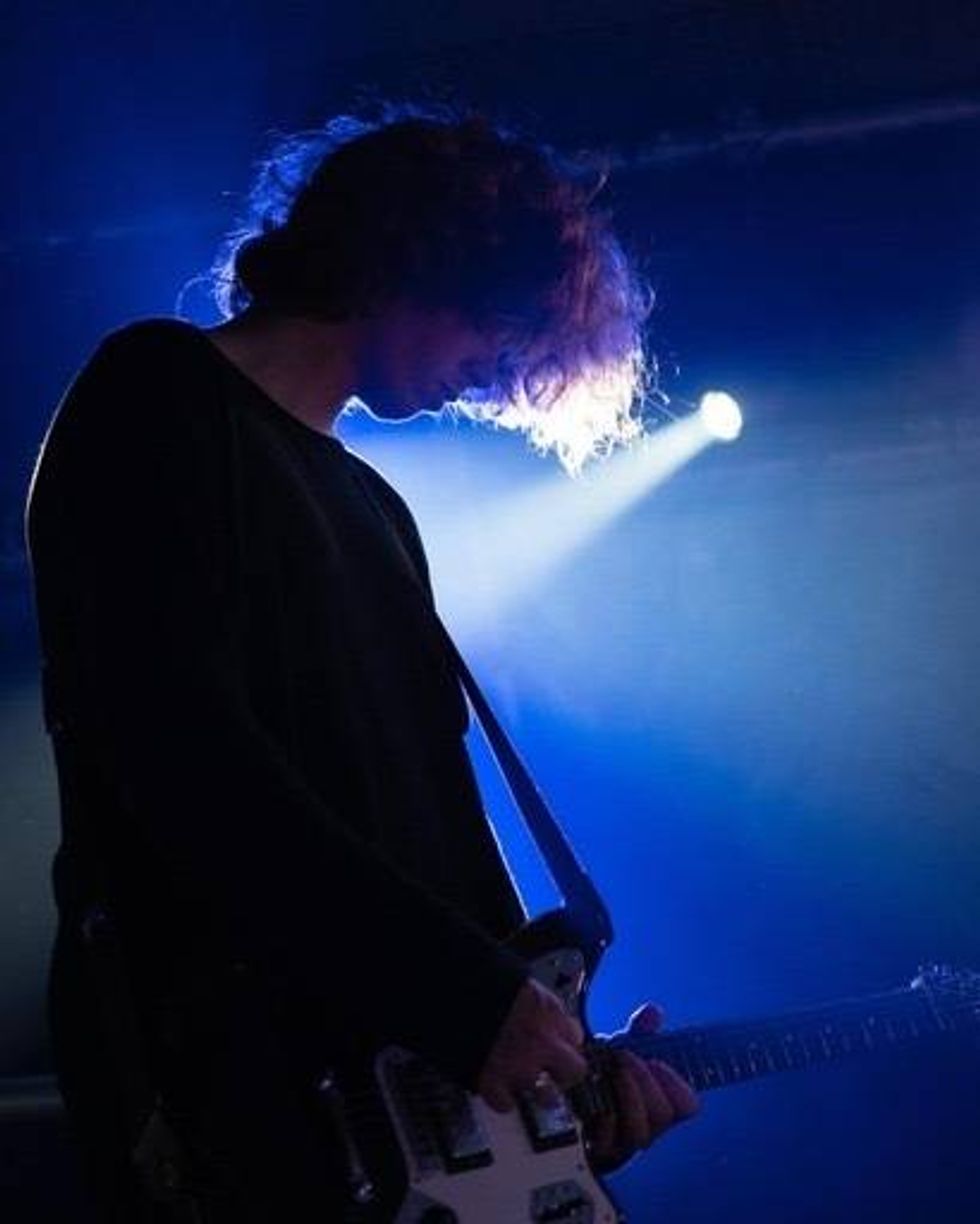
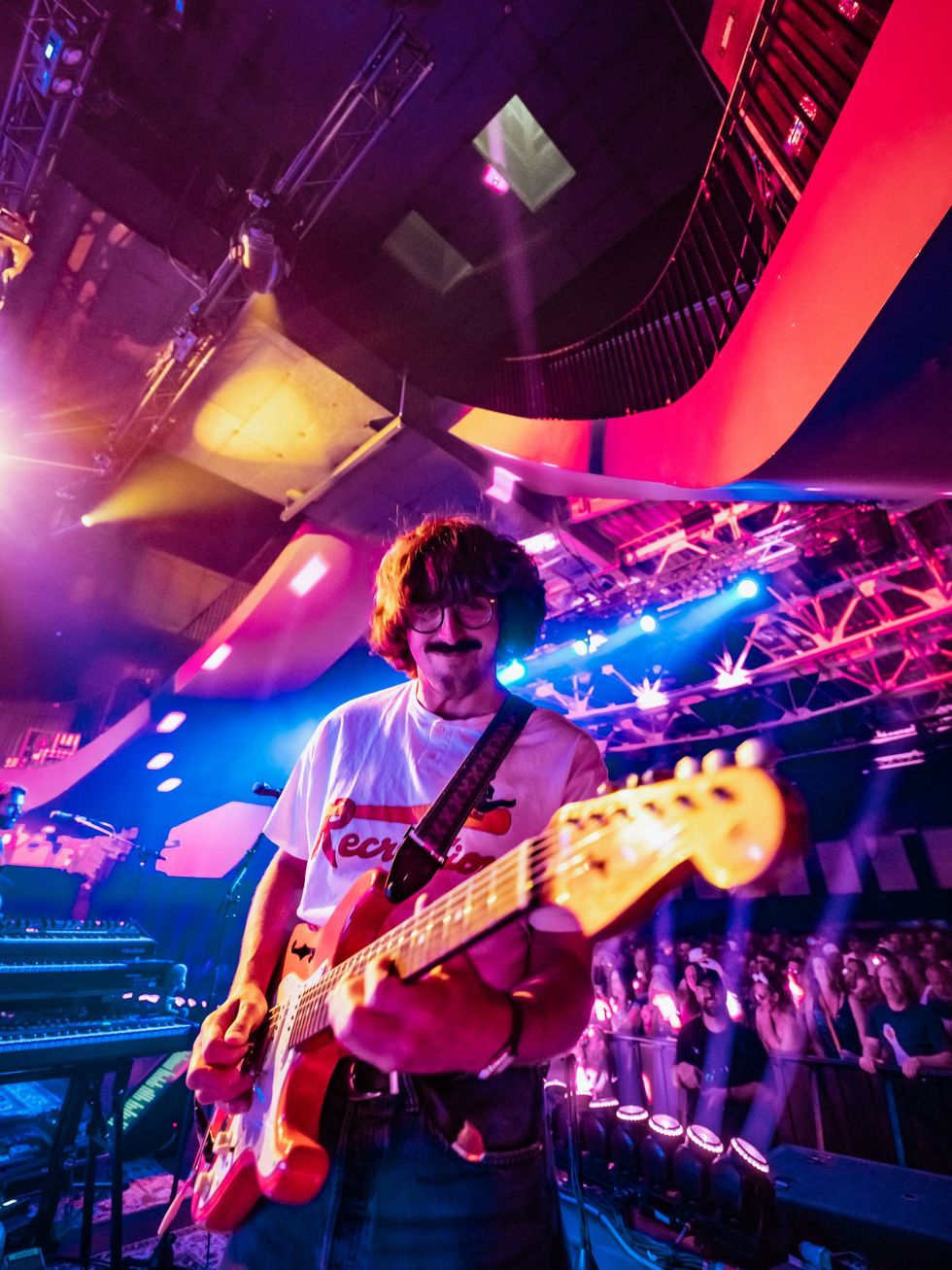
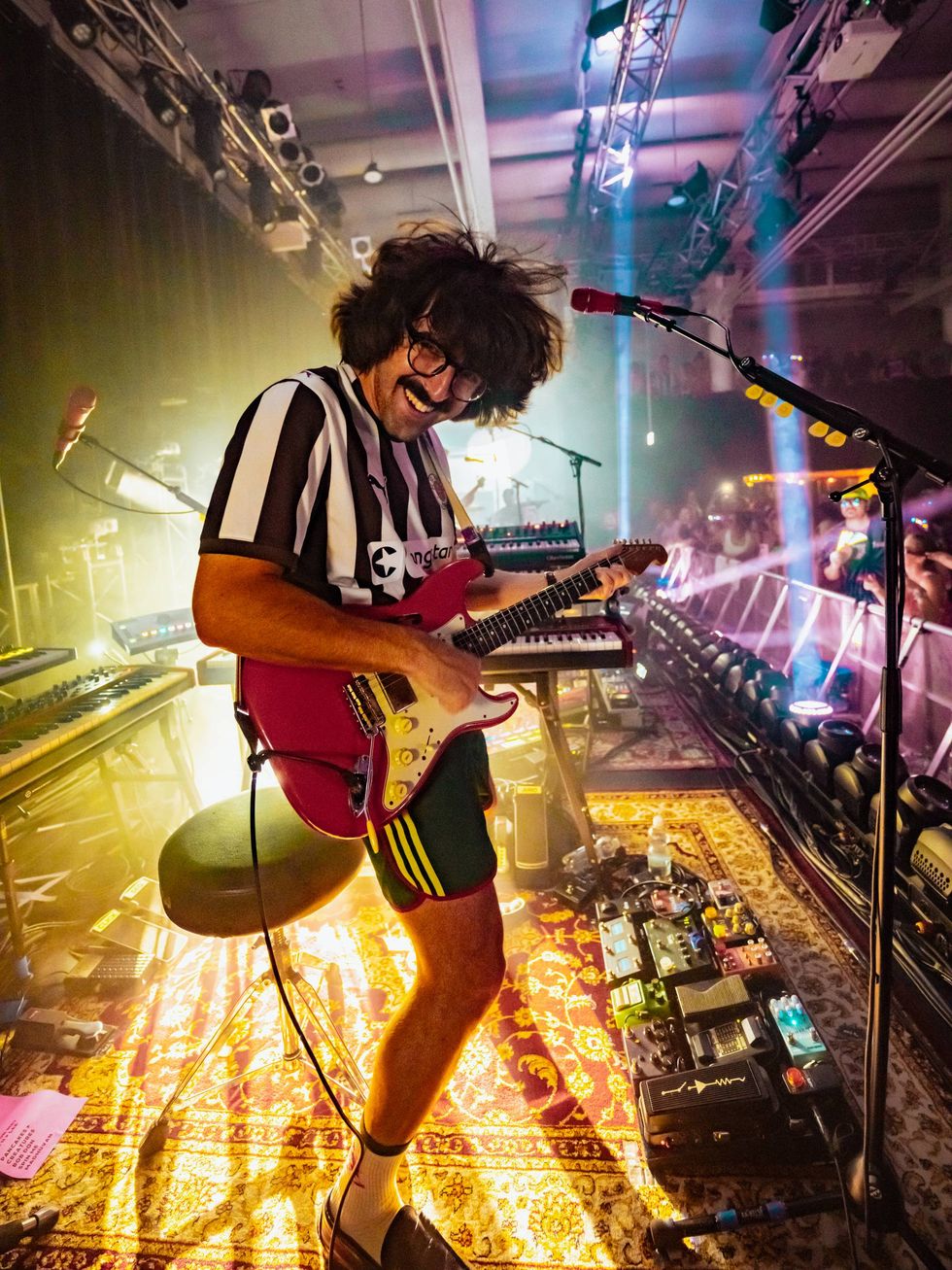
David Noonan
Ginger Dope
Unconventional as they may be in their guitar approaches, both Noonan and Kalyon came by their love of music by way of bands like the Beatles, Queen, and Led Zeppelin. “I wanted to be a saxophone player and a drummer at first, but they were too loud, so my parents got me a guitar,” Noonan says. His first guitar—a Squier Strat—practically became firewood when he discovered Nirvana. “The music was so exciting, and I thought that’s how you were supposed to play guitar, by throwing it around your bedroom and breaking things,” he says.
"I think when you try to make guitars sound like synths it actually works sometimes. But I never want to disguise the sound of the guitars entirely."—Mete Kalyon
It was also Nirvana that ignited the spark for Kalyon. “I used to listen to their greatest hits album, and that made me go, ‘All right, I need to learn how to play guitar,’” he says. “I got a crap guitar and played the hell out of it.” However, Kurt Cobain wasn’t the only Seattle guitarist who excited him: “I used to play loads of Jimi Hendrix’s stuff on guitar, but I can’t do it anymore,” he says.
Noonan laughs and says, “The first thing I remember about Mete was that he could play Hendrix’s ‘Little Wing.’ We were so impressed that he could break something like that out.”
Gear
David Noonan’s Gear
Guitars
Fender Jaguar Special HH
Fender Player II Jazzmaster (live)
Amp
Fender Hot Rod DeVille 212 IV
Effects
Fender Expression pedal
JHS Electro-Harmonix Soul Food with “Meat & 3” Mod
Electro-Harmonix Cathedral stereo reverb
Z.Vex Fat Fuzz Factory
Crowther Audio Hot Cake
DigiTech X-Series DigiDelay
Montreal Assembly Count to 5 delay/sampler
Hologram Effects Dream Sequence
Strings, Picks and Cables
Ernie Ball Super Slinky
Dunlop Max-Grip nylon .60mm
Fender cables
Mete Kalyon’s Gear
Guitar
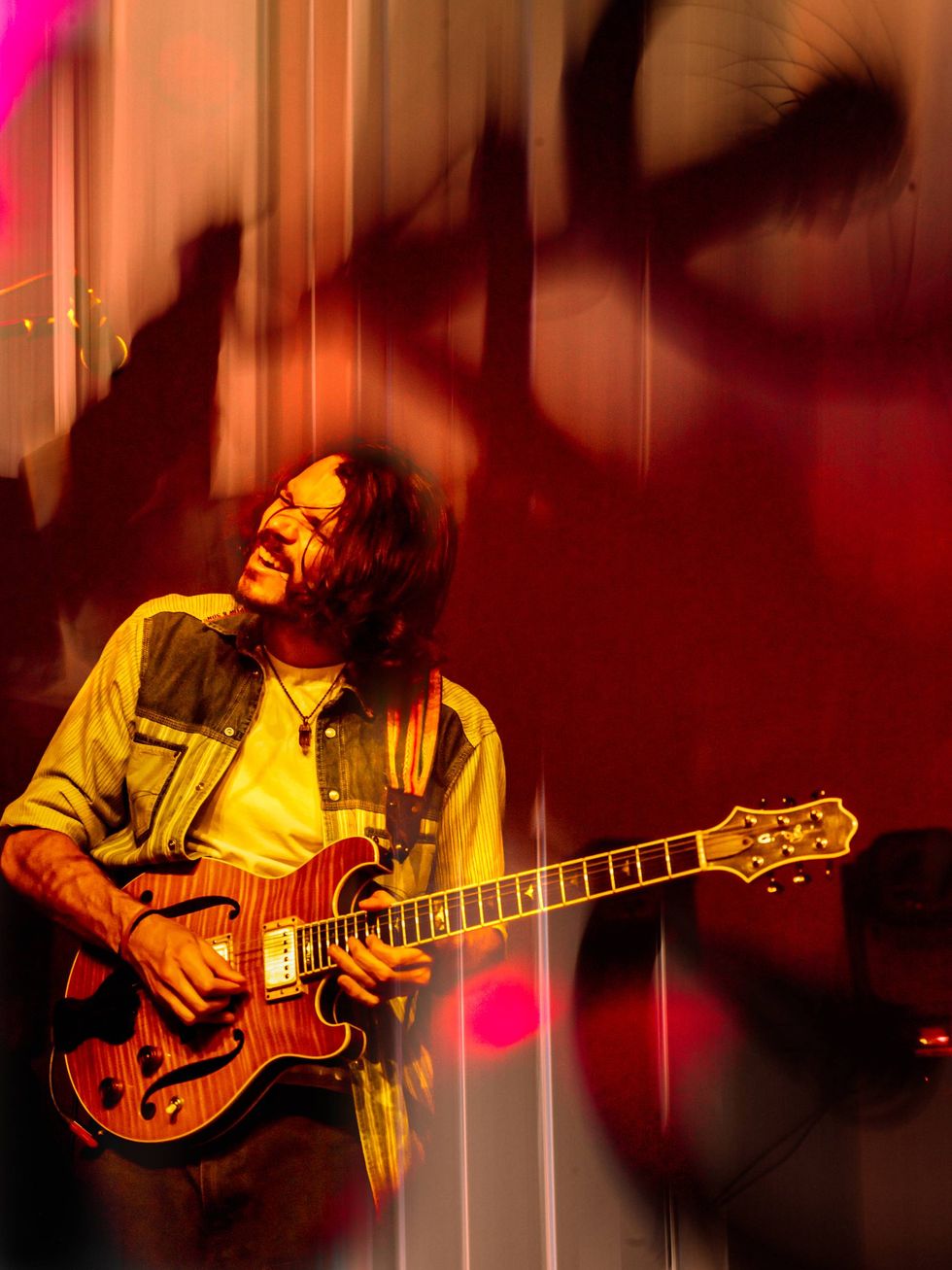
Fender Telecaster
Amp
Roland JC-120 Jazz Chorus
Effects
Pro Co Turbo RAT distortion
Way Huge Swollen Pickle Fuzz
Z.Vex Machine Oscillator
Electro-Harmonix Cathedral stereo reverb
DigiTech Polara Reverberator
Boss DD-7 Digital Delay
Moog MF Moogerfooger Ring Modulator
Montreal Assembly Count to 5 delay/sampler
Strings, Picks and Cables
Ernie Ball Super Slinky
“Whatever picks I can get my hands on”
“I haven’t a clue what cables I use”
Noonan met Kalyon in the college town of Dundalk, where he and pal Clarke, enthralled by electronica and groups like the Pixies and Sonic Youth, had moved in the hopes of starting a band. Hooking up with Ball put things in motion, but they soon realized they needed a second guitarist to fill out their sound. “It wasn’t quite an abduction, but I guessed they had heard that I played guitar and was into their kind of music,” Kalyon recalls. “I just remember David grabbing me off the street and saying, ‘Quick—you’re joining our band.’ It was quite shocking, really. Just like that, I was in.”
After a few jam sessions, it became apparent to both guitarists that their experimental approaches to sound complemented each other perfectly. “We grew up with traditional rock and blues, but we did away with that once we formed the band,” Noonan says. “The idea was to sound like electronica, but with guitars making all the noise.”
“The idea was to sound like electronica, but with guitars making all the noise.”—David Noonan
Over the course of their first two self-produced albums, the duo created abrasive sheets of pedal-driven textures—loud then soft, continuing the Nirvana template—with Noonan driving home sparky lead lines wherever they seemed to fit. But the two insist that there’s no dedicated “lead player” in the group. “We’re quite capable of swapping roles,” Kalyon says. “If I’m making one sound, David does the other, and vice versa.”
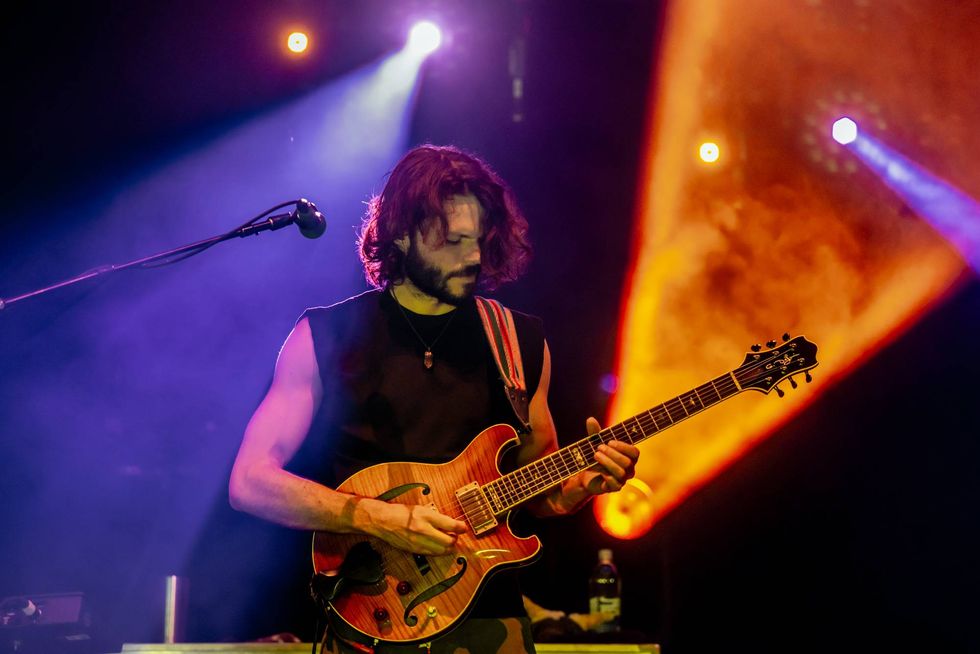
Noonan graduated to producer on We Were Just Here, and his basic approach involved recording the band live and then adding numerous guitar tracks—Noonan on a Fender Jaguar, Kalyon on a Fender Telecaster—to heighten the overall impact. “Silver” is an unnerving yet wondrous full-frontal assault on which Noonan piles tracks of pitch-shifting noise, enhanced by a Hologram Effects Dream Sequence. He and Kalyon ratchet up the chaos on “Endless Death”—its engulfing sonic boom is spiked with jagged melody lines that seem to escape at random times, shrieking and sputtering from all ends of the frequency range.
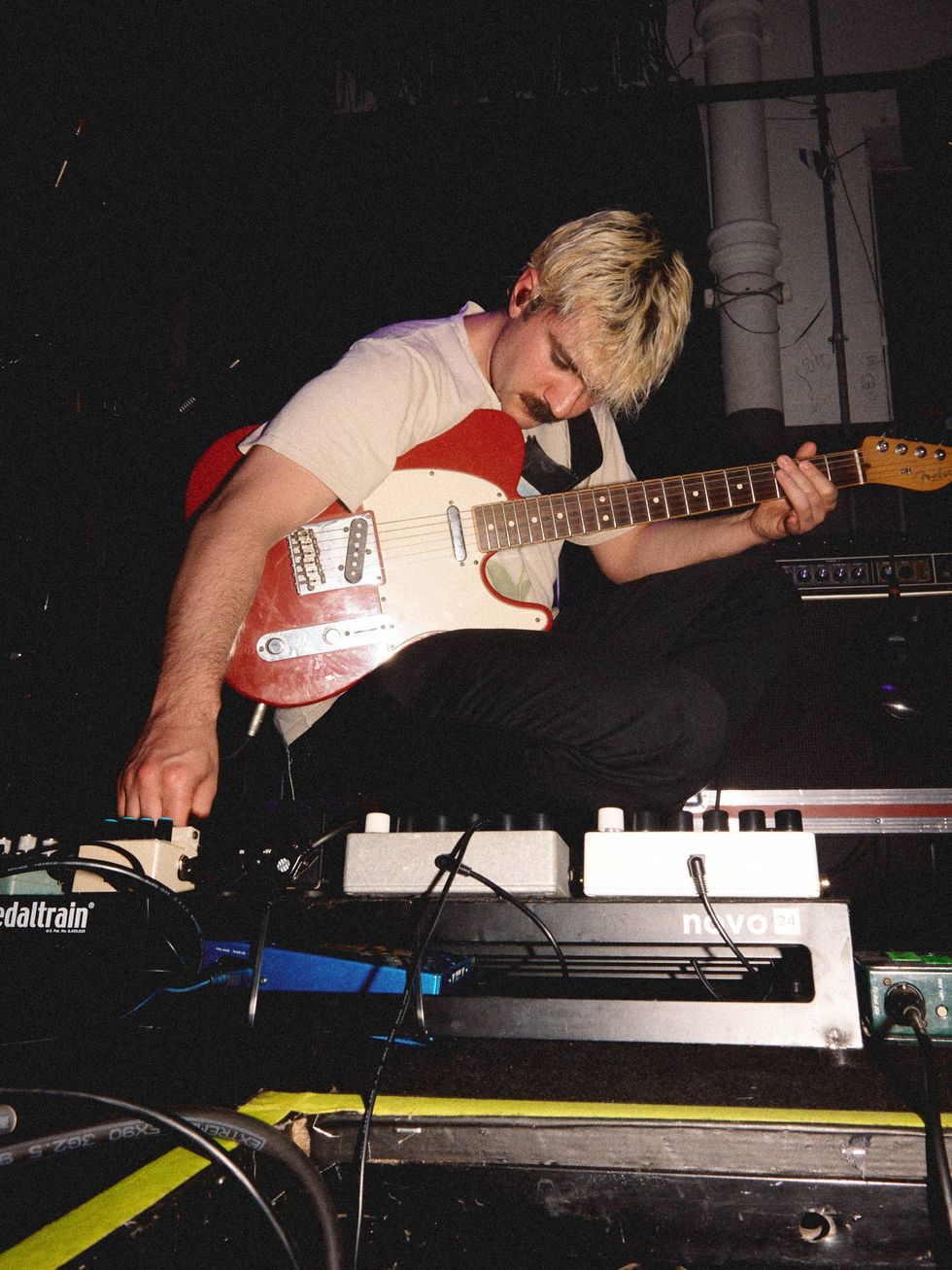
Mete Kalyon
James Streiker
“We kind of came at that one with everything we had,” Noonan says. “There was a lot of tinkering that went into that song, and now we have to figure out how to play it live.”
The matter of transferring their new material to the stage is a task that the band is now pondering, and Noonan admits that it’s going to be a harder nut to crack than before. “On some level, we just have to do what feels right at the moment, which is what we’ve always done,” he says. “Here’s a guitar melody that sounds right, but then you’ve got to slip back into the sonic happening and play something that’s not necessarily a lead part.”
He continues, “When we’re in the studio, there’s a lot of constructing bits that can make everything sound overproduced, but we don’t want to get to the level with some bands where you go to see them live and they have to have backing tracks or add these session musicians who go on tour with them. When you come see us, we want you to experience what you’re hearing on the record, which is us playing everything.”