
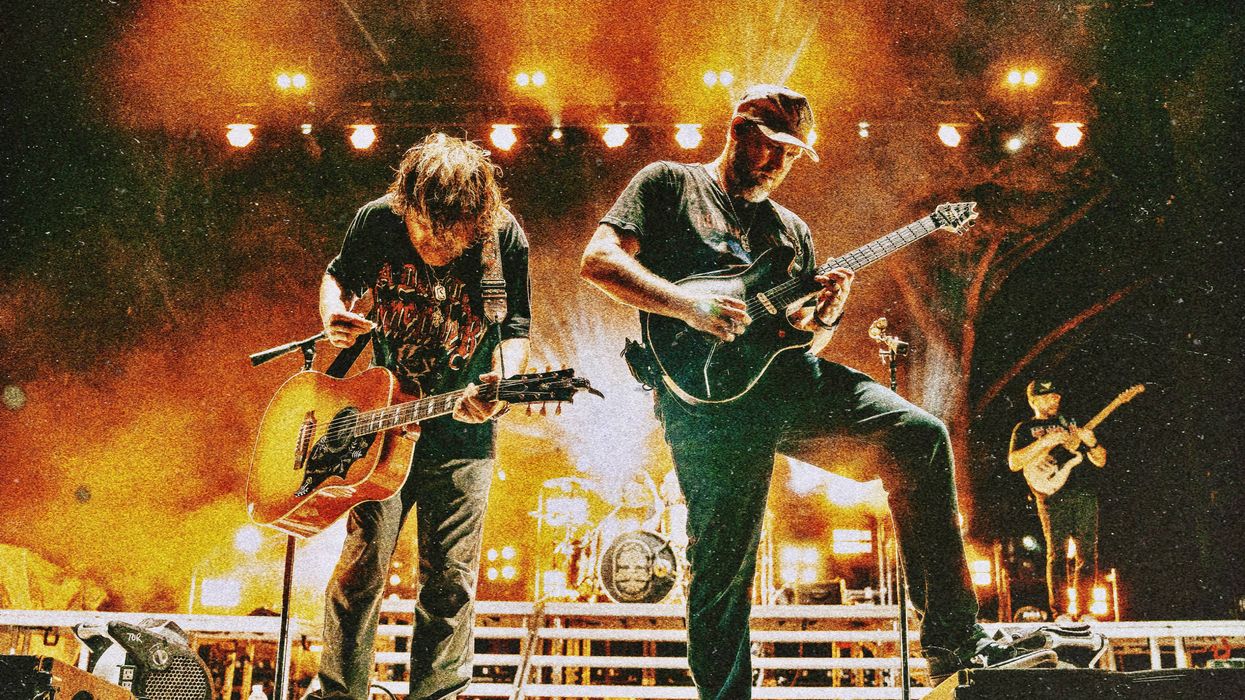
By all accounts, Treaty Oak Revival is doing a lot of things right. Over the past five years, the Odessa, Texas-based “rock band with a country accent” has issued two self-released, Gold-certified albums (2021’s No Vacancy and 2023’s Have a Nice Day), a host of Gold and Platinum singles, racked up over 1.4 billion global streams, and have played both the Grand Ole Opry and Lollapalooza.
Last October, the band made its first trip outside the United States on their four-stop “Treaty Oak Revival Takes Australia” headline run of dates Down Under. But what lead guitarist Jeremiah Vanley wants to talk about isn’t how the group sold out Melbourne’s 5,000-seat Hordern Pavilion; instead, he’s psyched about the time they played for 30 people in a Sydney bar.
“It was this girl’s birthday, and as it turned out, everybody in the place was a big fan of ours,” Jeremiah says. “They had a drum set and a sound system, so we just said, ‘Okay, we’ll get our guitars and play.’ It turned into our first pop-up show, and it was great. More and more we’re playing big places, but I still love a good club feel.”
Before he set foot on any kind of stage, Jeremiah was perfectly happy jamming with his buddies—bassist Andrew Carey and drummer Cody Holloway—in the back room of an Odessa vacuum cleaner repair shop. They called themselves Free Spirit, and on Tuesday and Wednesday nights they’d get together to drink Fireball Whisky and cut loose on classic rock covers. Eventually, they were joined on guitar by Jeremiah’s nephew Lance, who had just graduated from music school and was looking for something to do.
“They had about 10 cover tunes together,” Lance recalls. “It was kind of a crazy jam band—they did everything from ‘Free Bird’ to Fleetwood Mac to Van Halen. Jeremiah can shred on that stuff. It’s funny, ’cause the two of us never played together that much while I was growing up, but it felt really natural when we played in the vacuum shop.”
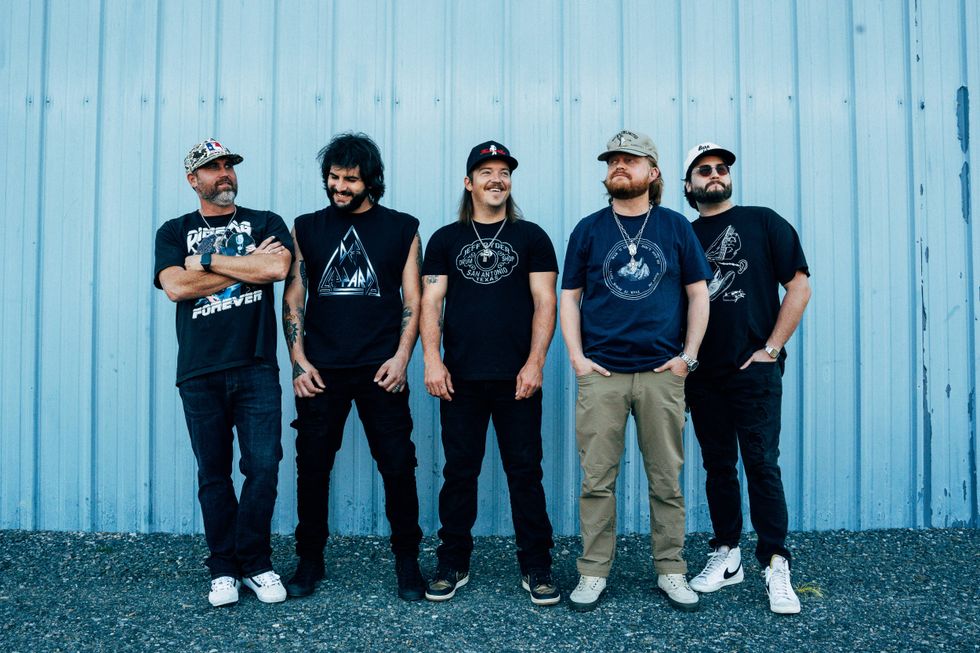
Treaty Oak Revival (l-r): Jeremiah Vanley, bassist Dakota Hernandez, drummer Cody Holloway, singer and acoustic guitarist Sam Canty, Lance Vanley
Photo credit: Paige Williams
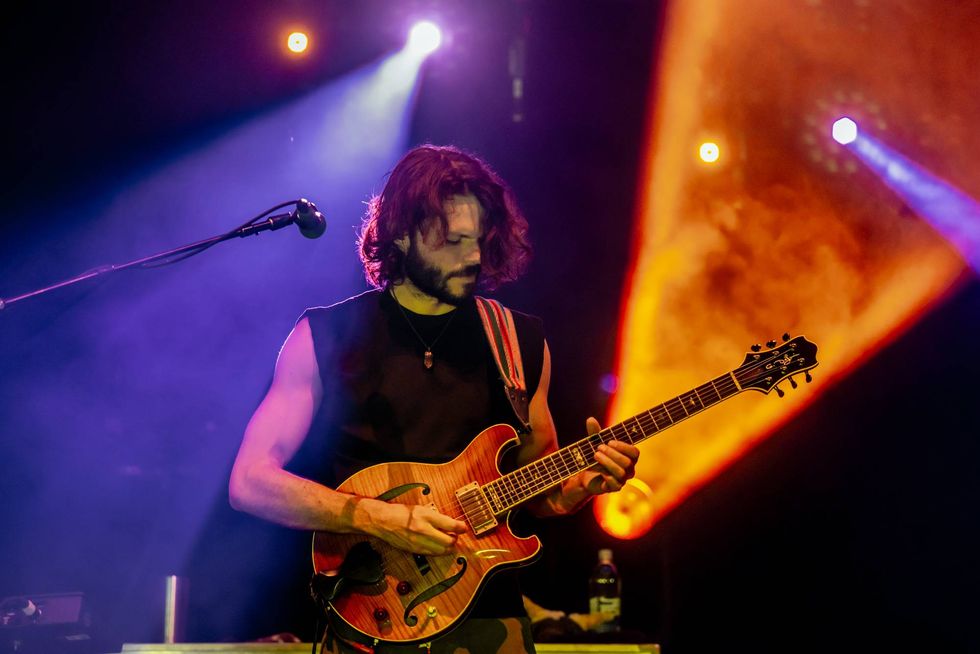
Jeremiah Vanley’s Gear
Guitars
Amp
- Neural DSP Quad Cortex (Brit Plexi 50 model)
Effects
- Ibanez TS808 Tube Screamer
- MXR EVH Phase 90
- Morley Bad Horsie Wah
Strings, Picks and Cables
- D’Addario NYXL or Ernie Ball (.010–.050)
- Dunlop Flow 1.5 mm picks
- “Whatever cables we have”
The two Vanleys couldn’t be more different. While Lance started playing guitar at age nine and studied music theory in college, Jeremiah, older by 10 years, didn’t pick up the guitar until he was 18—and never took so much as one lesson. Lance grew up listening to rock, jazz, hip-hop and R&B; he calls John Mayer one of his biggest influences. “I love his rhythm playing and the way he builds songs,” he says.
Jeremiah, on the other hand, cites Metallica, Pantera, and Van Halen as his prime inspirations. “I still listen to Eddie Van Halen and have my mind blown,” he says. “It’s like, ‘How did he come up with all that amazing stuff?’” Interestingly, it’s self-taught Jeremiah who shoulders lead guitar duties in the band, while Lance is content to play in-the-pocket rhythm. “Jeremiah’s a shredder—he can just rip all night long,” Lance says. “I don’t mind playing rhythm guitar. A good band needs a solid rhythm guy. It’s really important.”
“More and more we're playing big places, but I still love a good club feel.”—Jeremiah Vanley
Shortly after Lance joined Free Spirit, singer Sam Canty came by the vacuum shop, and that’s when things got serious. “Sam had a cool stage presence about him, and he could sing really well, but we were like, ‘Wow, he’s pretty country,’” Jeremiah says. “We did some covers with him, and then he pulled out his original tunes. He played ‘Boomtown,’ and we were knocked out. We looked at each other and said, ‘We could do something with this.’ So we became more of a Texas country-rock band.”
Originally, both Vanleys played Telecasters through Fender amps, but that changed when Canty suggested that the band—rechristened Treaty Oak Revival in honor of the Treaty Oak in Austin—should forge a heavier sound. Jeremiah required no arm twisting. “I already had a Les Paul, so I went out and bought a Marshall amp,” he says. “Once I plugged that in, we got a grungier rock sound.”
“It made a huge difference,” Lance says. “With Jeremiah on the Les Paul, everything started to fall into place.”
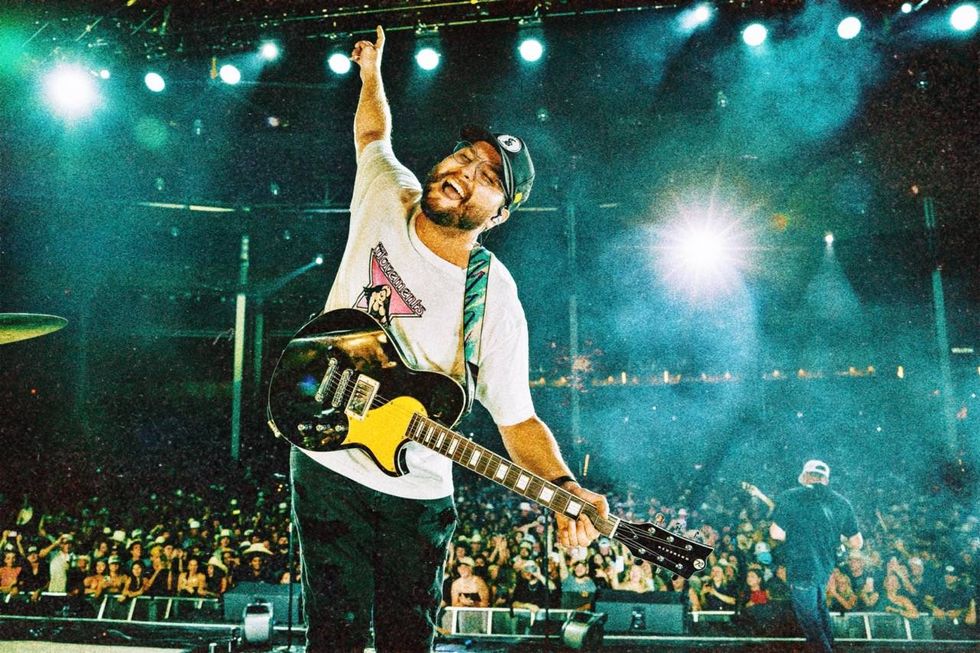
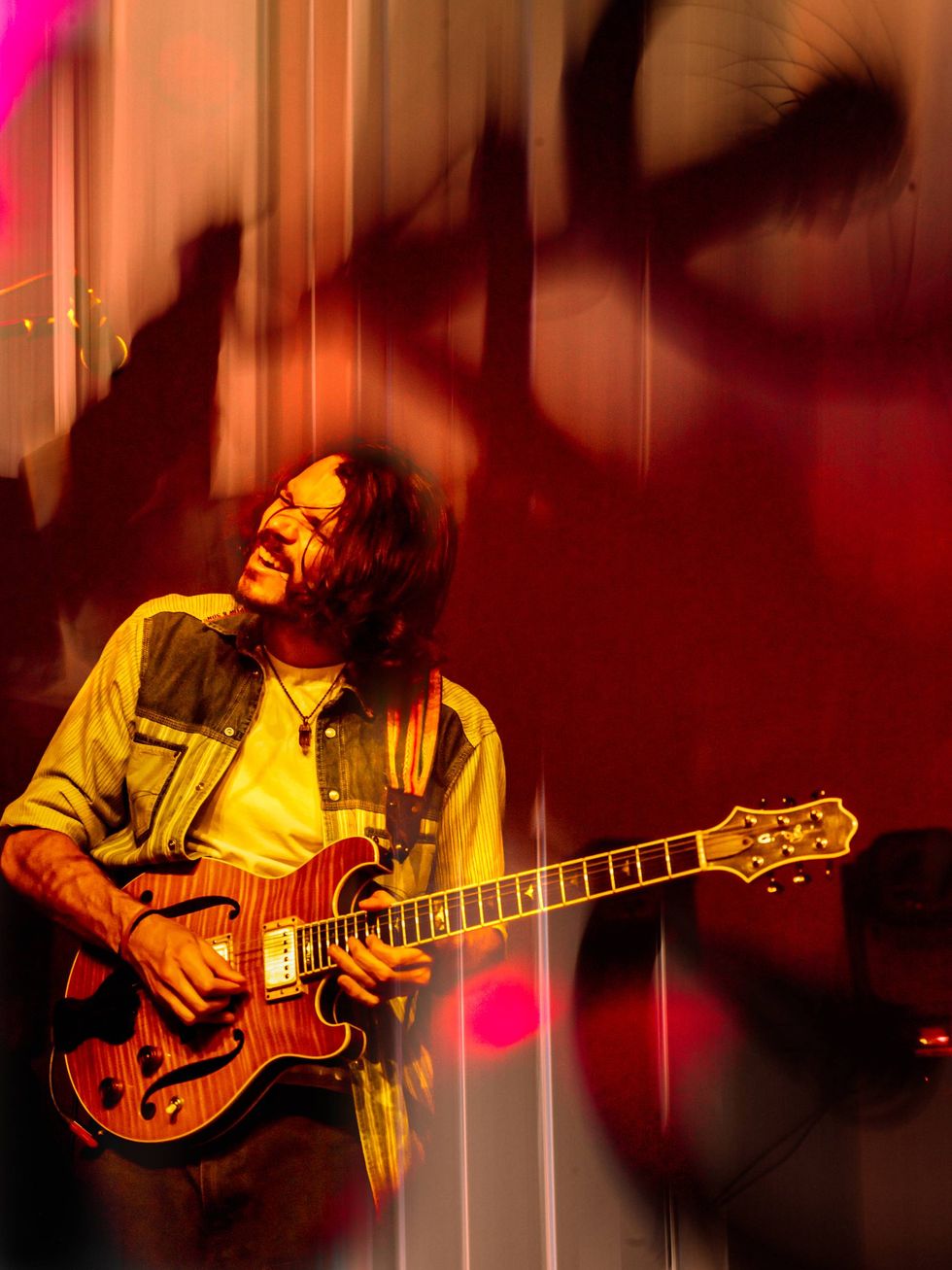
Lance preaches with his Reverend.
Photo credit: Paige Williams
Lance Vanley’s Gear
Guitar
- Reverend Stacey Dee Signature
- Reverend Charger Jr.
Amp
- Morgan AC20 Kemper Profile
Effects
- “All of my effects are in the Kemper”
Strings, Picks and Cables
- D’Addario NYXL (.011–.049)
- Dunlop Tortex 0.71 mm picks
- “We have a mix of cables—D’Addario and potentially Ernie Ball.”
The group started playing live, and their sound got tougher still—walls of bone-rattling power chords and flame-broiled riffs that provided turbulent canvases for Canty’s richly detailed narratives. The combination of revamped post-grunge and red-dirt Americana worked like a charm on TOR’s first two albums; songs like “Missed Call” and “See You in Court” went down like musical comfort food. Fifty-somethings could revel in rip-roaring ’90s nostalgia, while their kids could claim the band as their own without embarrassment.
Treaty Oak Revival’s newest album, West Texas Degenerate, is their grittiest, grungiest effort yet—at times, Canty’s twangy vocals are the only country element to be heard. The mean-spirited “Shit Heel” packs the guitar wallop of Everything Zen-era Bush, and the bruising title track could have fit alongside Pearl Jam, STP, or Everclear on any 1995 alternative radio playlist. The tone and style shift on “Bad State of Mind”—it’s a decidedly modern country affair, but even here its gloomy main riff owes more to the Pacific Northwest than, say, Music Row. “I came up with that opening bit,” Lance says. “I tend to be more of the riff guy. If there’s something that continues throughout a track, that’s usually me.”
“Jeremiah’s a shredder—he can just rip all night long. I don't mind playing rhythm guitar. A good band needs a solid rhythm guy.”—Lance Vanley
Jeremiah, meanwhile, snarls and snorts throughout the record. He’s like a “greatest hits” of classic rock, metal, and alt-rock licks and solos—there’s a pinch of Zakk here, a touch of VH there, a smidgen of Joe Walsh over there, and a sprinkle of Mike McCready for good measure—but he’s incorporated it all into his playing in an authentic and personal manner. Onstage, he’s a great showman (there’s a theatrical flair to his playing that would be absurd were he not so damn confident), and when he lets loose with a bracing, arena-ready solo on “Port A,” he’s letting you in on the excitement he feels.
“There’s a lot of improv going on in my solos, and it can take me anywhere from three to 15 takes to get something down, depending on how difficult it is,” Jeremiah says. “We go through the takes and pick out parts that sound good. It can’t be just some melodic, weird thing—it’s got to fit the song. I think everything we’ve done collectively fits well on this record. It’s worth listening to more than once.”

![Rig Rundown: The Black Crowes’ Rich Robinson [2026]](https://www.premierguitar.com/media-library/youtube.jpg?id=66952027&width=1245&height=700&quality=70&coordinates=0%2C0%2C0%2C0)