
The superstrat was not born in a design studio. It was not shaped by a focus group, nor was it conceived as part of a grand plan to reinvent the electric guitar. It evolved because one player demanded more from the instrument than it had ever delivered before. When Eddie Van Halen assembled his now-legendary Frankenstrat, he wasn’t trying to create a new category of guitar. He was solving problems. He wanted an instrument that could survive aggressive tremolo abuse, deliver more power and thickness, and respond to the speed and articulation of the music he heard in his head. Every modification—hotter pickups, a flatter fingerboard radius, larger frets, a locking tremolo—brought the guitar closer to that vision.
What began as one player’s search for a more appropriate tool evolved into an entire philosophy of instrument design. The Frankenstrat became one of the defining blueprints for the superstrat, influencing everyone from boutique builders to major manufacturers. It also changed what players expected from an electric guitar and created a platform that continues to evolve nearly half a century later. Few people have had a better understanding of that evolution than Jon Romanowski.
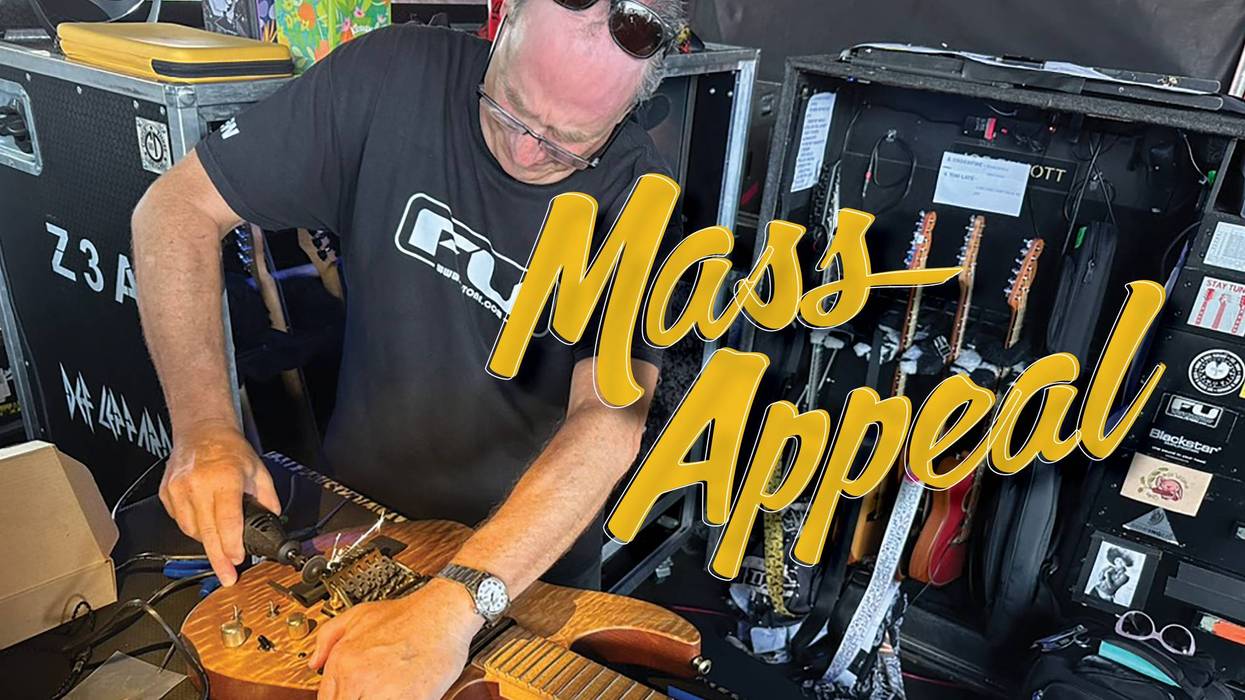
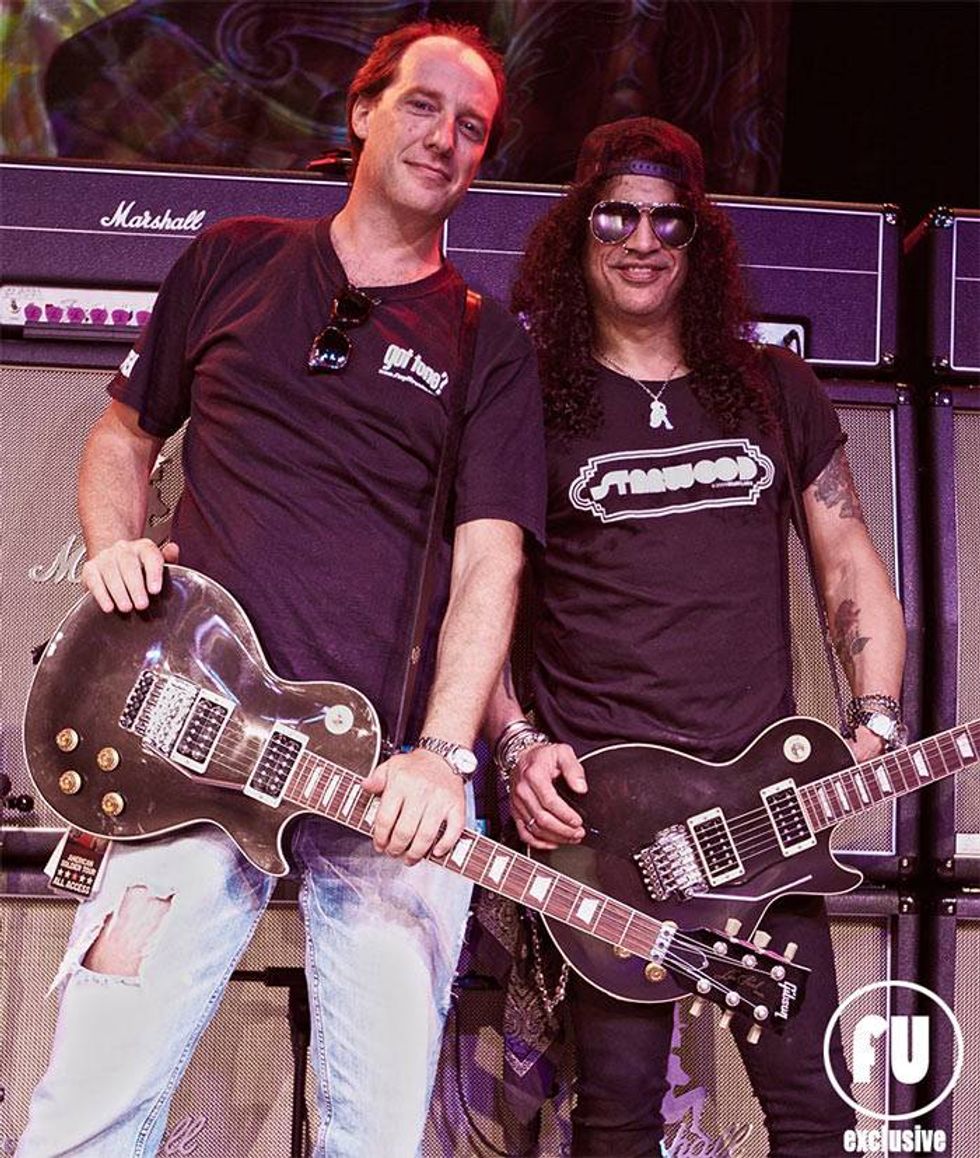
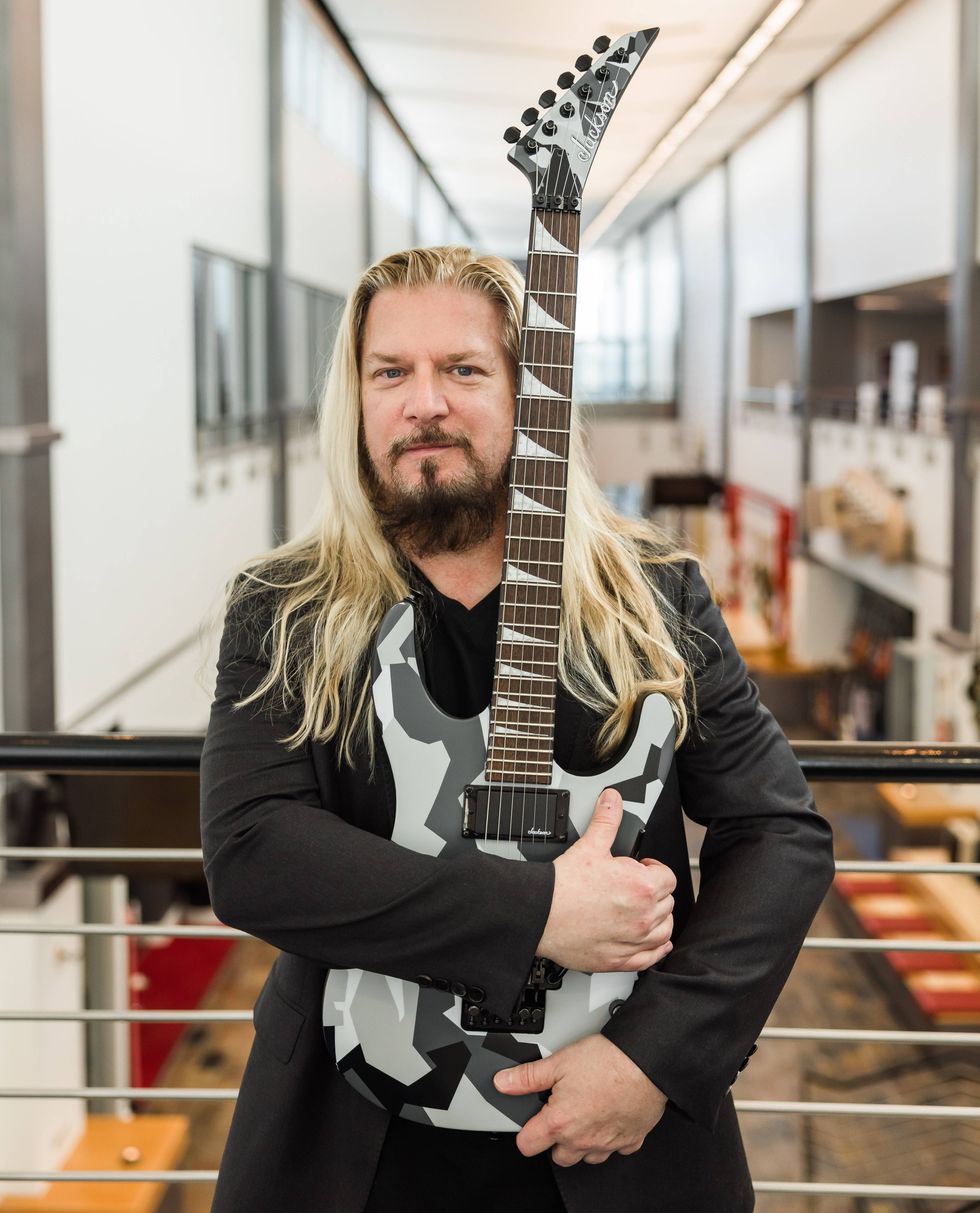
As Vice President of Product for Fender Musical Instruments Corporation’s high-performance brands—Jackson, Charvel, and EVH—Romanowski occupies a unique position in the guitar world. He doesn’t build guitars in the traditional sense. He doesn’t carve necks, wind pickups, or spray finishes. Instead, his craft is something less visible but equally important: understanding what innovations guitarists seek and translating those insights into instruments they genuinely want to play.
“There’s a huge, undulating current of artists and bands having a major impact, so we’re watching those trends.”
Romanowski describes product management as the hub of a wheel, with each “spoke”—engineering, manufacturing, artist relations, marketing, sales, and finance—contributing a different kind of expertise. “Successful products,” he says, “are created at the point where those perspectives intersect.” Throughout a conversation that repeatedly emphasizes the value of teamwork, Romanowski’s focus always returns to the most important voice in the room: the guitarist.
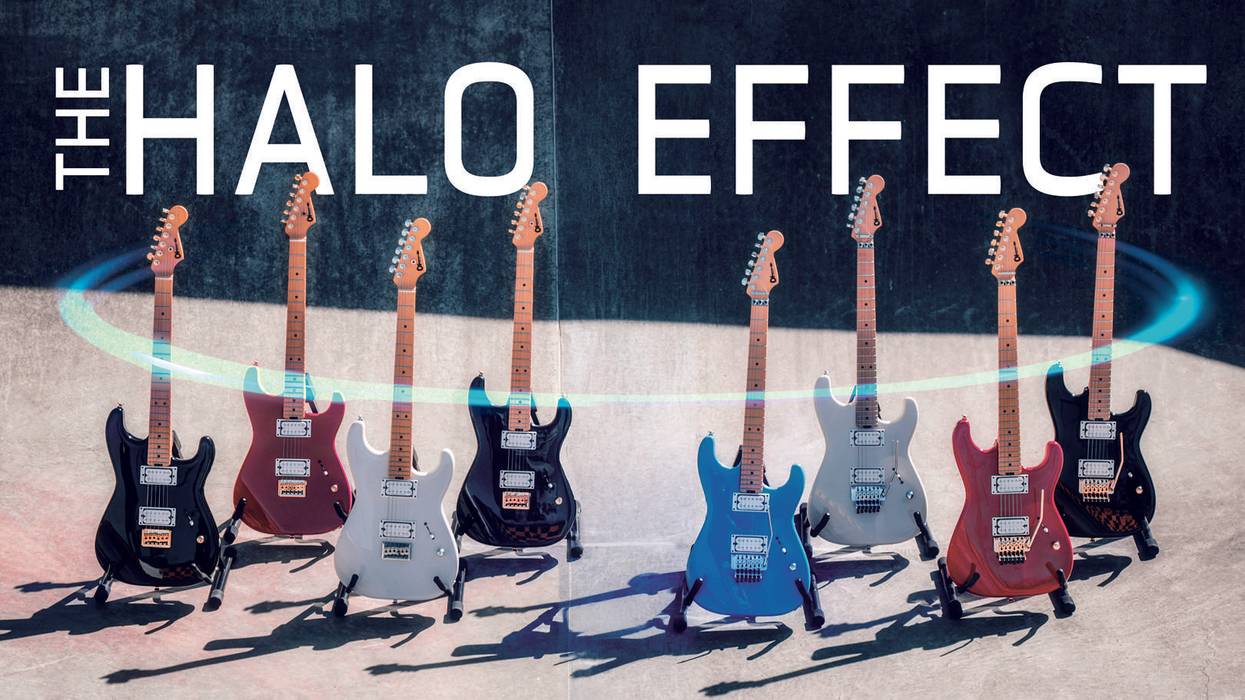
To Romanowski, innovation doesn’t begin in a factory or a boardroom. It begins with a player trying to solve a problem. A player pushes boundaries, other musicians take notice, manufacturers respond, and new technologies eventually filter through product lines and out into the broader guitar community. He calls this phenomenon the “halo effect.” Eddie Van Halen’s Frankenstrat was one of those ideas. Romanowski has spent much of his career shepherding similar ideas into existence—not by imposing himself on the product, but by listening to what players need.
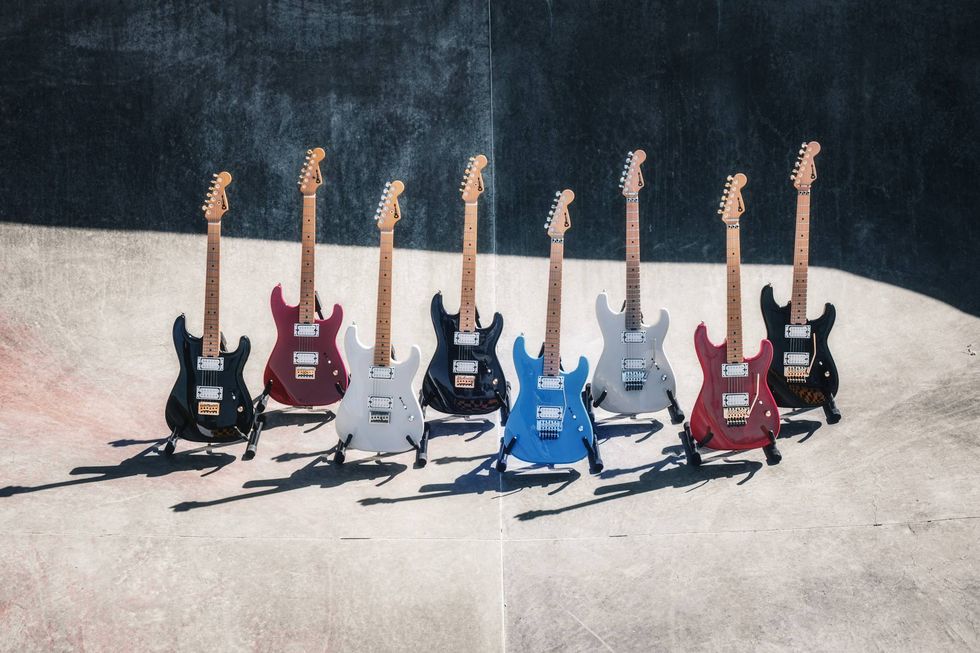
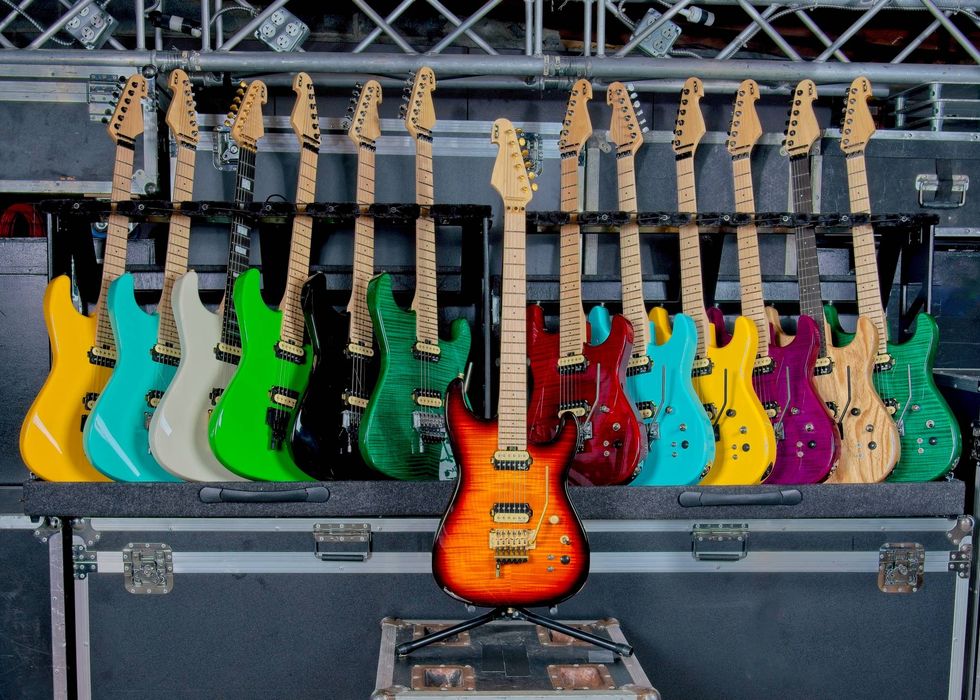
The Charvel American Neo Classic San Dimas Series
Long before he reached the upper levels of the guitar industry, Romanowski grew up in Rochester, New York, raised with two distinct perspectives: His father, an engineer, emphasized discipline, academics, and analytical thinking, while his mother encouraged creativity and artistic exploration. That combination proved formative. His father’s mindset would eventually serve him well in product development, while his mother kept music at the center of his life.
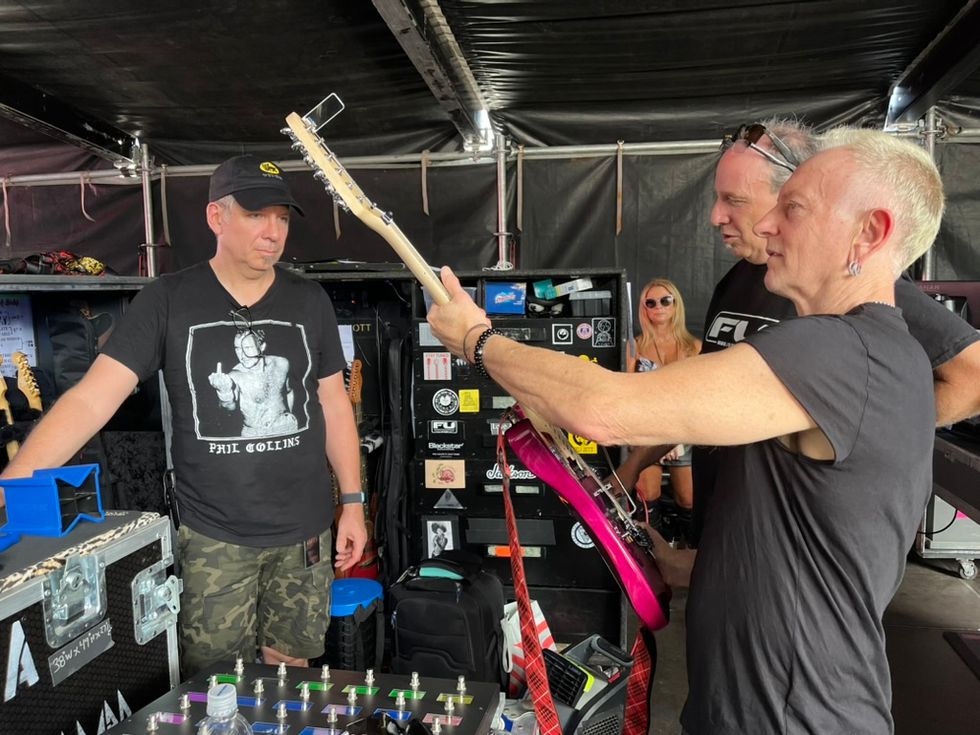
Like many teenagers of his generation, Romanowski’s path changed after seeing the possibilities of rock music explode on MTV in the early ’80s. Watching Def Leppard’s “Photograph” video, he knew he wanted to play guitar. “My mom was always trying to get me involved in the arts,” he recalls. “But after seeing Def Leppard, I thought, ‘Man, I want to do that.’”
Playing eventually led to a job at Rochester’s legendary House of Guitars, where he says his real education began. The store became a classroom unlike any traditional academic environment. He saw firsthand how players interacted with instruments, watched local musicians chase opportunities, witnessed artists develop their identities, and began to understand that the music business extended far beyond playing guitar. “Don’t let school get in the way of a good education,” he says with a laugh.
That experience eventually led to positions with ART (Applied Research and Technology, founded by MXR alumni) and later Ibanez, where Romanowski learned one of the most important lessons of his career: successful product development isn’t necessarily about inventing something completely new. Often, it’s about paying attention.
“You’re looking for holes in the marketplace,” he explains. “You say, ‘We have these types of guitars for these kinds of players, but they’re looking for this other type of sound, so maybe we should do that.' You pair them up and bring it to market.” That philosophy would become the foundation of his approach. The goal isn’t to predict the future. It’s to listen closely enough that the future reveals itself.

The Jackson Pro Plus Series Limited Edition Signature Misha Mansoor Juggernaut ET8 2
By the time Van Halen’s debut album arrived in 1978, the electric guitar had already undergone several major transformations, yet Fender and Gibson still largely dominated the market. Romanowski acknowledges players like Les Paul were already pushing technical boundaries. “He was playing very fast and quick; he just didn’t do it with distortion,” he says. “And you had the undulating fusion thing going on with Al Di Meola and Allan Holdsworth, so there was already that virtuosity—except those players were highly-schooled and rooted in jazz. Then here comes a guy with those chops, applying them in a pop context. It was accessible and digestible, yet it also sounded like nothing anyone had heard before.”
“Eruption” was more than a great guitar solo; it was a moment when players realized the instrument could do things they had never imagined. “‘Eruption’ sounded like Beethoven meets E.T.,” Romanowski says with a chuckle. “People had never heard a guitar sound like that before. That was the appeal.”
But Van Halen’s influence extended beyond technique. Romanowski describes the Frankenstrat as “patient zero” in the superstrat lineage. “He completely changed the engineering demands of the electric guitar,” Romanowski says. “To play that way, you needed a guitar with a flatter radius, bigger frets, hotter pickups—and it had to look the part.”
Van Halen didn’t build the superstrat to create a market category, but rather because existing instruments didn’t meet his needs. “And people glommed onto that. They were like, ‘I want to be like that guy, so I need that kind of guitar.’” For Romanowski, that insight is essential: defining moments in the guitar industry are often driven by musicians pushing instruments beyond their present limitations.

The Charvel Jake E. Lee Signature Pro-Mod San Dimas Style 1 HSS HT RW 2
Romanowski believes the halo effect is earned through meaningful innovation, not novelty for novelty’s sake. The goal is not to change an instrument simply to make it different, but to understand why players need something different in the first place. It’s a philosophy that shapes his view of signature models. In some corners of the guitar world, artist models are dismissed as marketing exercises—familiar designs dressed up with a famous name. Romanowski sees them differently. At their best, signature instruments give artists opportunities to push manufacturers toward ideas that may eventually benefit everyone.
He points to Misha Mansoor of Periphery as an example of an artist whose influence extends beyond his own instruments: he introduced ideas through his Jackson Juggernaut signature guitar that filtered through the rest of the product line. “Artists like Misha help push us in terms of design and technologies,” Romanowski explains. “They’re the ones that lead the charge, internally. We do stumble upon some things, but in my experience, we’ve always been more successful when we listen to what the artist needs, or the market telegraphs us some stuff. The halo effect drives the overall business.”
For Romanowski, the artist is not simply endorsing a product—they’re a part of the development process. He compares that influence to the way Michael Jordan changed perceptions of basketball shoes. A player at the highest level can transform how an audience views a product—not because everyone will perform at that level, but because the product represents possibility. The same idea applies to high-performance guitars. “With heavy metal and hard rock, you can’t just casually play it,” Romanowski says. “You must spend some time on it, which means you did that at the expense of something else. You sacrificed something to be able to play like this. And for those players, there’s an expectation there.”
Though Romanowski was initially hired by Fender to jumpstart its high-performance brands, he and his team understand that their role isn’t to recreate the revolutionary moments of the past. “Those moments already happened,” he admits. “Classic brands don’t need a whole lot. They’ve got a great history. They just need a little tweaking here and there.” The groundwork laid by the players and builders who reshaped the instrument—Eddie Van Halen, Randy Rhoads, Grover Jackson, and Wayne Charvel—has endured. “That group in the ’80s hit pay dirt,” Romanowski says. “So [at Jackson] we already have extraordinary platforms—the Rhoads, the Soloist, the Dinky.”

The Jackson Pro Series Signature Wes Borland King V KV
Today, the challenge is to keep evolving those platforms. That means adapting classic designs for modern players with seven- and eight-string models, new pickup configurations, varied scale lengths, updated finishes, and a broader range of price points. Romanowski jokingly compares the process to “Mr. Potato Head”—rearranging familiar pieces to create something new. Beneath the humor is a sophisticated philosophy of iterative design: great designs endure because they are flexible. The superstrat can absorb new influences without losing its identity.
“A young player can stream Pantera, Bring Me the Horizon, Allan Holdsworth, Brad Paisley, and Kurt Cobain within the same afternoon.”
The next stage of the superstrat is already underway, according to Romanowski. While technical ability will always matter, he sees younger players increasingly emphasizing heavier riffs, lower tunings, and songwriting chops, rather than pure displays of speed. He believes the superstrat is well positioned for that future because it has always adapted to the musicians using it.
“The last guitar revolution, in my opinion, was back in 2008/2009, with Periphery and Animals as Leaders,” he says. “To me, that was like the late ’70s/early ’80s Van Halen and Randy Rhoads kind of thing.” For Romanowski, those moments are connected. Both represent players asking for more from the instrument, and manufacturers responding.
Now he sees two generations helping shape what comes next. “Boomers are starting to age out,” he says. “And Gen Xers are becoming more prominent. They were the ones that got exposed to all this stuff in the ’80s and ’90s, and that’s helped give us a tailwind. They remember it and want to get back in touch with it. There’s also a large group of very young people getting into guitar for the first time, so you’ve got these two cohorts coming together that can help chart a course.”
Beyond guitar-centric revolutions, Romanowski believes another major shift has helped shape the modern guitar landscape: the way people consume music.
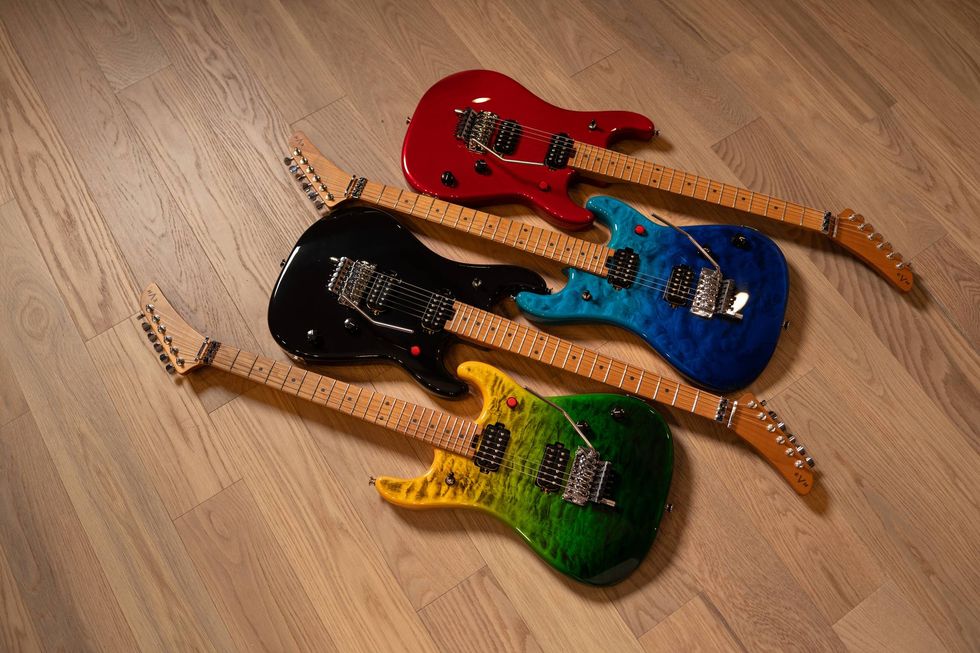
EVH 5150 Series DX + DX QM (Quilted Maple) models
“In the 1980s, MTV helped determine which artists reached millions of listeners,” he says. “In the 1990s, grunge changed the priorities of many guitarists seemingly overnight. Today, because of the internet and social media, those divisions have largely disappeared. A young player can stream Pantera, Bring Me the Horizon, Allan Holdsworth, Brad Paisley, and Kurt Cobain within the same afternoon.”
The result is a guitar culture where multiple generations and styles exist simultaneously. The superstrat no longer belongs only to virtuosos chasing technical perfection. It has simply become another electric guitar to choose from, regardless of what style of music one plays.
Ultimately, Romanowski defines his leadership role simply: “to take the beatings and celebrate the wins.” Nearly 50 years after Eddie Van Halen painted stripes on a modified Stratocaster and changed guitarists’ expectations of the instrument, the superstrat now comfortably coexists with standard-bearers like the Stratocaster, Les Paul, and SG.
“Technology evolves, players change, music moves forward,” Romanowski says. “Yet the conversation between musician and instrument continues. There’s a huge, undulating current of artists and bands having a major impact, so we’re watching those trends.”
He may not be able to predict the next guitar revolution, but Romanowski knows the future belongs to those willing to listen for it. “There continues to be a path forward, and there continue to be even more growth opportunities,” he says. For Romanowski, perhaps that is the real halo effect—not simply creating something new, but making an instrument that helps move the conversation forward.