
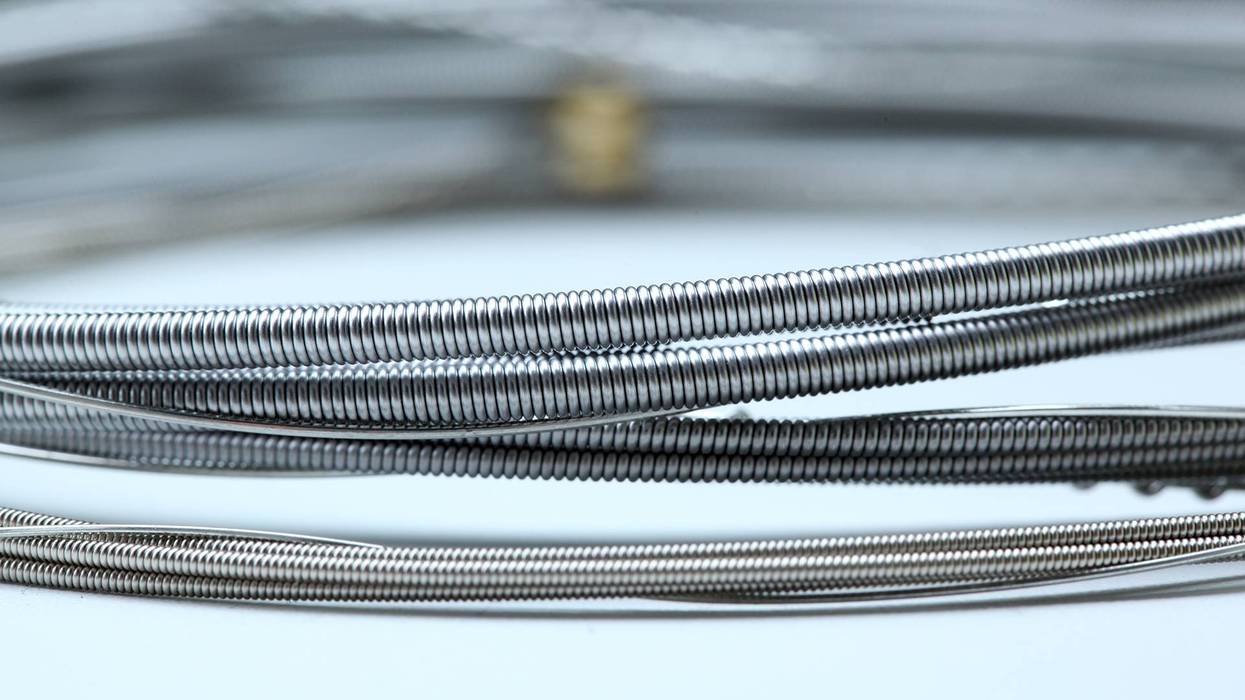

We’re living in a golden age of innovation for extended-range guitar. These days, there are more ways than ever to fine-tune and experiment—whether you’re playing a 7- or 8-string, cranking down to extreme drop tunings, utilizing specialized pickups or multi-scale designs, or chasing the sonic subtleties of particular string brands. We spoke to five top manufacturers for insights into the creation and refinement of their flagship products.
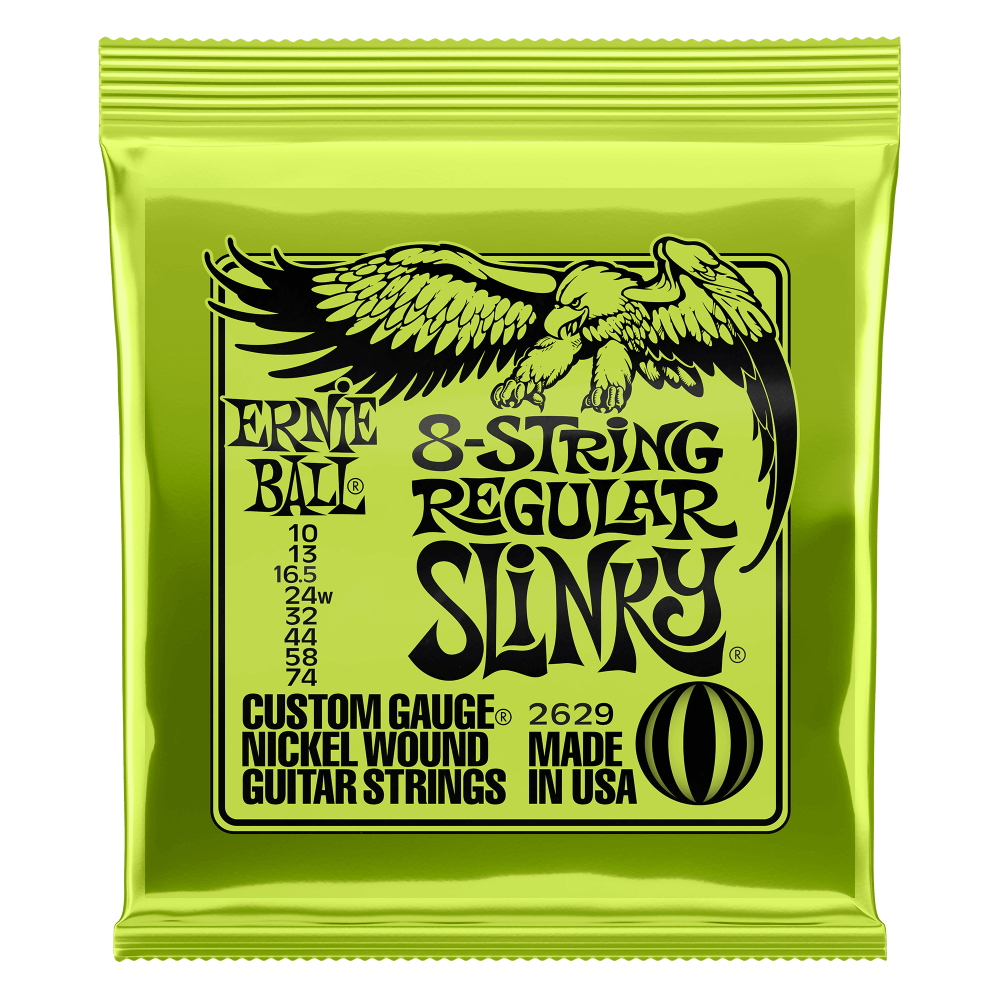
8-String Regular Slinky (P02629)
Ernie Ball’s extended-range history dates back to 1992, when they introduced their first set for 5-string bass. From there, the pace was fairly steady: a 6-string bass set a few years later, the 7-string Slinky guitar sets by 2000, and baritone gauges shortly after. “One clear signpost came in the early 2010s when we saw other manufacturers move quickly from 8-string to 9-string instruments,” says Chris Harrington, director of Operations & Innovation. “[This showed us that] extended range wasn't a passing trend but an accelerating one. We introduced our first 8-string set in 2012, followed by our first 9-string set just two years later.”
Another major turning point came in 2021: The company created a signature Music Man Majesty 8-string model for Dream Theater wizard John Petrucci, paired with a set of Regular Slinky strings (P02629) for optimized performance.
"Because tension alone doesn’t tell the whole story, development involved trial and error, which John validated when confirming the final gauges,” Harrington says. “We also use proprietary methods and tools to evaluate factors beyond tension, ensuring the set feels and sounds consistent across all strings. Lastly, we have the advantage of listening to our large family of artists to understand what matters most to players. Many of our set expansions over the years, including our extended range options, have been directly informed by these relationships and the solutions we’ve generated together.”
Ernie Ball’s philosophy in the extended-range space is to “build with users rather than guess what they want”—a support process that partly involves working through string needs beyond their current sets. “These conversations are often where our insight into future offerings comes from, as we see a need firsthand and develop a solution for it, which at times leads to an eventual product offering,” Harrington says. “Over the past 34 years, we have continued to expand our extended-range offerings, and I don't see that stopping anytime soon.”
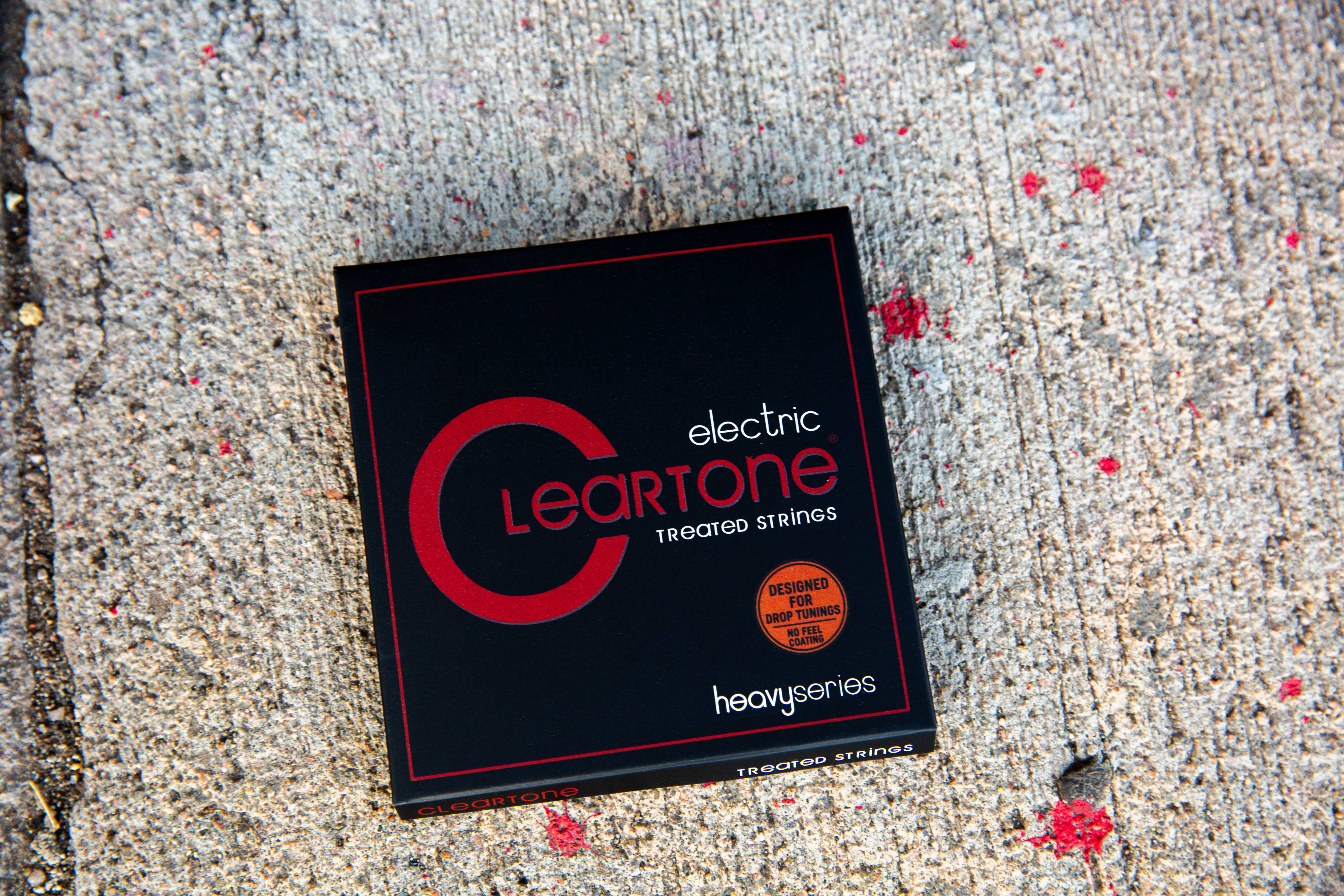
Heavy Series
Cleartone emerged in the early 2000s, just as nu-metal, metalcore, and post-hardcore guitarists were helping reimagine the dynamics of “heavy guitar.” The company recognized these shifts—the lower tunings, the increased string attack, the proliferation of extended-range instruments—and aimed to become part of that creative conversation. “From the beginning, we developed a proprietary manufacturing process called Super High Tension Winding,” company president Mike Loscalzo says. “We also custom-built our winding machines to apply precise, controlled tension as each string is made—an approach that was far from the industry norm at the time. Every wound guitar string contains hundreds of individual wraps, and we believe every one of them matters.” They went one step further with their Heavy Series, which uses a thicker core-to-wrap ratio to increase tension and structural strength, control excess string movement, and improve tuning stability, intonation, and note definition in those monstrous lower tunings.
“We’re constantly blown away by each new generation of guitarists pushing the instrument’s limits—tuning lower, developing more aggressive techniques, and creating sounds that didn’t exist when we began,” says Cleartone vice president Scott Sciacca. “As guitar manufacturers continue to develop more extended-range and longer-scale instruments, we’ve expanded and refined our offerings with more gauge options. We’ve also made baritone-compatible string length standard across all our electric sets, so players don’t need to purchase a custom or specially designed set to accommodate a longer-scale instrument. But at our core, we remain true to the same purpose Cleartone was founded on: making strings that resist breakage, stay in tune, last longer, and keep pace with the evolving demands of today’s players—and the next generation.”
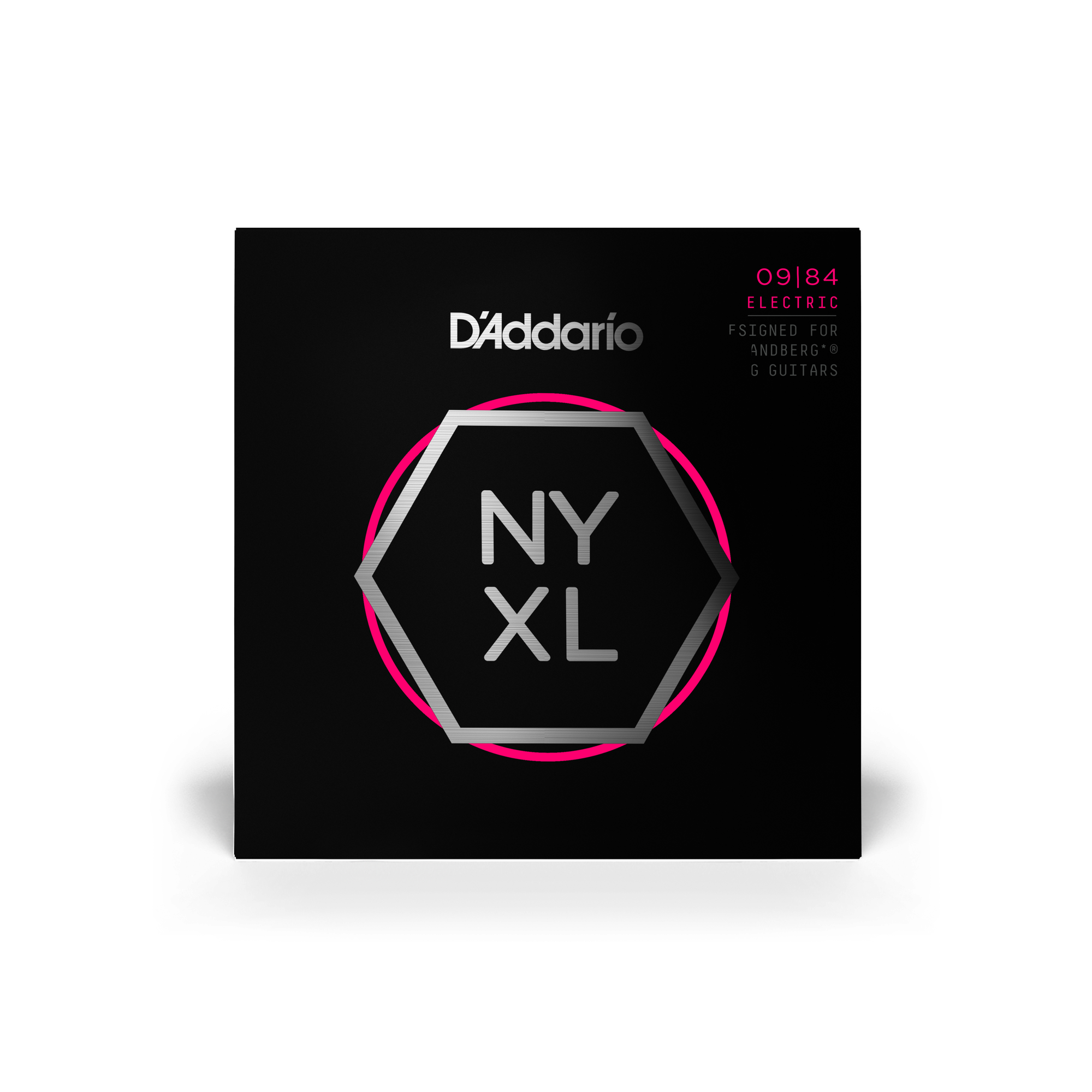
NYHD and XT Series
D’Addario have been around since 1973, through decades of string evolution. As extended-range guitars have become more prominent, they’ve responded by adding heavier-gauge strings to their XL series, introducing their NYXL line, and, in 2025, launching a program that allows players to customize sets for 7-, 8-, and 9-string guitars.
“We were very involved with the rising popularity of genres like djent and prog-metal that were pushing ERG instruments to their limit,” says Gabriel Sebastian, the company’s fretted product manager. “Feedback from the pioneers in that space helped define our first-generation ERG strings, which were sized to accommodate longer scale lengths and lower tunings. From there we continued to work with and learn from major guitar brands that were expanding their portfolios to cover extended range, along with smaller boutique guitar brands finding popularity with these segments.”
Two noteworthy string lines are the NYXL09564SB and NYXL0984SB,part of a joint effort withSwedish guitar/bass manufacturer Strandberg. “[Founder] Ola Strandberg reached out a few years after NYXL was launched,” Sebastian says. “He liked them and wanted to collaborate to offer them on his headless, muti-scale, extended-range guitars. This was a great opportunity to learn from an innovative industry leader.”
Artists have also been crucial to D’Addario’s philosophy and design. “Aaron Marshall from [prog-metal band] Intervals has had an immense effect,” Sebastian notes. “He reached out to us and asked, ‘Can you make a 7-string set that plays like it was meant for guitar, rather than a 6-string set with an extra heavy string?’ He and his contemporaries in the ERG space helped us understand what players were reaching for musically, what they wanted to get out of their instruments, and the string-related problems that needed to be solved.”
Then there’s Pat Metheny: “Yes, the jazz virtuoso,” Sebastian says. “Soon after we made modifications to our NYXL ERG strings, Pat came to us with an even more extreme request: ‘Make me a string for my 25.5" scale 6-string that allows me to tune the low E to E1 (a full octave lower) and has great harmonics, without the string being monstrously huge.’ That felt like an impossible ask. However, we were able to lean on our experience designing strings for cello and extended range electric violins to create a string Pat was happy with.
“These cross-instrument learnings are what make D’Addario a leading innovator,” Sebastian continues. “We can leverage orchestral string technology in fretted string designs, and vice versa. Which leads us to HD strings. We realized that we could take this even further by combining the Metheny experience with Aaron’s insight. That is how these series of High-Density strings came to be. So djent-y 9-string players can thank jazz for these strings.”
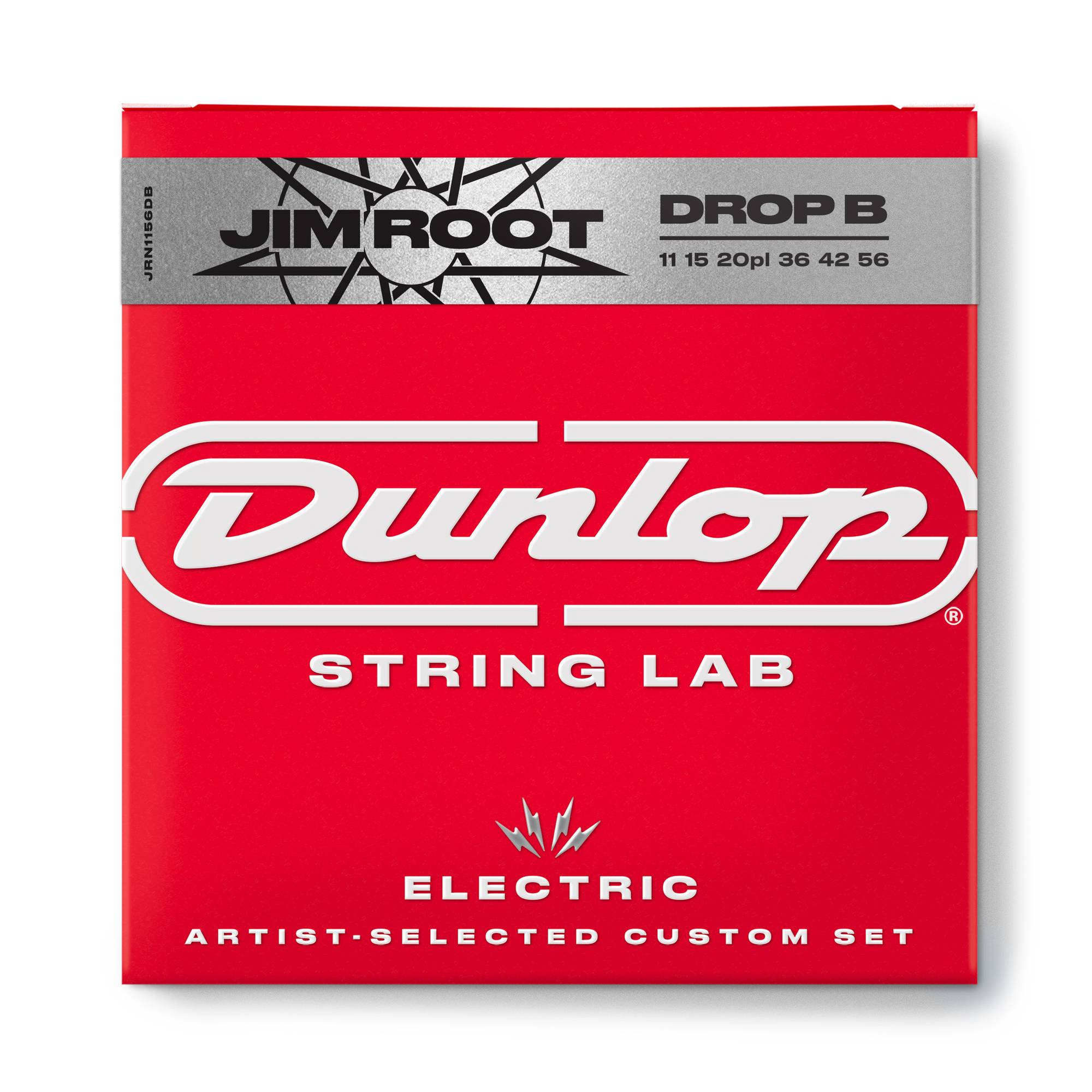
BIG1268 (Drop Bb), DEN1156DC (Drop C), DEN1156DB (Drop B), JRN1156DB (Drop B)
Dunlop is so attuned to the needs of guitarists that employ drop tunings that they’ve collaborated with artists to develop gauge combinations with those specific tunings in mind. They even identify them on the packaging. “We already have signature down-tuned sets from artists like [In Flames’] Björn Gelotte and [Slipknot’s] Jim Root,” says Frank Aresti, the company’s product manager of accessories. “But we’ve also expanded the lineup where we saw gaps, giving players more purpose-built options rather than expecting them to piece together their own sets.”
Their ultimate aim, regardless of gauge, is “true balance,” both under the fingers and in the ears. “I also want to distinguish that concept from the ‘balanced tension’ approach that some of our competitors promote,” Aresti adds. “While balanced tension focuses primarily on the measured pull of each string, our goal is a more holistic playing experience that considers both feel and tonal balance.”
To maintain that direct connection, Dunlop pays close attention to the daily challenges of working guitarists and the customer feedback passed along from dealers. “Those two groups are closely connected, because players often walk into a store looking to recreate the sound or setup of their favorite guitarist,” Aresti says. “Sometimes they’re asking, ‘How can I get the same tone as my favorite player?’ Other times it’s as simple as, ‘What strings should I use for Drop C?’ We've tried to remove the guesswork by offering purpose-built sets and clearly labeling many of them with the tuning they’re designed for, making it much easier for players to choose the right strings with confidence.”
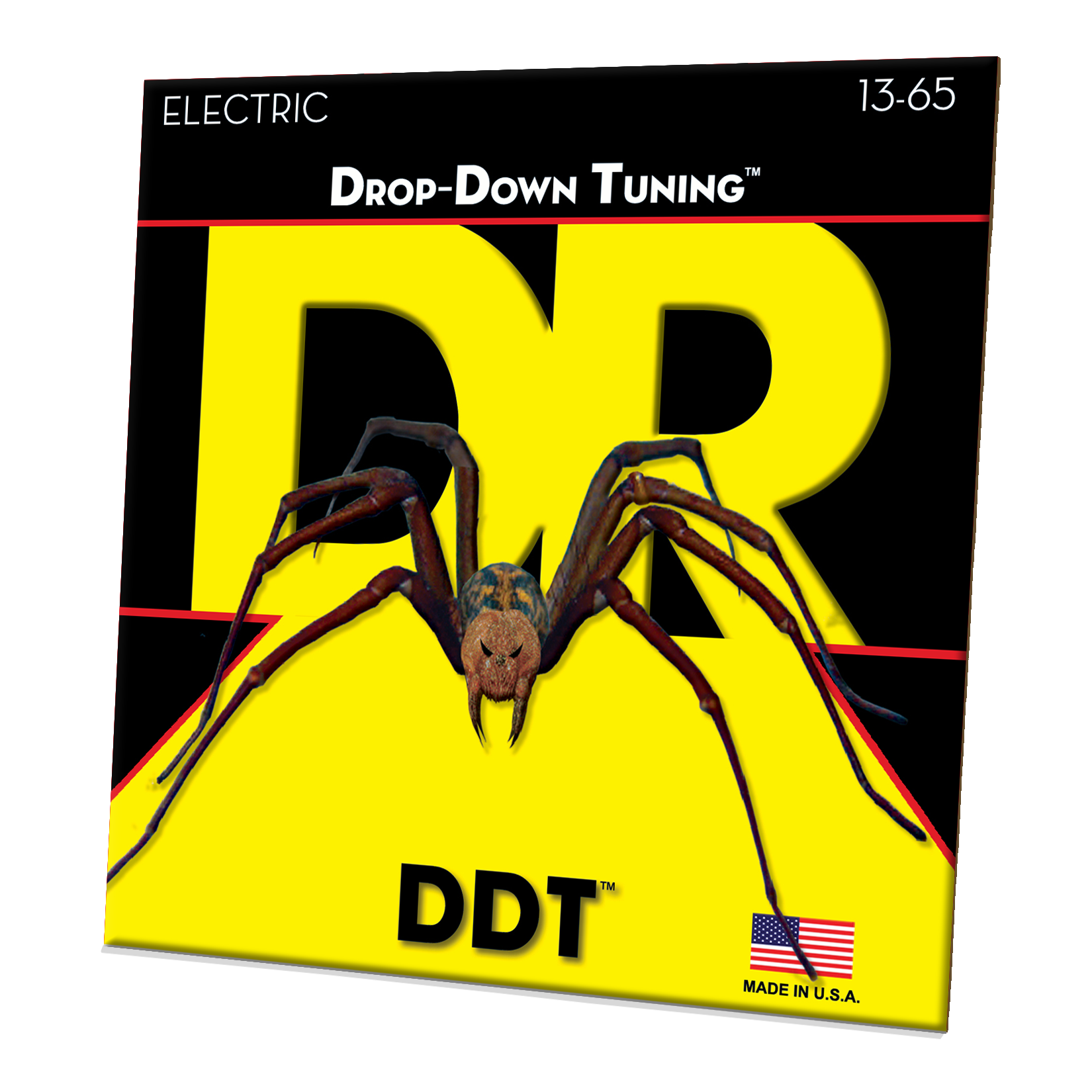
Dragon Skin+, Veritas, and DDT
Founded in 1989, DR have developed into one of the game’s most reputable brands, with their strings used by celebrated guitarists like Derek Trucks, Jared James Nichols, and, before their deaths, Dimebag Darrell and Johnny Winter. But they’ve also become staples among purveyors of heavier music, including Fredrik Thordendal and Mårten Hagström of extreme metal band Meshuggah and John Browne of prog-djent act Monuments. The company’s Vice President, Dave Avenius, highlights three string lines—Dragon Skin+, Veritas, and DDT—built using Accurate Core Technology. ACT primes the core wire to create more dynamic vibrations, improve tuning stability and intonation, reduce breakage, and add extra protection against tone-stifling dirt and sweat. (The company says DDT were the first strings on the market made specifically to support players who use drop tunings.)
“We believe that [they’re] especially great for players who use drop tunings, play extended scale instruments, or use 7- or 8-string guitars,” Avenius says. “Making a string bigger helps, but ACT upgrades the architecture of the strings, so they reproduce the lowest notes of your instrument with great tone and note-to-note definition, so you bring out the most from your guitar. Dragon Skin+ also features our K3 coating. This is a patented process by which we coat the outer wrap wire before we wind it around the core. This approach allows each part of the string to function properly, and the string can ring out pure and true. Everyone at DR is excited by all the players pushing the musical boundaries with drop tunings, extended scales, and 7- or 8-string guitars. We hope these artists will try our strings and hear and feel the benefits for themselves. As we like to say: DR—the Difference is Real."