Chris Kies has degrees in Journalism and History from the University of Iowa and has been with PG dating back to his days as an intern in 2007. He's now the multimedia manager maintaining the website and social media accounts, coordinating Rig Rundown shoots (also hosting and/or filming them) and occasionally writing an artist feature. Other than that, he enjoys non-guitar-related hobbies.
"Tungsten Amplification released the Creme Brulee, which is a cross between their Crema Wheat and a Fender tweed Harvard. Itуs loaded with 12AX7 preamp tubes, 6V6 power tubes, a 5Y3 rectifier tube, and has only two controlsяTone and Volume."
J Mascis has so many guitars that at least one of them has no obvious job. “It’s not good for songwriting, playing live, or recording. It’s not good for any of the real things we do. That leaves just playing it,” says the Dinosaur Jr. frontman, sporting a gray beard and red-framed glasses, via Zoom from a St. Louis hotel. “That’s kind of interesting: to play, knowing nothing will come out of it.”
The axe in question is a GibsonLes Paul Custom that had a broken headstock when Mascis bought it. “The guy at the shop said it was his bandmate’s,” Mascis recalls. “You could tell he just played it so much that it was somehow awesome. You could feel it was worn in just right.” Mascis had the headstock repaired, but he maintained everything else about it, including the “20th anniversary” letters stamped on the fretboard and its overall battered quality. “It’s beat up, and it’s been played at shows. It has a good feel you can only get from playing all the time. Somebody’s favorite guitar for years—it’s cool.”
The guitar has almost nothing to do with the reason Mascis is on this Zoom: to promote There Near, Dinosaur Jr.’s first album in five years. For this project, Mascis mostly employed a 1959 Fender Jazzmaster, after taking a multi-year break from the model. “I’m getting back to my roots because I never seem to,” he says, “and [playing] leads with it and stuff.” He retired the Fender from touring when he realized the guitar was worth tens of thousands of dollars, which freaked him out: “I’ll just play it when I’m recording,” he says.
Befitting Dinosaur Jr. since the Amherst, Mass., trio’s debut album, Dinosaur, in 1985, There Near is packed with Mascis’ solos and distinctively slacked-out voice meandering over the din. What’s slightly different about There Near, compared to the band’s previous album, 2021’s Sweep It Into Space, is a foundation of precise, Who-like power chords; the opening track “Several Got Away” has the feel of “I Can’t Explain” or “My Generation.” Mascis has zero theories about why that might be so: “Yeah, that’s just the songs I came up with,” he says. “At the time, I’m not sure where they came from.”
One physical piece of inspiration for There Near: a Mesa/Boogie Mark I amp, similar to the one Mascis used for the Dinosaur album 41 years earlier. Mascis purchased the more recent one secondhand, learning that the Rock & Roll Hall of Fame had once utilized it for bands onstage. It had hemp cone speakers, and he plugged it into a Marshall cabinet he miked for the recording. “It was an interesting, clean sound that I hadn’t gotten again—this thicker-than-a-Fender sound,” he says. In 1985, he “didn’t know anything about amps,” he adds. “I had a Yamaha solid-state amp, because I saw Bob Mould had one. I thought, ‘How bad could it be?’ But my friend, the good guitarist in town, told me how terrible it sounded. I just used the amp they had at the studio”—the Mesa/Boogie Mark I.
The band’s core—Mascis; bassist Lou Barlow, who would go on to front acclaimed indie-rock band Sebadoh; and drummer Emmett Murphy, known as Murph—has been together off and on since 1984, following the breakup of Mascis’ and Barlow’s hardcore band, Deep Wound. The new trio developed a distorted, sludgy sound that would resonate amid the ’90s alt-rock and grunge explosion.
The group put out Dinosaur on an indie label, Homestead, which employed a young Boston punk-zine publisher and show promoter named Gerard Cosloy. He had briefly managed Deep Wound and, after joining Homestead—also home to hardcore heroes Big Black and Naked Raygun—offered to release a record by Mascis’ new band. “Back then, the Minutemen were a band we liked, and they said, ‘You need an album. That’s like a flier for the gigs. It’s better to have an album than a tape if you want to get gigs,’” Mascis recalls. “It seemed more legitimate or something.”
After the first album gave Dinosaur Jr. a reputation as noise-rock innovators—their concerts reinforced this perception by cranking up the volume beyond healthy human-hearing capacity—the band shifted to a new label. Mascis had always admired SST Records, which had signed Black Flag, Hüsker Dü, Sonic Youth, and the Minutemen, so he left Homestead to go there. “That kind of ruined my relationship with Gerard,” Mascis recalls. “He kind of got pissed off and jumped ship. But I had to follow my dreams.”
Photo by Rafael Novak
In 1990, Cosloy went on to join Matador Records, which released landmark indie-rock albums by artists like Pavement, Guided By Voices, and Liz Phair. Did Mascis ever reconcile with him? “Yes and no,” he says. “I mean, we’re not great. We never were as good of friends after that. But we definitely hung out a little bit.”
Mascis’ early professional bridge-burning had little impact on Dinosaur Jr.’s career. The band’s first SST album, 1987’s You’re Living All Over Me, was simultaneously more focused, song-wise, and more insanely packed with innovative guitar leads. The guitar-rock masterpiece was one of many crucial albums that soon revolutionized MTV and radio while helping the band become a touchstone for the Lollapalooza generation. (Dinosaur Jr. was on the storied festival’s 1993 bill with Alice In Chains, Rage Against the Machine, and others.)
“As I get older, my attention span gets less and less. I can’t play guitar for eight hours straight in the studio like the old days.”
The original Dinosaur Jr. lineup, though, was fraying. Mascis and Barlow were silently feuding. Mascis maintained tight control, writing almost every song, but Barlow was evolving into the band’s George Harrison, and he needed an outlet of his own. In 1987, Barlow released a four-track cassette of home recordings under the name Sentridoh, with his friend Eric Gaffney contributing percussion; that project helped lay the groundwork for Sebadoh and the lo-fi aesthetic at the core of the band’s music. Tensions within Dinosaur Jr. continued to grow: As the story goes, Mascis informed Barlow he was disbanding the lineup, but he put a new version together instead, initially with a rotating cast of bassists.
Both entities kept moving forward: Dinosaur Jr. signed with a major record label, Sire, and released their Mascis-produced 1991 album, Green Mind; Sebadoh was prolific, peaking with 1994's electrifying Bakesale, and Barlow formed several other projects and collaborations, including the Folk Implosion, best known for the 1995 Kids soundtrack hit, “Natural One.”
Mascis and Barlow continued on their separate trajectories until 2005: Indie label Merge Records reissued their early albums, and they reunited for a tour, which led to a 2007 record, Beyond, with the original lineup.
How has the Dinosaur Jr. dynamic between Mascis, Barlow, and Murphy changed over the years? Mascis pauses for a long time before responding: “Um. It’s hard to remember. At some point, it seemed like Murph and Lou flipped. When we first started, Murph wasn’t sure he wanted to do it all the time, sometimes. He’d quit for a week, but me and Lou were super-dedicated to the band.
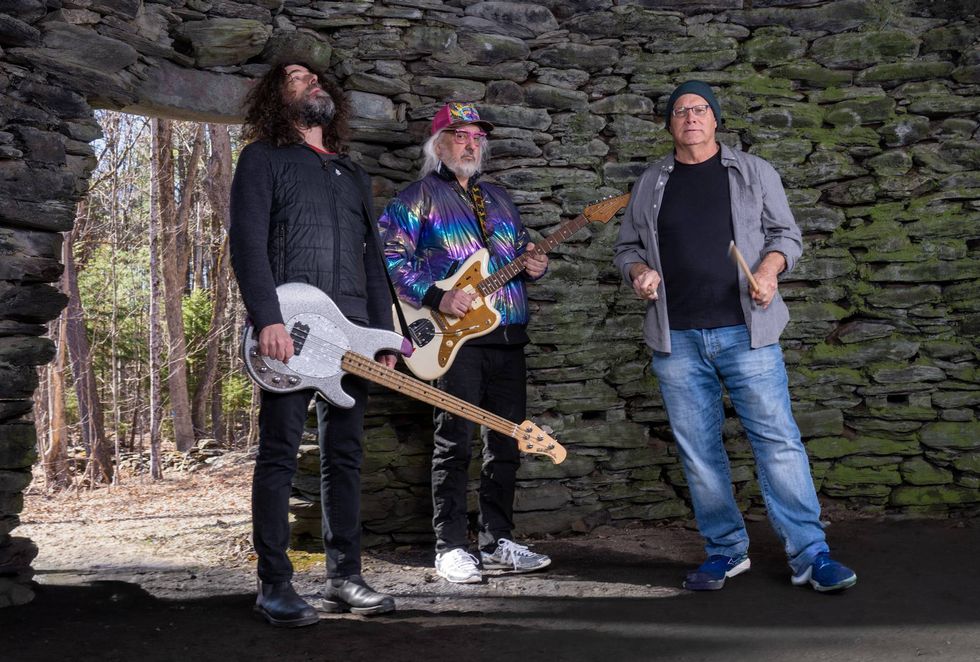
Dinosaur Jr. (l-r): Lou Barlow, Mascis, Murph
Photo by Jeff Fowler
“When we got back to the band, it seemed like they had switched the roles. Murph was way more into it than Lou,” Mascis continues. “Other than that, it seems similar. I’d write the drum parts and Murph learns them. Or, for Lou songs, me and Murph would both drum—just try to write some drum parts, because Lou doesn’t think of drums.”
The band created There Near in bursts over the course of a year at Bisquiteen Studio, in Amherst. That’s a function of age, says the 60-year-old Mascis: “As I get older, my attention span gets less and less. I can’t play guitar for eight hours straight in the studio like the old days. Now we just figured—[don’t] push it at all. Record for an hour and a half, four days a week. At that schedule, it takes a while.”
The approach, Mascis says, tightened the album and made it easier to focus on a unifying sound. There Near follows Dinosaur Jr.’s nearly 40-year formula—moaned and mumbled Mascis lyrics set to a stomping rhythm, which is especially pronounced on the faster songs like “Several Got Away” and “Gone Off,” but slower tracks such as “Walk Me Back” open up to sharp torrents of shredding as well. “It’s good for quality control because you have time to weed out what you don’t like and see if you still like the thing four months later,” he says.
The two songs that deviate from this style are the Barlow-written “Blowin’ Up” and “No One’s Ready,” which have a softer, more melodic feel, with more space to accentuate the pointed lyrics: “You’re about as dumb as they come / and telling stupid stories every day,” he begins on “Blowin’ Up.” Mascis cedes control on Barlow’s compositions, playing guitar and bass as needed. “I just step back a bit and see what he wants me to do on the song,” he says.
“Back then, the Minutemen were a band we liked, and they said, ‘You need an album. That’s like a flier for the gigs.’”
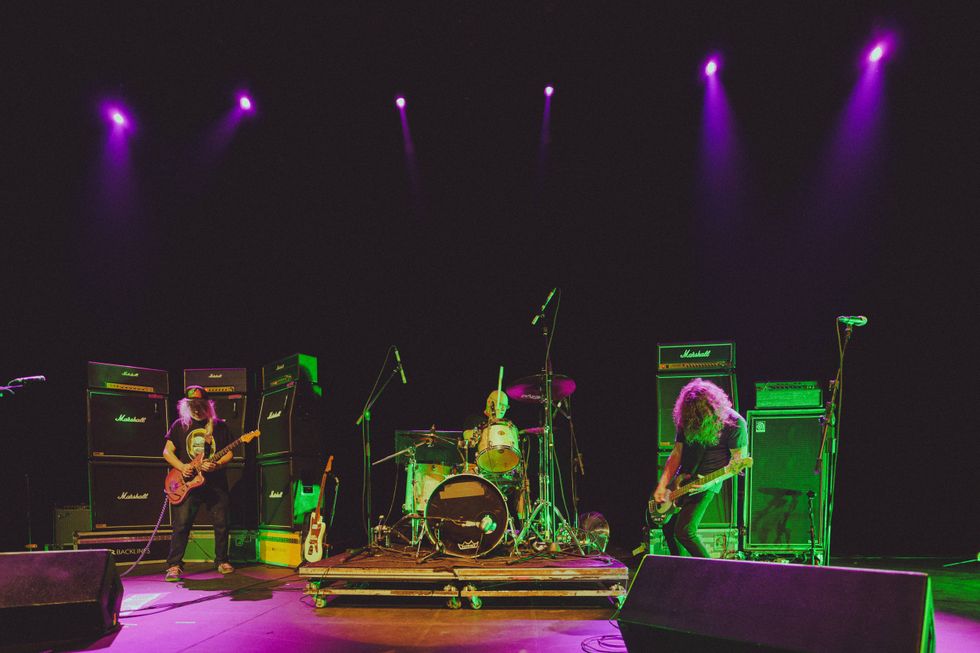
Mascis, Murph and Barlow take it to the stage
Photo by Jeff Fowler
In the early days, Dinosaur Jr. put out a new album every two or three years; more recently, in part due to the band members’ solo projects, the gap has expanded to four or five years. But there’s no strategy for the timing of There Near, according to Mascis: “We just kind of do ’em. There’s no rhyme or reason. It just feels like time to do a new album. You’ve played all these places already, so it feels like you need a new album so you can play all the same places again. I guess that’s the logic in our head. That’s how we grew up.”
During the mixing process, Mascis adds, he wrote a couple of other songs “that were on the back burner,” and recorded them in the studio living room. Eventually, Dinosaur Jr. will release a seven-inch single as an addendum—but Mascis refuses to divulge any information about these additions. “Like what? What do you say about a song?” he asks. “Songs that didn’t quite make it. The one song sounded a lot like all the other songs. There were three that were vying for the last slot on the album, and one was just slower. It seemed to be good to have a slower song.”
At one point during the half-hour interview, Mascis refers to a Fender Super Champ as his “favorite around-the-house amp,” which he uses to “just watch TV and play the guitar and hope for the best.” He adds: “It sounds really good at a low volume.”
It’s one of many public references Mascis has made over the years to his lifelong passion for watching television; in 1997, he informed this reporter, for a Billboard story, of his obsession with MTV’s The Real World. The streaming-and-bingeing era hasn’t changed his habits much—including one specific and unexpected technical characteristic of his TV time. “I still watch it on my computer. I like the computer because it’s 15 inches—and that’s the size of the TV I had when I was a kid in our kitchen,” he says. “It was an odd size back then, but somehow I’m always drawn to 15-inch screens.”
All this talk of TV leads Mascis to an even more passionate subject: guitars. He brings up his Gibson Les Paul Junior in TV Yellow, which, he says, “supposedly looks white on TV, because white guitars would get blown out. You wanted the look of a white guitar on TV, you get the TV model.”
Did Mascis ever play the “TV Model Junior,” as he calls it, on TV? Dumb question, as it turns out. “Well, it’s black-and-white TV,” he says with a small smile. “So I don’t know if that would work now.”
J Mascis’ Gear
Guitars
1959 Fender Jazzmaster (leads)
Gibson Les Paul Junior, TV Yellow (rhythm)
Rickenbacker 620-12 12-string
Amps
Mesa/Boogie Mark I
Marshall JCM800 Model 4104, 50-watt 2x12 vertical-input combo
(All amps miked through a Marshall cabinet)
Pedals
Tone Bender MkI-circuit fuzz (“I’ll use that as a base and then add other fuzzes to it.”)
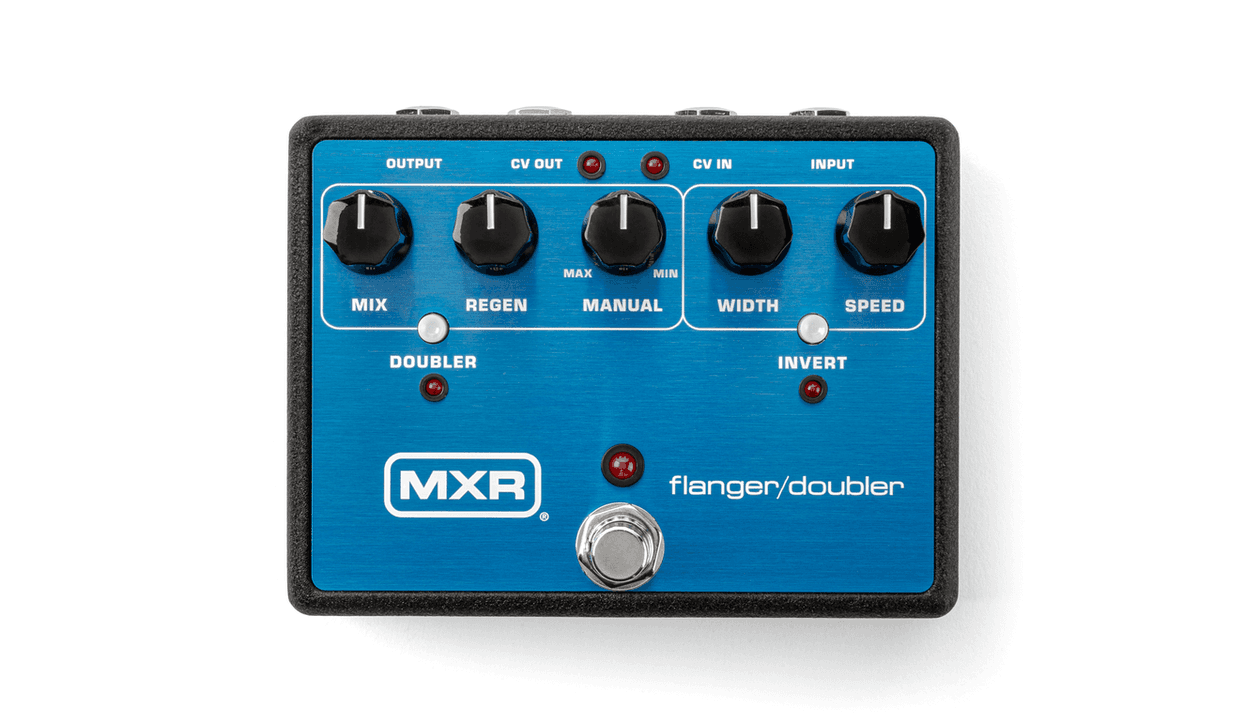
Some pieces of gear become legendary because everyone used them. Others become legendary because one person used them, relentlessly, until the sound became inseparable from the player. The original MXR Flanger/Doubler—the M-126 rack unit, a fixture of studios and touring rigs throughout the ’70s and ’80s—belongs mostly to the second category. Yes, it swept through countless studio sessions in its heyday, doing the jet-engine swoosh work flangers are built for.
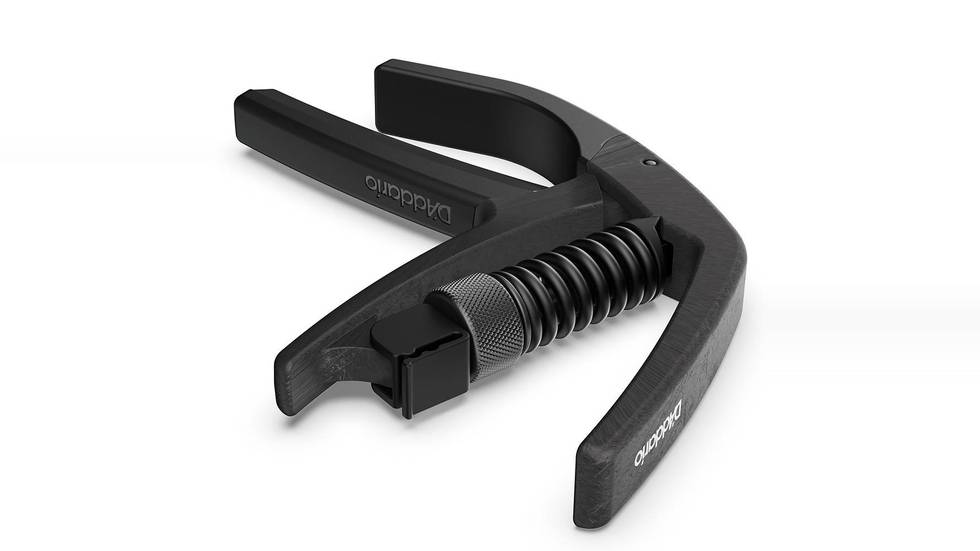
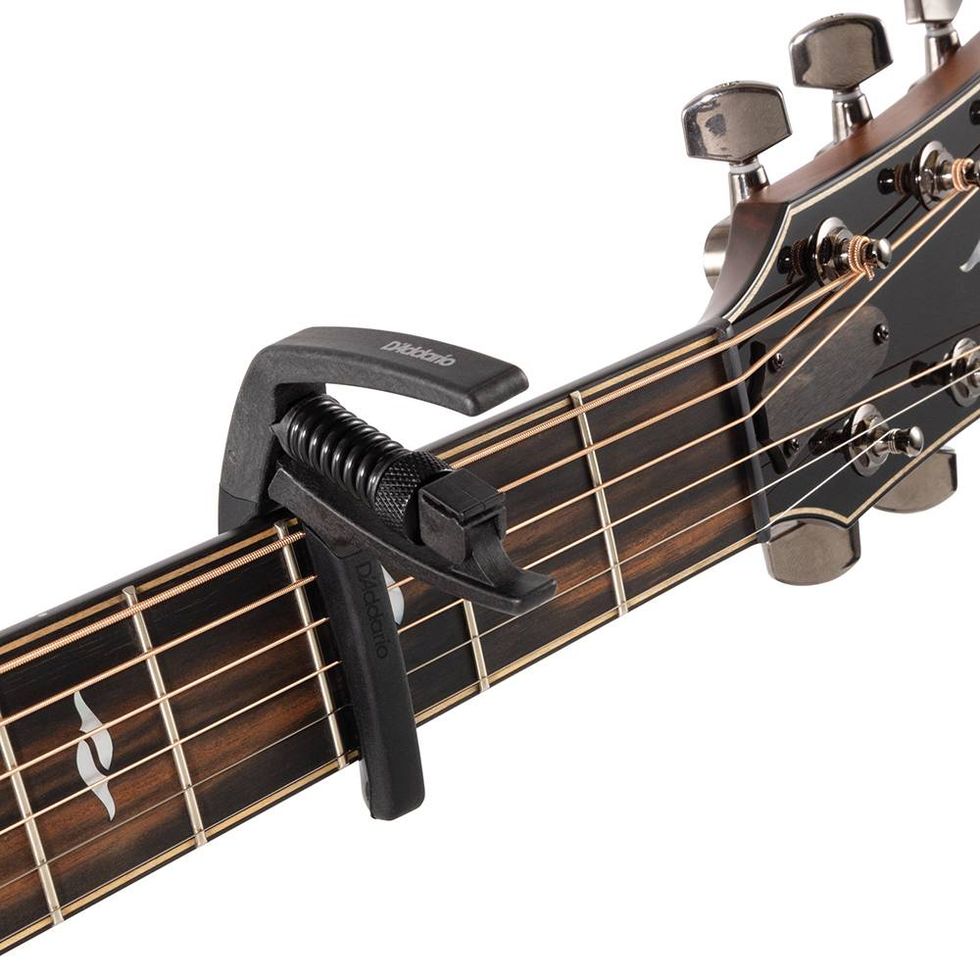
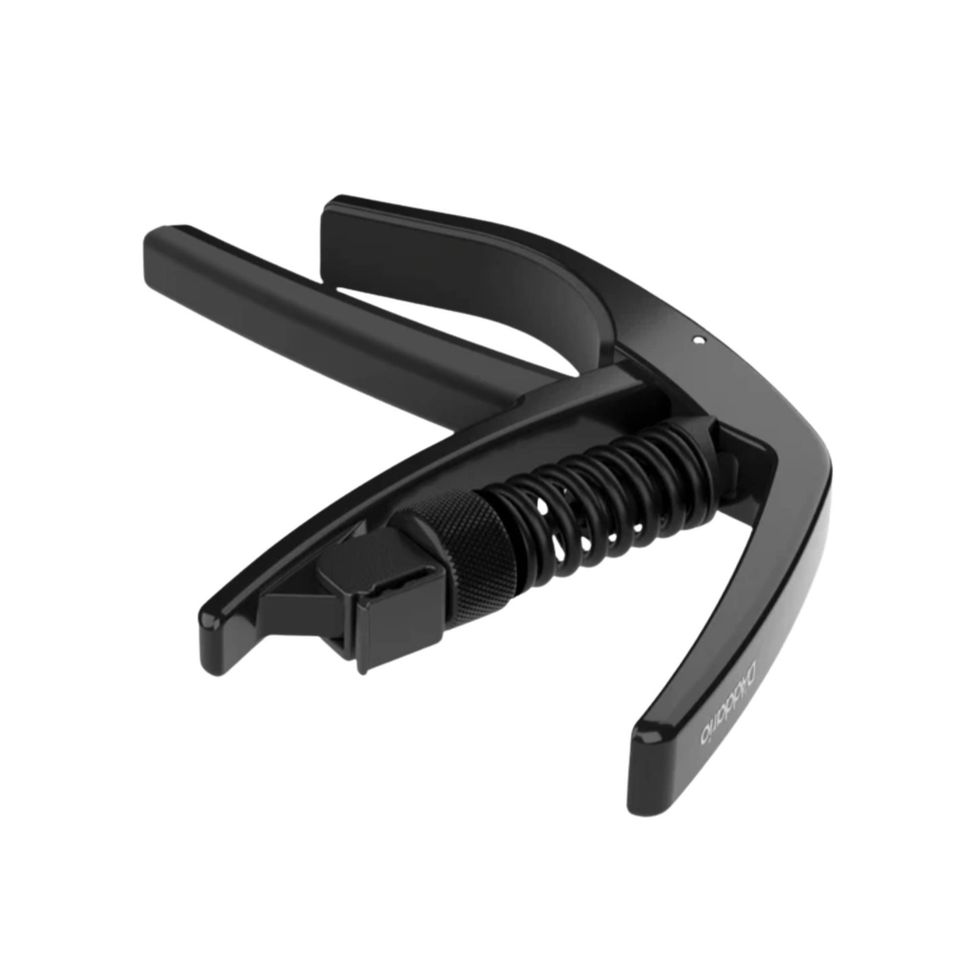
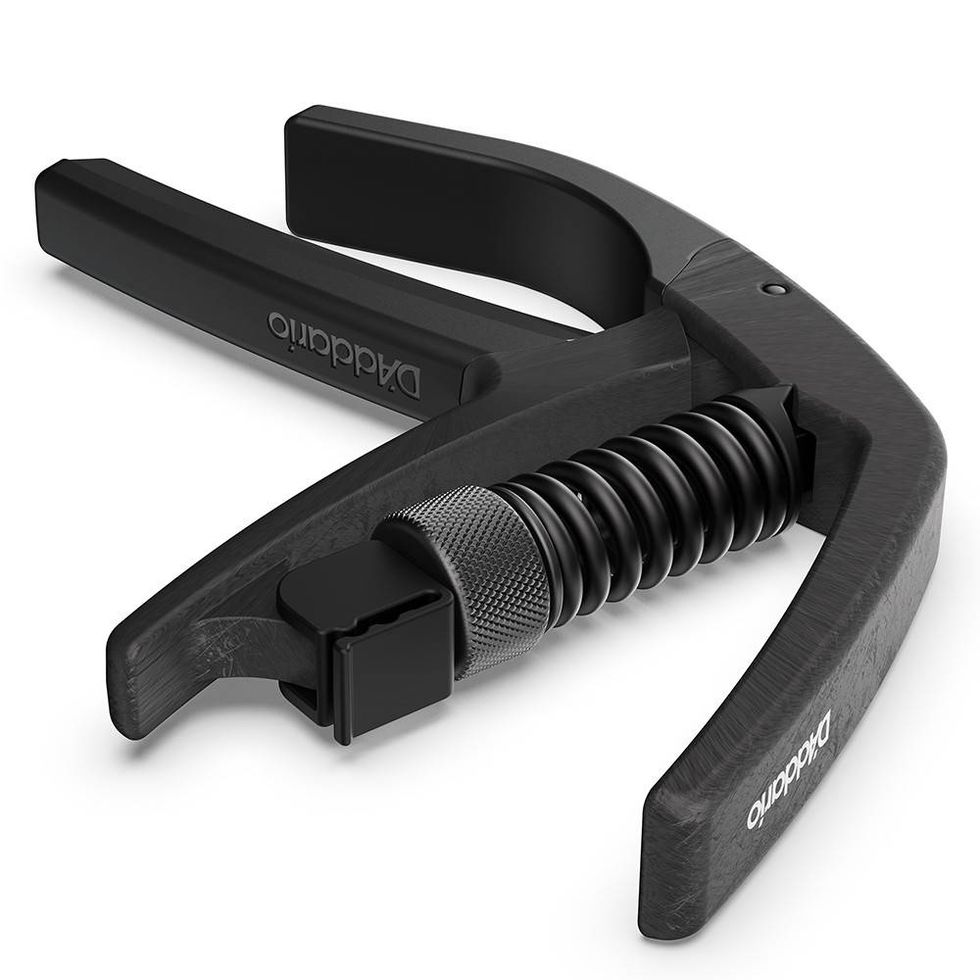
Adding to the company’s broad range of guitar accessories, D’Addario has introduced a pair of new capo models: the new Artist+ Carbon Capo, featuring the company’s first-ever carbon fiber design, and an updated black Artist Capo.
Both capos feature D’Addario’s patented FlexFit Technology, which automatically adapts to different fretboard radii and string gauges, distributing pressure evenly across every string and fret. The net result? Improved tuning stability.
Together, the two capos are designed to give guitar players more control and fast, one-handed operation. Both capos feature an adjustable spring tension micrometer, which allows players to achieve the exact pressure they need for clean, buzz-free fretting without pulling the strings out of tune. And both capos include a built-in pick holder that keeps a spare pick conveniently within reach.
Assembled in the USA, the new Artist+ Carbon Capo pairs these features with ultra-lightweight carbon fiber construction, delivering pro-grade strength without adding unnecessary weight and bulk to the neck of the guitar. The updated Artist Capo brings the same FlexFit performance to its original design, so players have two distinct options built around the same proprietary tech.
Key features include:
Adjustable Spring Tension Micrometer: Allows players to achieve the ideal, specific pressure they need for clean fretting and better tuning stability.
Patented FlexFit Technology: Automatically adapts to fretboard radii and string gauges, distributing even pressure across every string.
One-Handed Operation: Makes capo placement and position changes fast and easy.
Built-In Pick Holder: Keeps a spare pick conveniently within reach.
Ultra-Lightweight Carbon Fiber Construction (Artist+): Combines durability with minimal weight.
USA Assembly (Artist+): Assembled in the U.S. for long-lasting quality.
D’Addario’s Artist+ Carbon Capo is available at a street price of $29.99. The updated Artist Capo carries a street price of $25.99. For more information visit Daddario.com.
D'Addario
Artist+ Carbon Capo
Adding to the company’s broad range of guitar accessories, D’Addario has introduced a pair of new capo models: the new Artist+ Carbon Capo, featuring the company’s first-ever carbon fiber design, and an updated black Artist Capo.
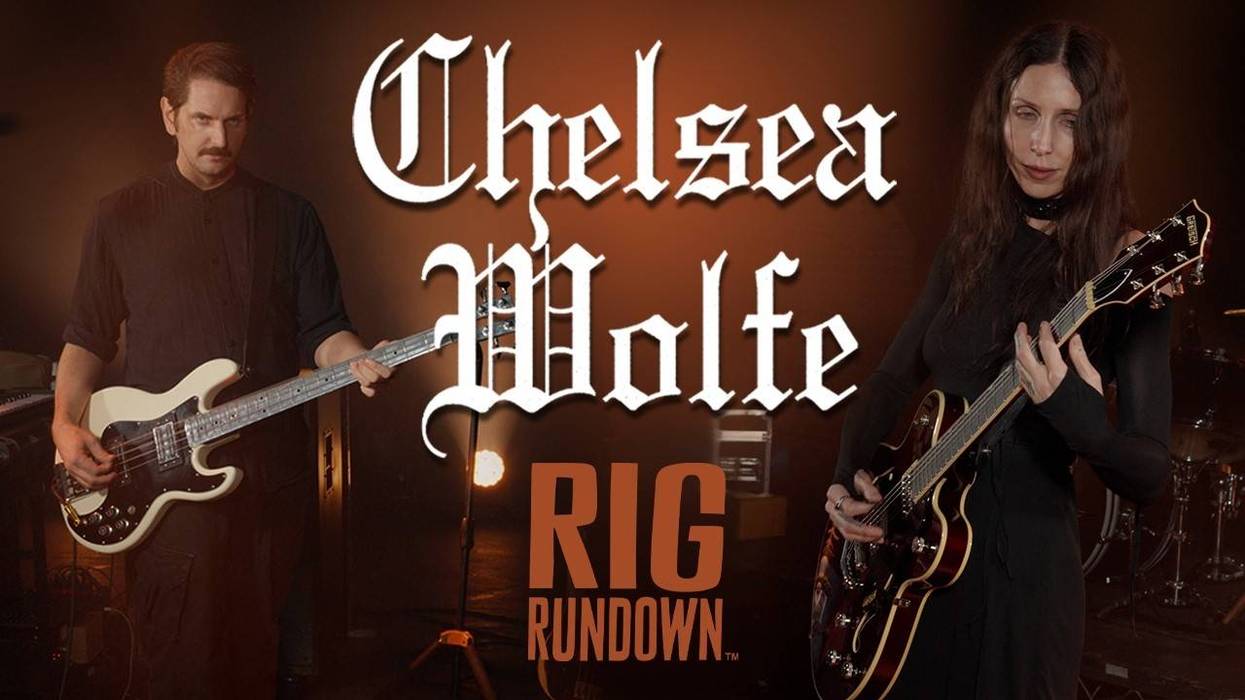
PG’s Chris Kies caught up with Chelsea Wolfe and her longtime collaborator Ben Chisholm at Marathon Music Works in Nashville, where they were playing in support of Wolfe’s new record, The Dark. Have a look at some quick highlights below, and tune into the new Rig Rundown for all the details.
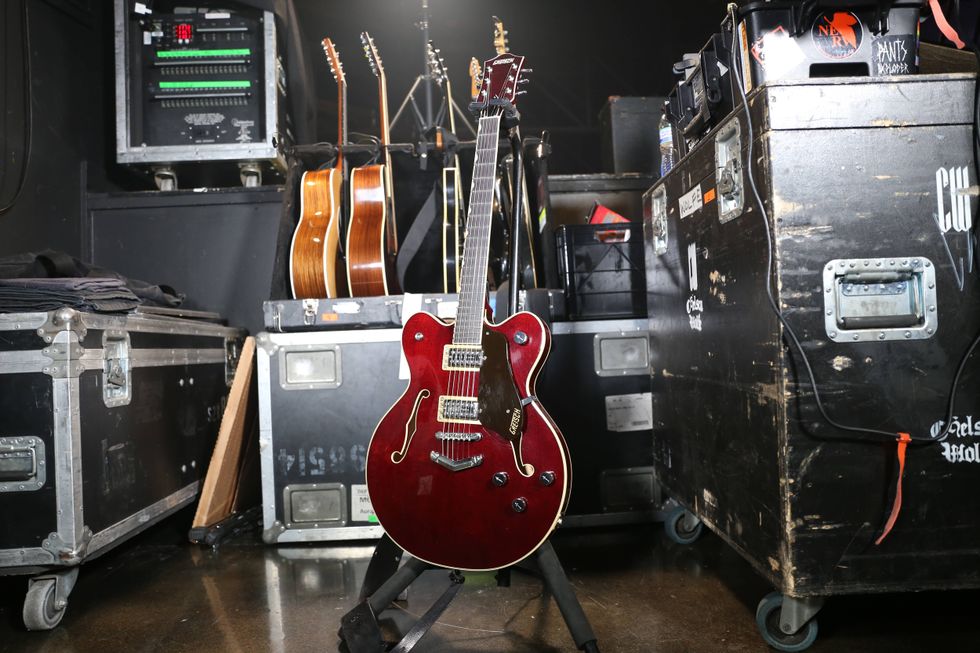
Wolfe was given this Gretsch Broadkaster years back and keeps coming back to it—she’s drifted further into hollowbodies over time, which she says is a shame given how much she likes her solidbodies. She likes the resonant feedback and the low end, and feels a bigger guitar suits her frame. Managing that feedback is a nightly adjustment depending on the room.
Cold Comfort
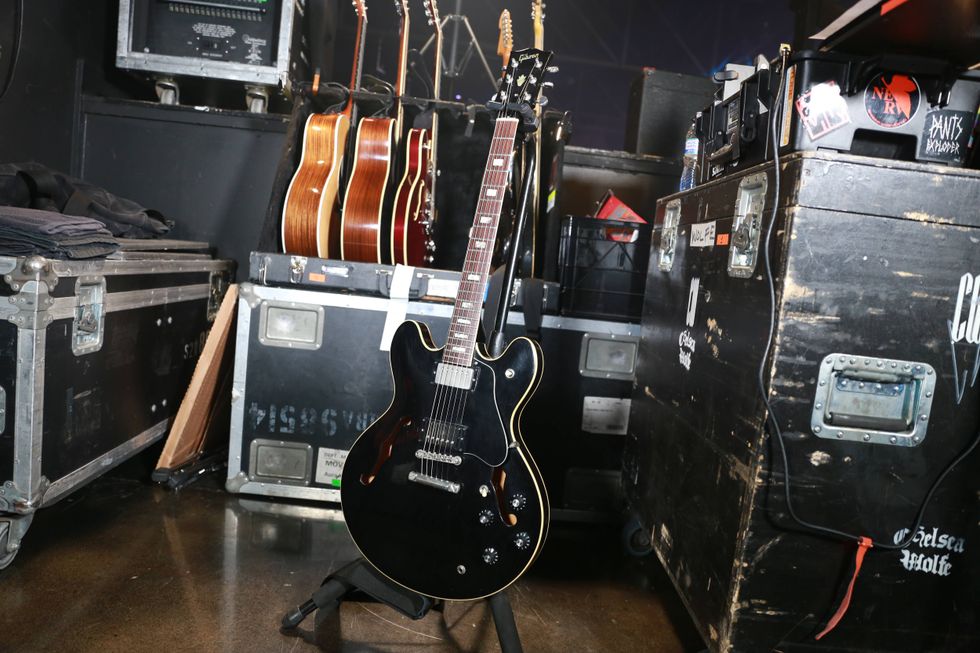
The ES-335 has long been seen as Wolfe’s signature electric, and it’s still on the road, though at the moment it comes out for one song—“Cold.” She figures every tour ends up with one guitar you play the most, and this time it isn’t this one.
Dolly’s Pickguard
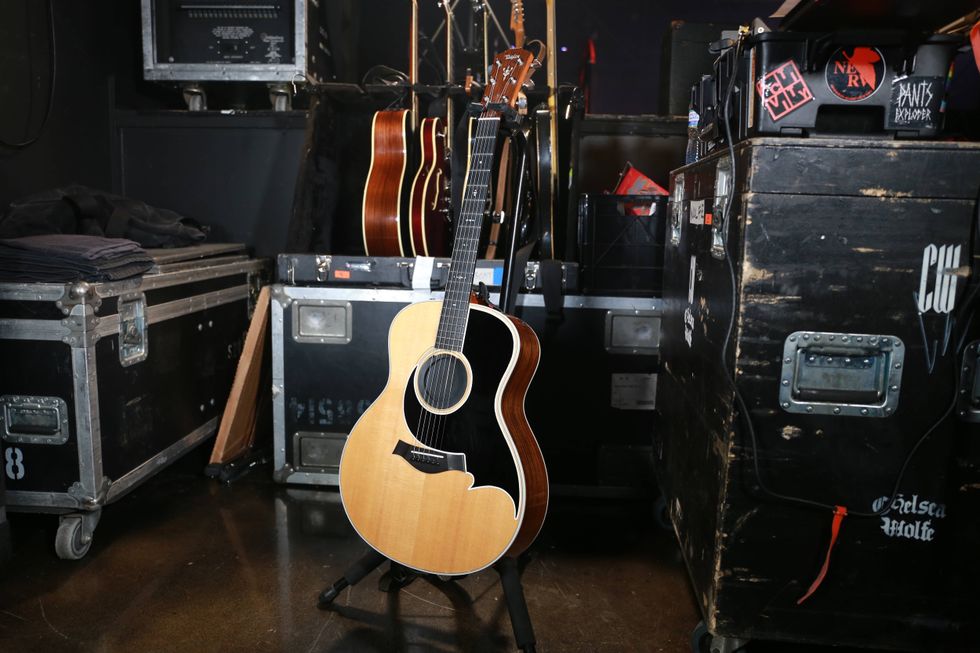
Her Taylor 416ce sports a custom pickguard inspired by a photo of Dolly Parton with a similar one. Taylor gave her this one and sent it to a maker in Nashville to have the pickguard made. People point out she rarely uses a pick on the acoustic. She thinks it looks beautiful anyway.
Grayscale
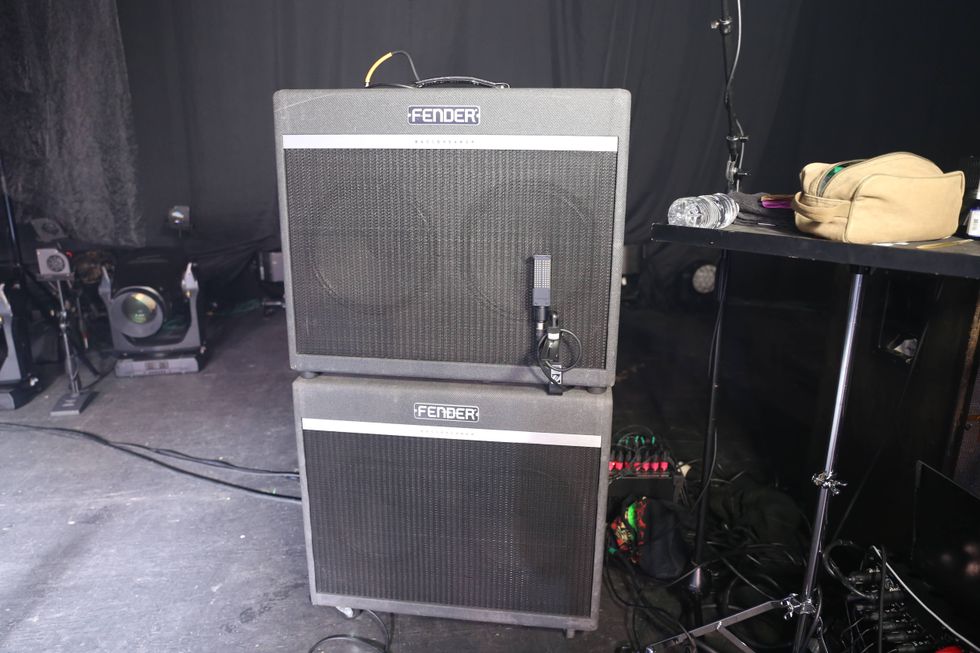
Wolfe’s amp is a Fender Bassbreaker combo, which she believes is discontinued. She likes how it takes pedals, and she likes the look: slightly vintage but in grayscale rather than the usual tan. She has the head and cab as well, but it’s the combo on this tour.
Chelsea Wolfe’s Pedalboard
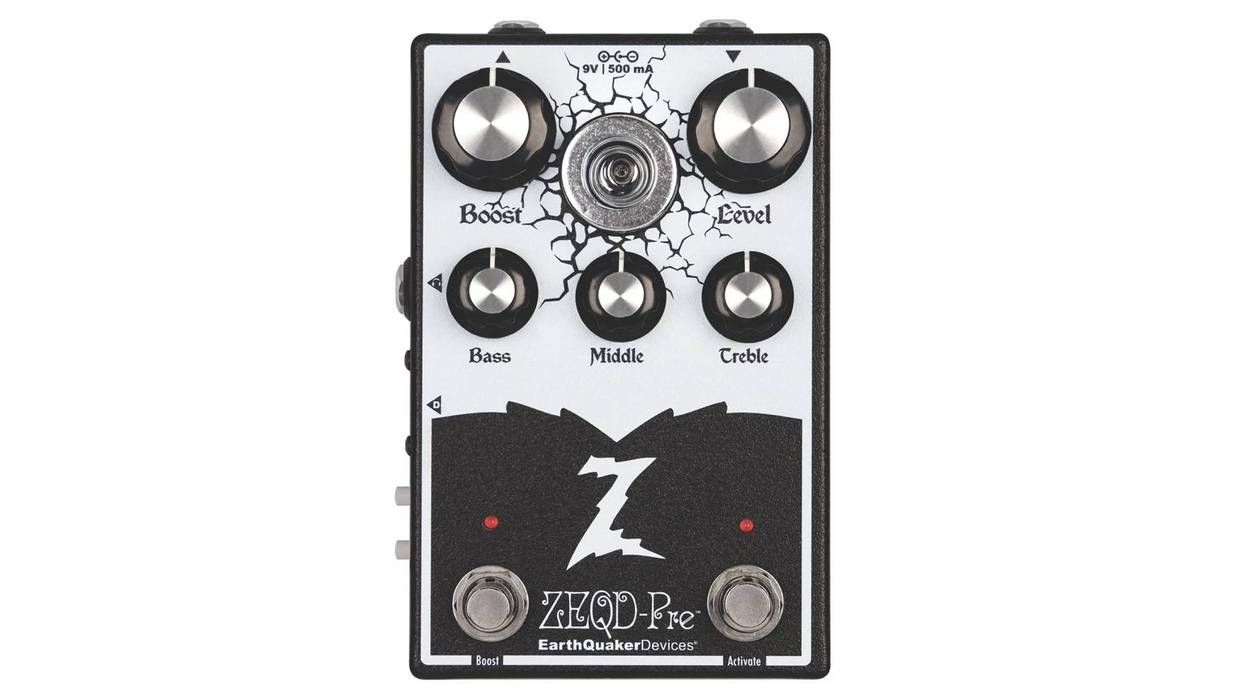
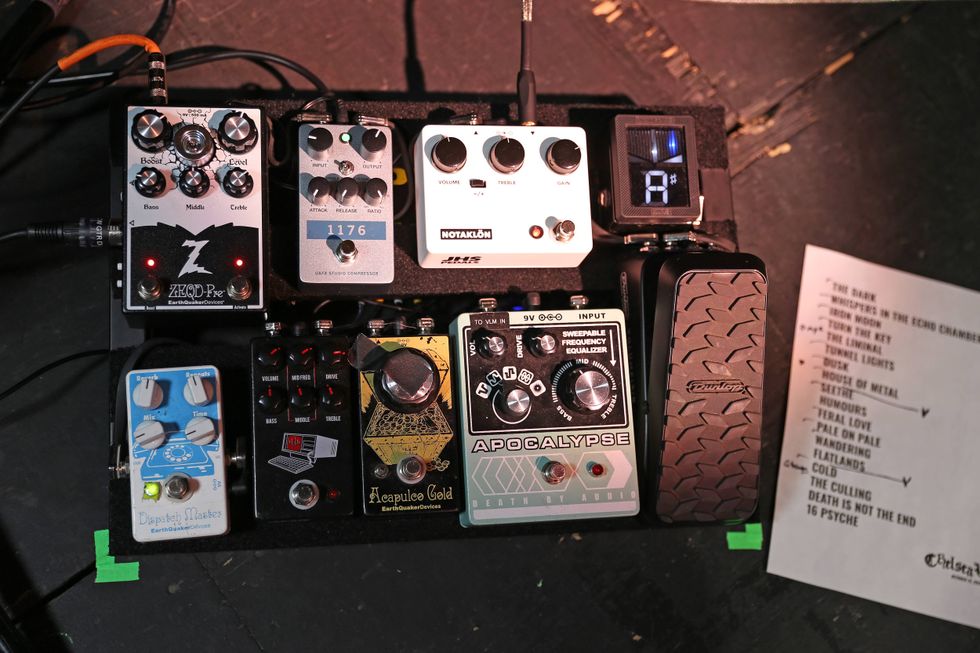
The top row of Chelsea’s board stays on all night: a JHS NOTAKLÖN for general gain, an EarthQuaker ZEQD-Pre she landed on after a long search for the right preamp, a UAFX 1176 compressor, and an EQD Dispatch Master. The heavier end runs a JHS Hard Drive for most of the newer material, an EQD Acapulco Gold that’s been on her board since the Hiss Spun era, and a Death by Audio Apocalypse. A Korg tuner and a Dunlop volume pedal round it out.
Her Happy Place
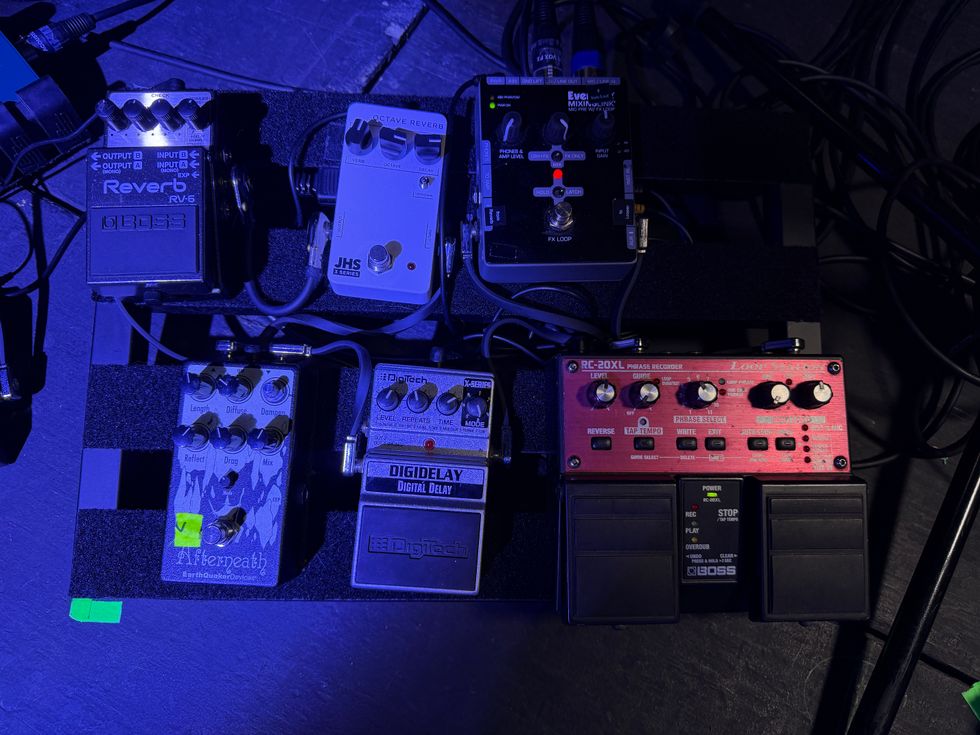
The left half of the floor is all vocals. Wolfe’s father gave her pedals as a kid and she ran her voice through them with an adapter she rigged for the mic cable, which is where all this started. A Radial Voco-Loco gets the mic into the chain, feeding a DigiTech DigiDelay and a Boss RV-6 she calls her ride or dies, an EQD Afterneath, a JHS Octave Reverb, and a Boss RC-20XL. Not seen here: the Third Man Troika, a Jack White and JHS design built for singers—the one piece of gear she admits to impulse-buying.
Florida Man Special
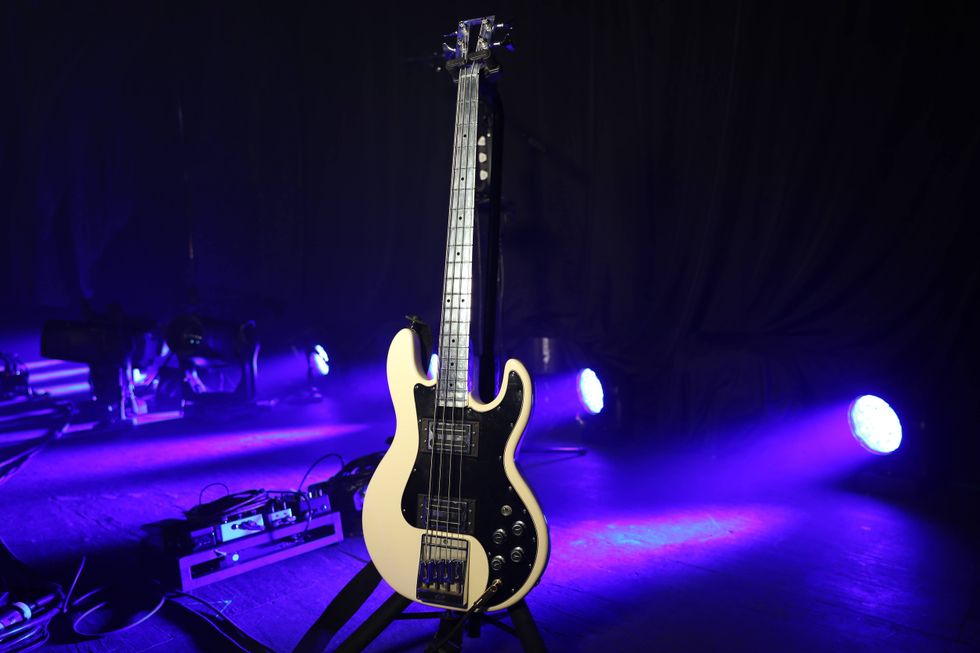
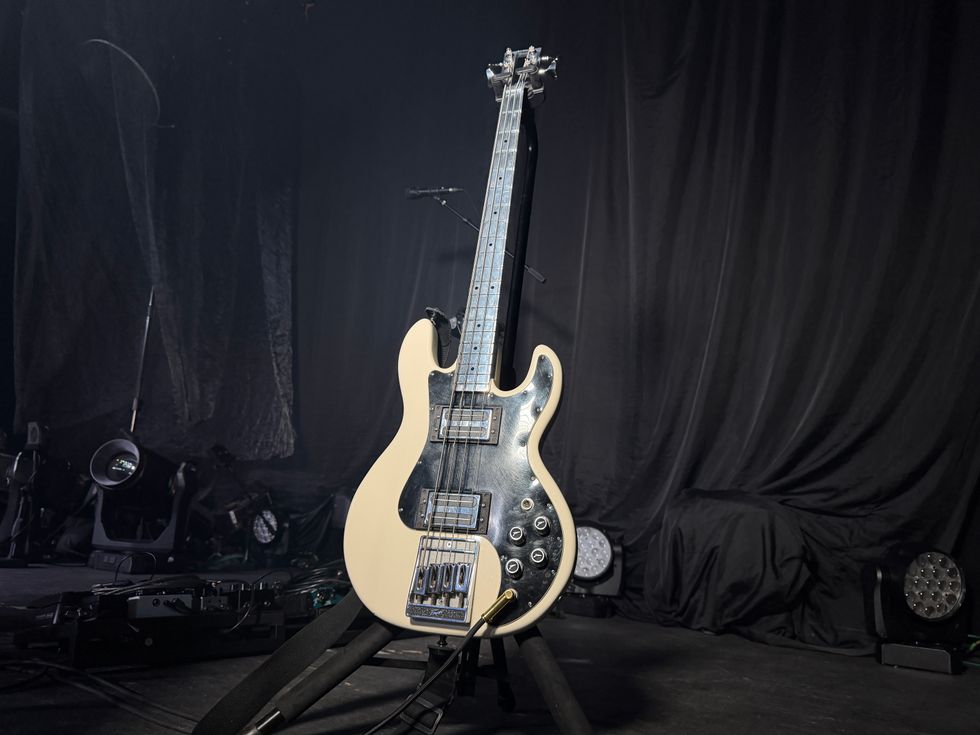
Chisholm found this Peavey T-40 on Reverb, sold by Drew Storcks of Shy, Low, already fitted with an Electrical Guitar Company aluminum neck by someone he’s never identified. He’d wanted a T-40 since seeing one at a session with the Armed, and wanted an aluminum neck for the sustain. It’s brighter and meaner than anything else he’s played, enough that he had to calm down his existing tones to accommodate it.
The B Team
The Nash bass was his main for years and he used it a lot on the new album, before the Peavey turned up. It’s the backup now, and picking it up after the T-40 is a shock—mostly because of how light it is.
Quad Squad
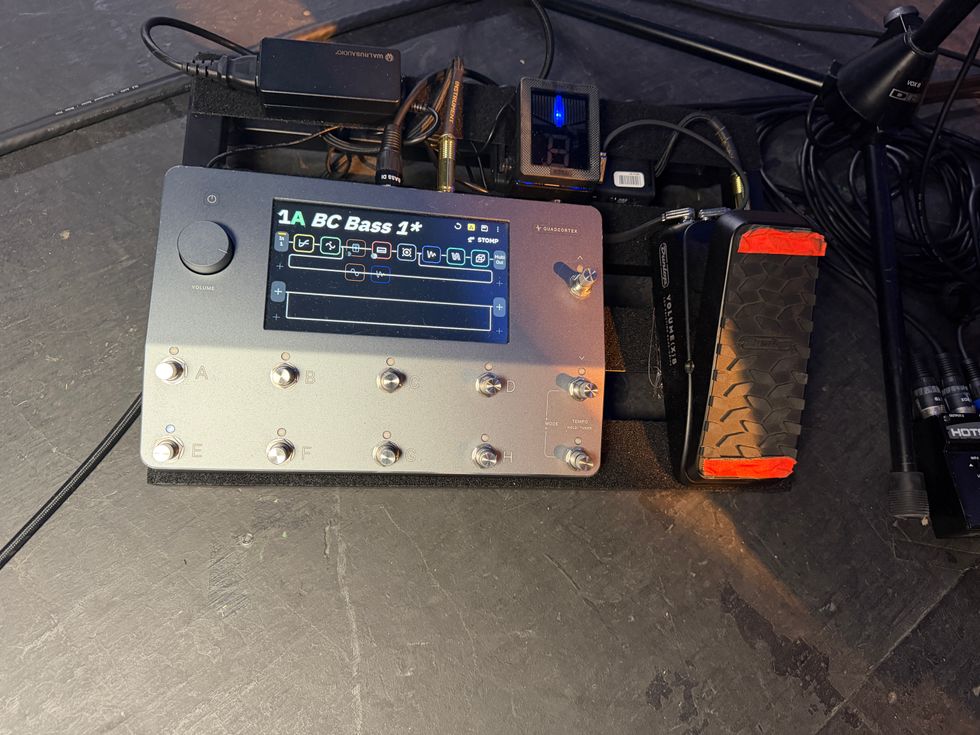
Chisholm abandoned a full pedalboard mid-rehearsal once a Neural DSP Quad Cortex arrived. It’s running Ampeg models, fuzz, overdrive, compression, and chorus, plus the modulated-delay patch behind the whale noises he makes between songs. A clean channel runs parallel at 50 percent, so the low end survives the worst of the fuzz. A Dunlop Volume (X) 8, Korg tuner, and Walrus Audio supply round things out.
Two Fifteens
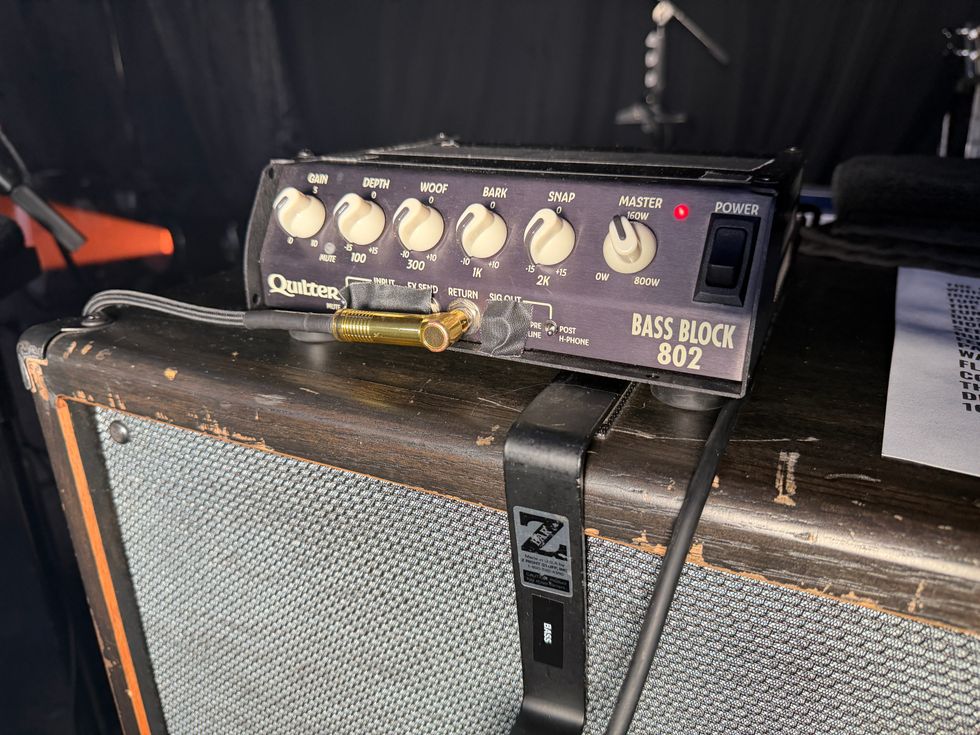
A Quilter Bass Block 802 powers the rig, with its EQ bypassed entirely — he’s using the effects return and letting the Quad Cortex do the amp work. The cab is a Tyrant 2x15 he got from Sean at Tyrant years ago, after deciding an 8x10 wasn’t delivering the sub frequencies he wanted.
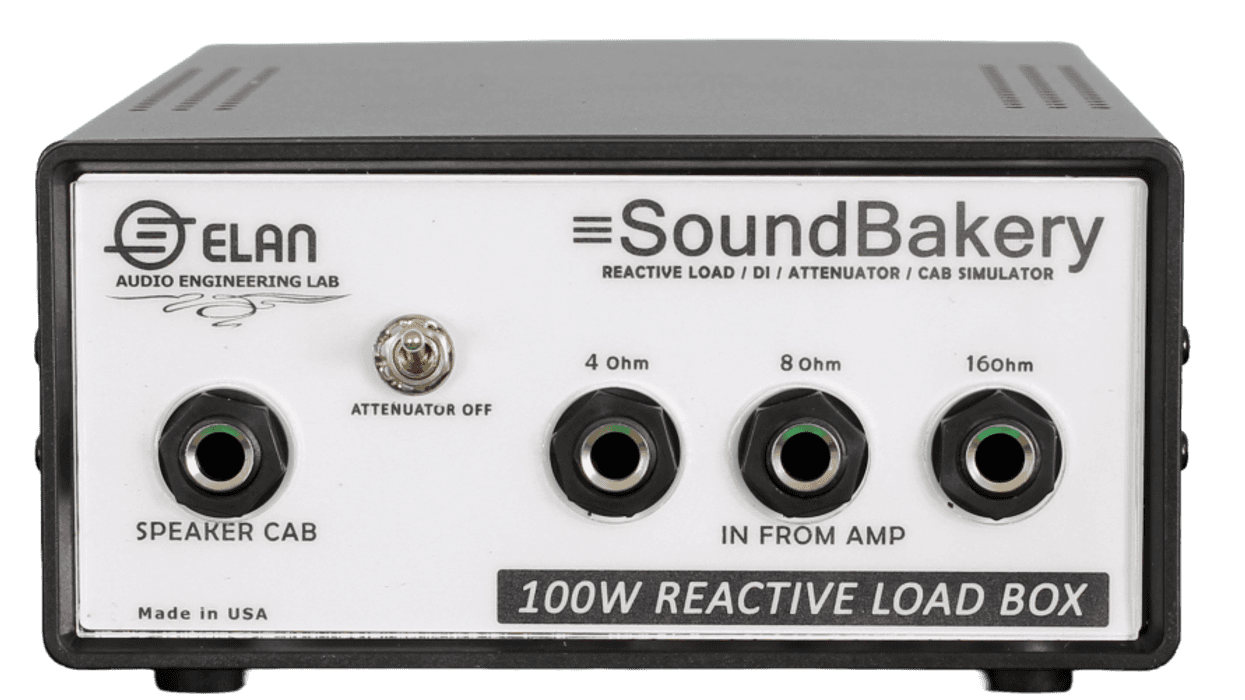
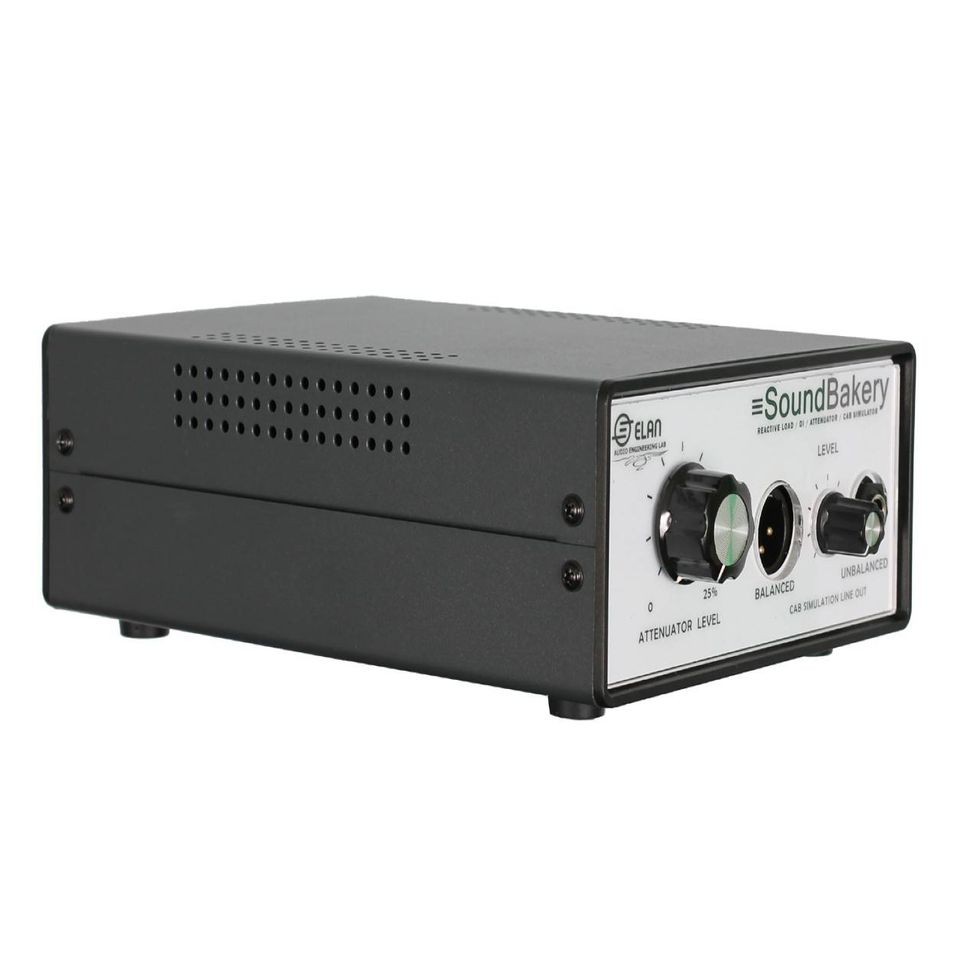
Elan Audio Lab has released the SoundBakery, a passive analog reactive attenuator, load box, and DI designed to let players run tube amps at high output while controlling speaker volume. Handmade in the USA, SoundBakery builds on the design legacy of MetalHead Electronics.
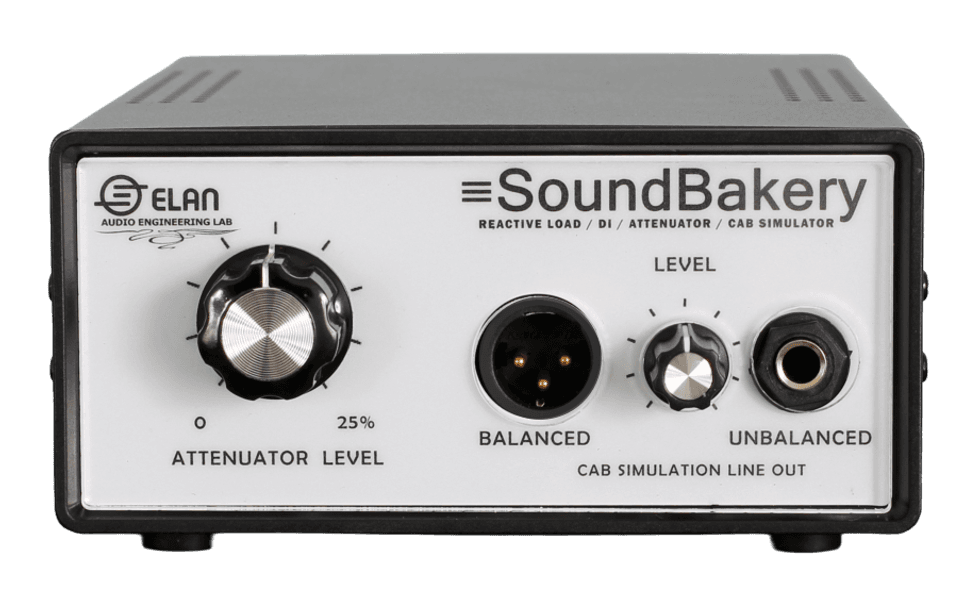
SoundBakery uses a reactive load designed to mimic a speaker cabinet’s changing impedance. Its attenuation knob adjusts speaker output from approximately 25 percent of full level down to silence. A dedicated Attenuator Bypass switch connects the amplifier directly to the speaker cabinet for full, unattenuated output. The balanced XLR and 1/4-inch line outputs remain connected even in bypass mode.
With the reactive load engaged, SoundBakery operates without a speaker cabinet for silent recording, direct-to-PA use, and in-ear monitoring. The line outputs can also feed another amplifier. They carry the amp’s signal without cabinet simulation or EQ, allowing players to add impulse responses or cabinet simulation in their recording software. One level control adjusts both line outputs.
SoundBakery requires no batteries or power supply.
Features:
Reactive load for tube amplifiers up to 100 watts
Three dedicated 4-, 8-, and 16-ohm amplifier inputs
Speaker attenuation knob
Dedicated Attenuator Bypass switch
One 1/4-inch speaker output
Balanced XLR and unbalanced 1/4-inch line outputs
Shared line-out level control
Silent load-box operation
Aluminum chassis, approximately 4 lb.
Dimensions: 5.9 x 7.9 x 2.75 inches (150 x 200 x 70 mm)
SoundBakery is available directly from Elan Audio Lab for $479. For more information, visit elanaudiolab.com.
Elan Audio Lab
SoundBakery
Elan Audio Lab has released the SoundBakery, a passive analog reactive attenuator, load box and DI designed to let players run tube amps at high output while controlling speaker volume. Handmade in the USA, SoundBakery builds on the design legacy of MetalHead Electronics.

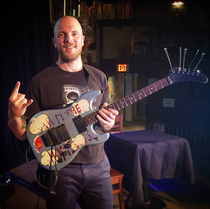





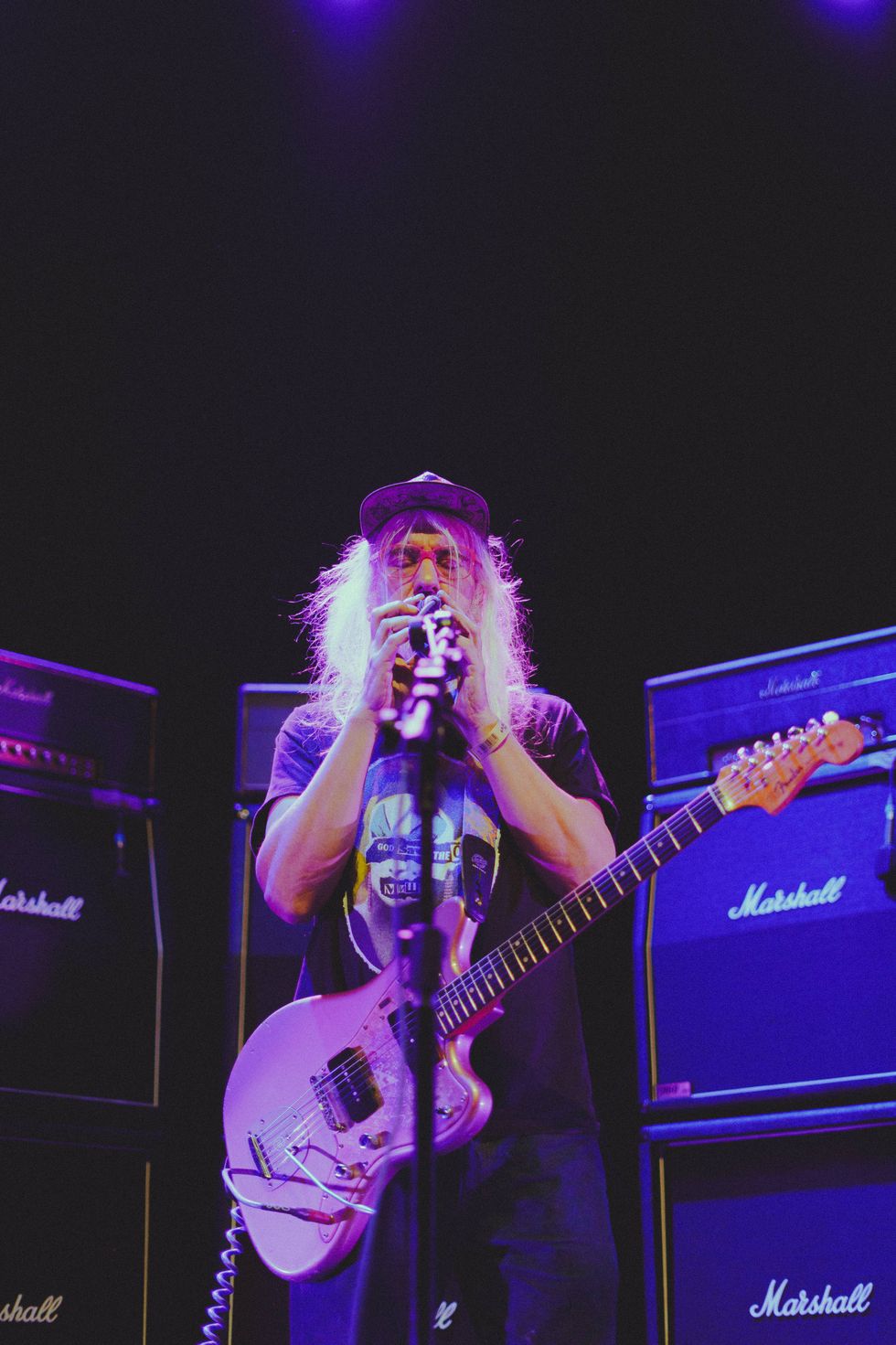 Photo by Rafael Novak