
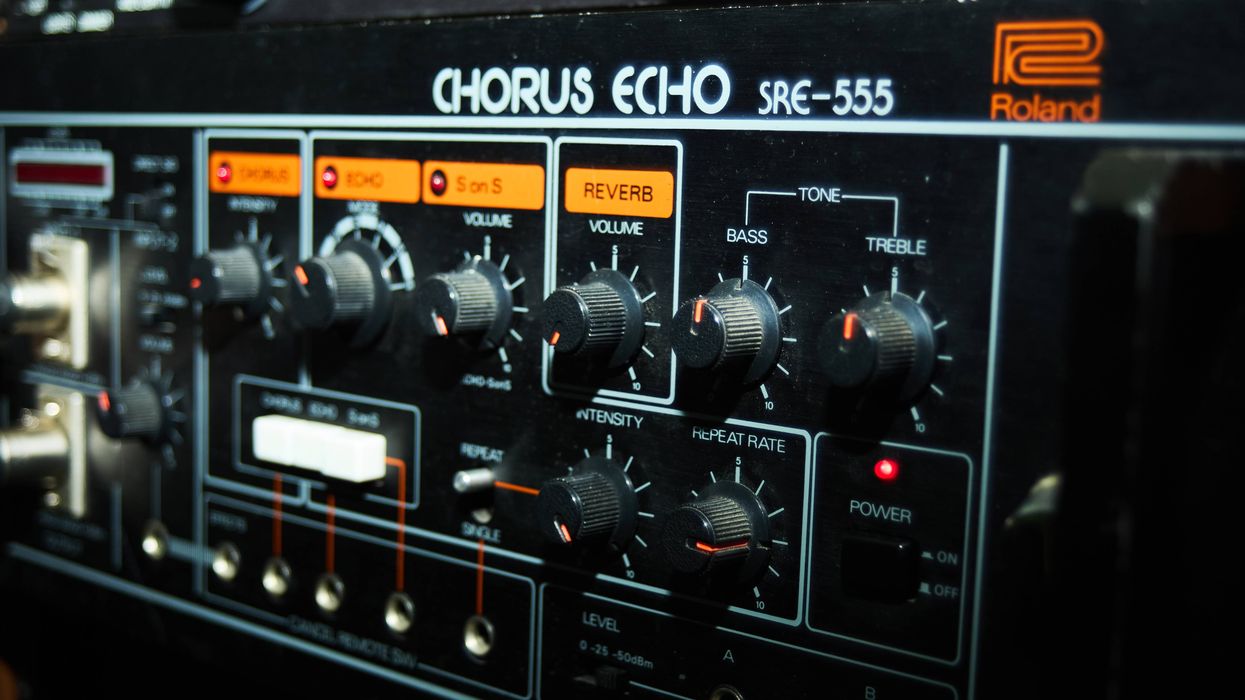

When people say things like, “They don’t make ’em like that anymore,” I think of two production runs that began in 1974: the Volvo 200 series, which lasted until 1993, and the Roland Space Echo, which saw its final unit manufactured in 1990.
One afternoon 15 years ago, I packed up my VW Golf and was on my way to record a trio gig somewhere in the hills of Los Angeles. I pulled up behind a Volvo station wagon and Nels Cline got out. He opened the giant semi-rectangular trunk and took out his amp, guitar, and pedals. I was visibly amazed at the space inside. “The Swedish pickup truck!” Nels proclaimed as he slammed the metal door shut and we loaded in for the afternoon.
A while later, I bought my own 1989 Volvo 245 wagon (the four-door sedan model was the 240). One benefit of a 19-year production run was that you could drive to a local pick-a-part and take whatever you needed from a junker unit, and it just worked. Need a new rear-tail-lamp assembly? Ten dollars and a screwdriver will solve that problem. Missing the plastic cover over the emergency brake between the front seats? There are plenty out there to choose from. My old mechanic Russell (who also worked on Josh Freese’s Volvo 240) told me that he loved working on them because after 20 years, parts were still easy to find and he could easily move around inside the engine compartment.
One summer workday, my Isuzu box truck broke down and I loaded more than a dozen produce orders into the back of my 245 wagon. I left the South Bay and drove into the Valley. I finished the route, and by the time I was heading down Ventura Boulevard toward the freeway, there was smoke coming from under the hood. I jumped on the 405 South and kept an eye on my hovering temperature gauge. After a Sorcerer-like two hours in the slow lane, I was back home. The Swedish pickup never overheated or died on me. A day later, Russell told me there was a quarter-sized hole in the engine compartment, and then he repaired it.
“There are few sounds that could not be improved by adding a little tape echo, chorus, and/or spring reverb.”
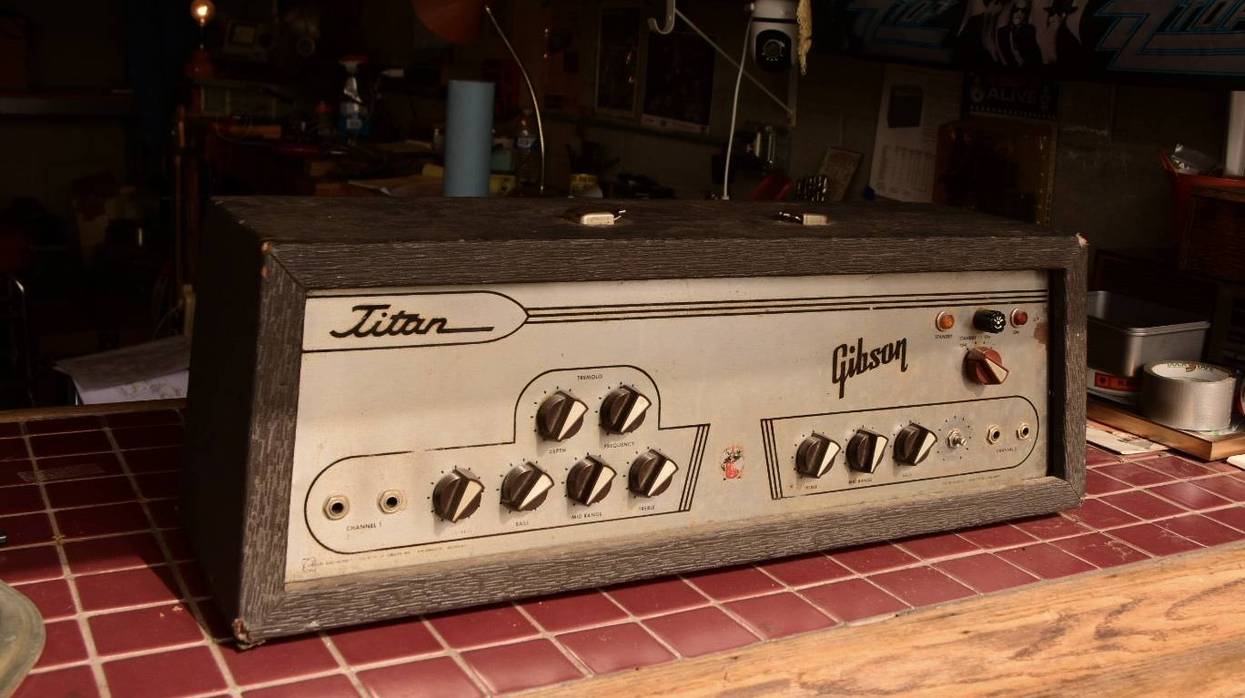
Similarly, a Space Echo might not work perfectly, but it will still get the job done. Worn-out tape? Unscrew the top plate and replace it yourself. Echoes not self-oscillating? Try adjusting the trim pots. No high end on the echo? Get some 90% isopropyl alcohol and Q-tips on those tape heads! Broken spring reverb? Open it up and throw a new tank in there. Plenty of room to move around.
Like the Volvo 200 series, the Roland Space Echo came in a few simple variations: the classic three-head RE-201; the stripped-down RE-101 and 150, which omitted the spring reverb, EQ, and a tape head; the RE-301, which added a chorus circuit; and, finally, the RE-501/SRE-555. I have owned all of them, and the one I’ve used the most is my beloved SRE-555 rackmount unit.
I’ll tell you why:
I am one of those people who thinks there are few sounds that could not be improved by adding a little tape echo, chorus, and/or spring reverb. Once, when recording electric guitar overdubs on singer-songwriter Eamon Fogarty’s song “Utopia In Blue,” I set up a mic on the amp and a mic in the lobby of the studio, and I sent that distant microphone into the Chorus Echo. The result was a beautiful triangulation: the immediate amp guitar panned just off center, the distant mic panned left, and the tape echo’d distant mic panned hard right. For every strum, I was rewarded with three distinct sounds. For my purposes, the balanced XLR ins and outs of the 501 and 555 facilitate ease of use. I always have them operating at line level on an auxiliary send from a mixer or console, and it’s always “Aux 1.”
Sometimes a tool is so well made that even the routine feels inspired. The Volvo 245 wagon was outfitted with an optional rear-facing third row seat. I can’t tell you how fun it is to take a road trip with kids who are looking into the eyes of the driver behind you. Likewise, the Roland Chorus Echo invites you to experiment with combinations of sound. During a session for Cherry Glazerr’s cover of Leonard Cohen's “I’m Your Man,” I solo’d the drums and used the repeat rate to sync the Chorus Echo to the song’s tempo. Then, I took the echo off the drums and put it on Clem [frontwoman Clementine Creevy]’s electric guitar. She loved the sound and it transformed the guitar part. I printed the echo and went back to use a short slap on her lead vocal, which you can hear in the final mix (if you can find it).In this digital age, I will be the first to admit, “If it sounds good, it is good.” That said, there are a few pieces of analog outboard gear that I find irreplaceable. My Volvo 245 has long since retired from the road, and yet, the Roland Chorus Echo SRE-555 carries on.